“True freedom is not the ability to choose between a few pre-packaged options; it is the radical reclamation of the mind from the invisible structures that define our very reality,” says Glenroy Bristol. “We live in a world where many are functional and productive yet remain internally confined by unexamined fears and inherited beliefs”.
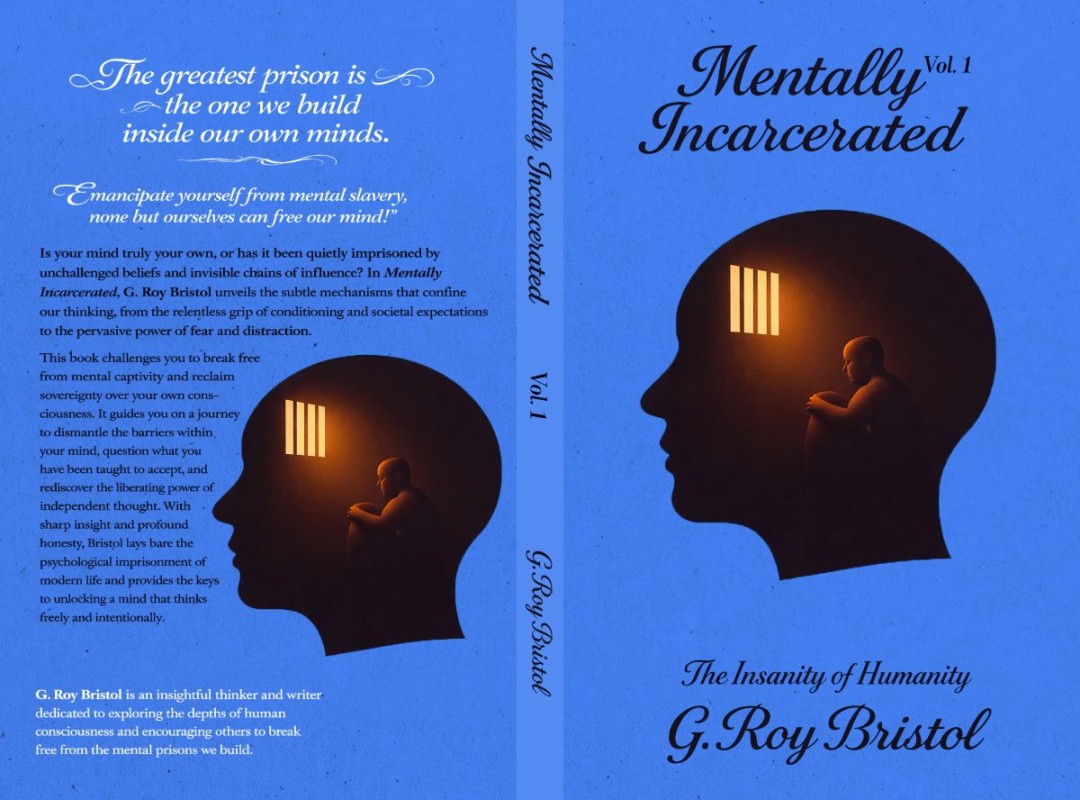
Glenroy Bristol is an experienced psychotherapist with a clinical practice of more than 20 years. Over the years, he has been a guide for many people through the intricate path of the human mind. He is residing in the US but his main area of concentration is where psychology, philosophy, and society coalesce. In his daring new book, Mentally Incarcerated: The Insanity Of Humanity, he uses his 20 years of professional experience to investigate the ways people turn into captives of their minds and how they can be liberated to finally have a mental self-determination.
The Invisible Prisons of the Modern Mind
In Mentally Incarcerated, Glenroy Bristol challenges the traditional understanding of what it means to be a free individual in modern society. He argues that while physical chains are easy to identify, the most restrictive prisons are those constructed from unexamined ideas, habits, and societal expectations that feel so "normal" they become invisible.
“The most effective cage is the one you don’t even know you’re in,” Bristol notes. The book explores how humans often mistake the presence of choices for the existence of freedom. According to Bristol, choosing between paths defined by others is merely a more comfortable form of captivity. Mentally Incarcerated is a call for people who think in the right direction but still have a feeling of discomfort to open their eyes.
Rethinking the Unhealthy Patterns of Thought
One of the major ideas in the literature is that of the inherited patterns of thought. From a young age, individuals absorb meanings from family, culture, and institutions. These frameworks eventually become so deeply embedded that they are experienced as personal convictions rather than external impositions.
Bristol details how these patterns are reinforced by fear specifically the fear of isolation and the fear of being wrong. Bristol puts it this way: “Our psychological chains are very hard to break but we do not want to do it anyway since they give us feeling of belonging and a protection against the uncertainty of life.” The book, by exposing these “hereditary prisons,” grants the readers the insight necessary to separate their true identities from the parts they were told to perform.
Moving from Awareness to Authentic Mental Agency
Unlike many self-help books that focus solely on "mindfulness" or "awareness," Mentally Incarcerated makes a sharp distinction between seeing a pattern and changing it. Bristol asserts that awareness is only the first step; true freedom is a behavioral practice that requires ongoing responsibility.
The book provides a deep dive into the internal "guards" of the mind, such as:
• The Ego as a Guardian: Comprehending the operation of the inner self-image that maintains us in safe, foreseeable limits.
• Self-Deception and Rationalization: Identifying the psychological "glue" that hinders us from recognizing our imprisonment.
• The Addiction to Distraction: Exploring the way the contemporary "attention economy" obstructs the profound contemplation that is indispensable for freedom.
“Freedom is not a destination you reach and then stop; it is the daily, often uncomfortable practice of existing without the protection of a rigid, pre-defined identity,” says Bristol.
A Practical Roadmap: The Reader Workbook
To ensure that the philosophical concepts in Mentally Incarcerated translate into real-world change, the book includes a comprehensive Reader Workbook. Each of the fifteen chapters is accompanied by reflection prompts designed to help readers identify their own mental loops, trauma-informed reactions, and social dependencies. This interactive element makes the book an essential tool for anyone serious about psychological growth and reclaiming their thought processes from the "insanity of humanity".
About the Author
Glenroy Bristol is an incredible author and a skilled therapist who has always questioned the psychological mechanisms of people and thus has been very curious throughout his career. He knows the ropes of the human psyche very well with two decades of psychotherapeutic practice under his belt. He has grown to know the stories people tell to cope with life and the habits they need to get rid of to live fully. His practice is based on observing and experimenting with people and on the goal of granting them "Mental Agency," a condition in which one's thoughts and actions are truly one's own. Mentally Incarcerated: The Insanity Of Humanity is his latest contribution to the field of psychological liberation.

Media Contact
Company Name: Premium Book Writers
Contact Person: Glenroy Bristol
Email: Send Email
City: INDIAN ORCHARD
State: MA
Country: United States
Website: http://www.grbbooks.com