Introduction
As of January 27, 2026, the industrial landscape in the United States stands at a crossroads of infrastructure renewal and decarbonization. At the center of this transformation is Steel Dynamics, Inc. (NASDAQ: STLD), one of the nation’s largest and most efficient domestic steel producers. Historically celebrated for its nimble Electric Arc Furnace (EAF) model, STLD is currently capturing investor attention not just for its core steel business, but for its ambitious pivot into the aluminum market. Despite a 2025 fiscal year characterized by "metal spread" compression—where the gap between finished steel prices and raw material scrap costs narrowed—STLD has demonstrated remarkable resilience. With a market capitalization of approximately $26.5 billion and a recent earnings beat that sent shares to record highs, the company is proving that its diversified, circular manufacturing model can thrive even as traditional market cycles soften.
Historical Background
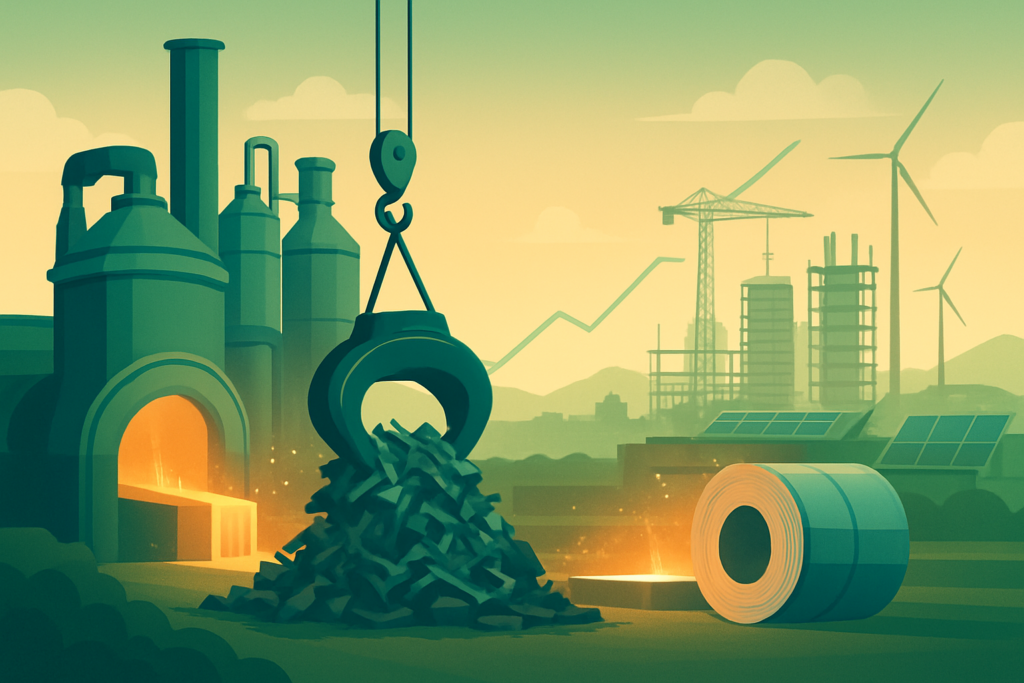
Steel Dynamics was born from a vision of disruptive efficiency. Founded in 1993 by three alumni of Nucor Corporation—Keith Busse, Mark Millett, and Richard Teets—the company was designed to leverage the "mini-mill" revolution. Unlike traditional integrated steelmakers that rely on massive, carbon-intensive blast furnaces and iron ore, STLD focused exclusively on EAF technology, which melts recycled scrap metal using electricity.
The company’s journey from a greenfield startup in Butler, Indiana (1996), to a Fortune 500 leader is a study in disciplined growth. Key milestones include the 2007 acquisition of OmniSource, which secured a steady supply of scrap metal, and the 2014 purchase of Severstal Columbus, which expanded its footprint into the high-growth Southeastern U.S. market. Most recently, the 2022 commissioning of its state-of-the-art flat-roll mill in Sinton, Texas, and the 2025 launch of its aluminum division, have solidified its reputation as a pioneer in diversified metal production.
Business Model
STLD operates a vertically integrated circular manufacturing model that is unique in its breadth. The business is organized into four primary reporting segments:
- Steel Operations: This is the flagship segment, generating approximately 62% of revenue. It produces a wide array of products including hot-rolled, cold-rolled, and coated steel, as well as structural beams and rails.
- Metals Recycling (OmniSource): Accounting for roughly 21% of revenue, this segment processes and sells ferrous and nonferrous scrap. It serves as a vital internal supply chain for STLD’s mills, hedging against external scrap price volatility.
- Steel Fabrication (New Millennium Building Systems): Contributing 9% of revenue, this division produces steel joists and girders for non-residential construction. It acts as a "natural hedge"—when steel prices fall, the fabrication margins often expand as their input costs drop.
- Aluminum (Emerging): The newest pillar, focused on recycled aluminum flat-rolled products for the beverage packaging, automotive, and industrial sectors.
Stock Performance Overview
Investors who have held STLD over the long term have been handsomely rewarded. As of late January 2026, the stock’s performance metrics are staggering:
- 1-Year Performance: Up approximately 50%, fueled by the successful ramp-up of the Sinton mill and optimism surrounding the aluminum expansion.
- 5-Year Performance: A total return of over 410%, significantly outperforming the S&P 500 and most industrial peers.
- 10-Year Performance: An explosive 1,294% total return, reflecting the company’s transition from a regional player to a national powerhouse.
Since its 1996 IPO, STLD has maintained a compound annual growth rate (CAGR) of 15.26%, a testament to its consistent profitability and shareholder-friendly capital allocation.
Financial Performance
Steel Dynamics’ 2025 full-year results, released earlier this month, highlight the company’s ability to navigate a challenging macro environment.
- Revenue: $18.2 billion, a 3.6% increase year-over-year.
- Net Income: $1.2 billion, or $7.99 per diluted share.
- Operating Margins: While margins faced pressure due to softening steel prices ($1,089/ton average in 2025 vs. higher levels in 2024), the company maintained an industry-leading ROIC (Return on Invested Capital).
- Liquidity and Debt: The company ended 2025 with over $2.2 billion in liquidity and generated $1.4 billion in cash flow from operations.
- Valuation: Despite the stock being at all-time highs, it continues to trade at a reasonable P/E ratio, as earnings growth has kept pace with price appreciation.
Leadership and Management
The company remains under the steady hand of co-founder Mark Millett, who serves as Chairman and CEO. Millett is widely regarded as one of the most effective leaders in the materials sector, known for his focus on a "high-performance" culture and a decentralized management style.
The leadership's strategy is currently focused on "Value-Add" diversification. Rather than competing solely on volume in commodity steel, STLD is pushing into higher-margin products like painted and coated steels and, most notably, recycled aluminum. This move is intended to reduce the company's sensitivity to the steel price cycle and tap into the growing demand for sustainable packaging and lightweight automotive materials.
Products, Services, and Innovations
Innovation at STLD is synonymous with sustainability and automation. The Sinton, Texas mill is a prime example, utilizing advanced digital monitoring to optimize energy consumption and yield.
In the product sphere, the company has become a leader in "Green Steel." In July 2025, all of its steel mills received certification from the Global Steel Climate Council (GSCC). By using EAF technology, STLD’s carbon intensity is roughly 75% lower than the global average for blast furnace production.
The company's R&D efforts are currently concentrated on its $2.5 billion aluminum rolling mill. By applying its scrap-based EAF expertise to aluminum, STLD aims to disrupt a market that has historically been dominated by less flexible, higher-emission production methods.
Competitive Landscape
STLD operates in a highly competitive, yet increasingly consolidated, North American market. Its primary rivals include:
- Nucor (NUE): The largest U.S. steelmaker and a fellow EAF operator. Nucor has greater scale, but STLD often boasts higher operating margins and a more focused growth profile.
- Cleveland-Cliffs (CLF): An integrated producer with significant control over its iron ore supply. Cliffs has a stronghold on the automotive sector but faces higher fixed costs than STLD.
- United States Steel (X): Following its recent strategic shifts and ownership changes, U.S. Steel is transitioning toward the "Big River" EAF model to compete directly with STLD’s efficiency.
STLD’s competitive edge lies in its lowest-quartile cost structure and its high degree of vertical integration through OmniSource.
Industry and Market Trends
Three major trends are currently shaping the industry in 2026:
- Onshoring and Infrastructure: The Infrastructure Investment and Jobs Act (IIJA) continues to drive demand for structural steel in bridges and transit. Simultaneously, the "onshoring" of manufacturing is boosting demand for industrial warehouses and data centers.
- The Energy Transition: Solar farms and wind turbines require significant amounts of steel. STLD’s specialized products are increasingly feeding into these renewable energy supply chains.
- Decarbonization: As OEMs (Original Equipment Manufacturers) look to reduce their Scope 3 emissions, they are willing to pay a premium for "low-carbon" steel and aluminum, placing STLD in a favorable pricing position.
Risks and Challenges
Despite its strengths, STLD is not immune to risks:
- Margin Compression: In 2025, the "metal spread" narrowed as Hot Rolled Coil (HRC) prices softened while scrap costs remained stubbornly high. If scrap prices continue to rise due to global demand for recycled materials, STLD's margins could face further headwinds.
- Cyclicality: A significant portion of STLD’s revenue is tied to non-residential construction. A broader economic recession or high interest rates slowing down commercial building projects could hurt the Fabrication and Steel segments.
- Execution Risk: The ramp-up of the aluminum mill is a multi-billion dollar bet. While the segment turned EBITDA-positive in December 2025, reaching the targeted $650M–$700M annual run rate is not guaranteed.
Opportunities and Catalysts
The primary catalyst for 2026 is the Aluminum Segment. Management expects to reach 90% utilization by late 2026. This would transform STLD into a "multi-metal" company, diversifying its earnings base and potentially leading to a "valuation re-rating" as it begins to be compared with aluminum specialists like Ball Corp or Novelis.
Furthermore, the ongoing ramp-up of the Sinton mill to its full capacity offers another lever for volume growth. Management has also hinted at continued aggressive share repurchases, having bought back 4% of outstanding shares in 2025 alone.
Investor Sentiment and Analyst Coverage
Wall Street remains cautiously optimistic. Following the Q4 2025 earnings beat, the consensus rating is a "Moderate Buy." Analysts from firms like Morgan Stanley and Goldman Sachs have raised their price targets, with some reaching as high as $194.
Institutional ownership is high at 82%, with major firms like Vanguard and BlackRock holding significant positions. The sentiment among retail investors is also positive, often citing STLD as a "best-in-class" operator with a fortress balance sheet.
Regulatory, Policy, and Geopolitical Factors
The regulatory environment is a tailwind for STLD. Current trade policies, including Section 232 tariffs, continue to protect domestic producers from unfairly traded foreign imports. Furthermore, the 2026 landscape is heavily influenced by the "Buy America" provisions in federal infrastructure projects, which mandate the use of domestic steel.
Geopolitically, the shift away from Russian and Chinese steel due to environmental and trade concerns has allowed U.S.-based EAF producers to capture more market share.
Conclusion
Steel Dynamics (NASDAQ: STLD) enters 2026 as a premier industrial play on the American economy. While the softening of steel prices and the rise in scrap costs presented a margin challenge in the past year, the company’s diversified business model and variable cost structure have allowed it to remain highly profitable.
Investors should closely monitor the aluminum mill's progress and the stability of non-residential construction demand. With a visionary management team, a leader’s position in green steel, and a significant new growth engine in aluminum, Steel Dynamics remains a compelling case for those looking to invest in the backbone of modern infrastructure. As the company transitions from a "steel company" to a "metals solutions provider," its journey is far from over.
This content is intended for informational purposes only and is not financial advice.