Today’s Date: March 6, 2026
Introduction
Lululemon Athletica Inc. (NASDAQ: LULU) has long been the gold standard of the "athleisure" sector, a company that transformed technical yoga gear into a multi-billion-dollar lifestyle movement. However, the last two years have tested the brand’s resilience more than any period since its founding. Once a darling of Wall Street, Lululemon is currently navigating a complex transition characterized by executive turnover, intensifying competition from "cool-factor" rivals like Alo Yoga and Vuori, and a stock price that has struggled to recapture its 2023 peaks. As of March 2026, the company finds itself at a strategic crossroads, with investors weighing its historical dominance against the reality of a "stale" product pipeline and a leadership vacuum.
Historical Background
Founded in 1998 by Chip Wilson in Vancouver, British Columbia, Lululemon began as a single yoga studio that doubled as a retail store by night. Wilson’s vision was to create high-quality, technical apparel for women that combined performance with an aesthetic that could transition from the gym to the street.
The company went public in 2007 and quickly became a global phenomenon. Over the decades, it navigated significant transformations: the 2013 "sheer pants" recall, the departure of its founder following controversial comments, and a triumphant era under CEO Calvin McDonald starting in 2018. Under McDonald, the company expanded aggressively into menswear, digital fitness (via the ill-fated Mirror acquisition), and footwear, ultimately surpassing $10 billion in annual revenue by 2024.
Business Model
Lululemon operates a vertically integrated, direct-to-consumer (DTC) model that prioritizes high margins and brand control. Its "Power of Three x2" growth strategy—aimed at doubling men’s revenue, doubling digital revenue, and quadrupling international revenue by 2026—has been the north star for the organization.
The business is segmented into:
- Company-Operated Stores: High-traffic physical locations that serve as community hubs and "sweat life" centers.
- Direct-to-Consumer: A robust e-commerce platform that accounts for nearly half of total revenue, offering higher margins than physical retail.
- International Markets: While the Americas remain the largest revenue driver, China has become the company's primary growth engine.
Lululemon’s edge has traditionally been its "Science of Feel" philosophy, focusing on fabric innovation (Nulu, Luxtreme, Everlux) to create an emotional connection with the wearer.
Stock Performance Overview
Lululemon’s stock performance over the last decade tells a story of meteoric rise followed by a painful valuation reset.
- 10-Year Horizon: An investor who entered LULU in March 2016 at ~$65 has seen a total return of approximately 165% as of today, significantly outperforming the broader S&P 500.
- 5-Year Horizon: The 5-year chart is more volatile. After peaking at over $511 in late 2023, the stock suffered a prolonged decline throughout 2024 and 2025.
- Recent Performance: Over the last 12 months, the stock has been a laggard, trading near $173 (March 2026), down roughly 65% from its all-time highs. This decline reflects a transition from a "high-growth" multiple to a "value" multiple, as the market recalibrates expectations for the North American market.
Financial Performance
In Fiscal 2024, Lululemon achieved a milestone by surpassing $10 billion in revenue, a 10% year-over-year increase. However, the internal metrics began to show cracks. While international revenue surged by 34%, growth in the Americas slowed to a mere 4%.
By Fiscal 2025, the financial narrative shifted toward margin protection. Gross margins, which had historically hovered near 58-59%, compressed toward 56% due to rising logistics costs and the impact of new US trade policies. Earnings per share (EPS) for 2025 are estimated to land between $12.92 and $13.02, a decline from the $14.64 seen in 2024. Despite these headwinds, the company maintains a fortress balance sheet with minimal debt and strong free cash flow, which it has used aggressively for share repurchases.
Leadership and Management
The leadership suite at Lululemon has been in a state of flux since early 2024. The defining moment of this transition occurred on May 22, 2024, when Chief Product Officer Sun Choe resigned to pursue other opportunities (later revealed to be at VF Corp). Choe was the architect behind the brand's most successful product launches, including the expansion into footwear.
This was followed by the departure of CEO Calvin McDonald on January 31, 2026. Currently, the company is managed by Interim Co-CEOs Meghan Frank (CFO) and André Maestrini (Chief Commercial Officer). The Board of Directors, led by Executive Chair Marti Morfitt, is currently conducting a global search for a permanent successor, with activist investor Elliott Investment Management reportedly pushing for a candidate with deep luxury and fashion credentials.
Products, Services, and Innovations
Lululemon’s core product lines—the Align pant, the Scuba hoodie, and the ABC pant for men—remain the foundation of its revenue. However, the company has faced criticism for a "lack of newness" in recent seasons.
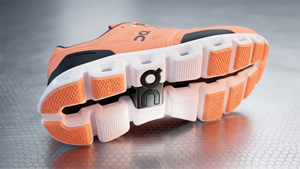
Innovation efforts in 2025 focused on the "Performance Casual" category and a reboot of the footwear line, which has struggled to gain traction against incumbents like Hoka or Nike (NYSE: NKE). The company’s R&D focus has shifted toward sustainable materials, such as plant-based nylon and enzymatically recycled polyester, as it seeks to maintain its premium "innovator" status in a crowded market.
Competitive Landscape
The competitive environment has shifted from general sportswear to niche, aesthetic-driven rivals.
- Alo Yoga: By early 2026, Alo has captured a 14% share of the premium DTC athleisure market. Its focus on "street-to-studio" fashion and aggressive influencer marketing has resonated with Gen Z, a demographic where Lululemon has seen softening engagement.
- Vuori: Having reached a valuation of $5.5 billion and preparing for an IPO, Vuori has become a formidable threat in the men’s category. Its "Coastal California" branding offers a distinct alternative to Lululemon’s more "technical" aesthetic.
- Traditional Giants: Nike and Gap Inc.’s (NYSE: GPS) Athleta continue to compete on price and scale, though Lululemon maintains a higher price floor and better brand loyalty metrics.
Industry and Market Trends
The "athleisure" trend has matured into a broader "wellness lifestyle" category. Consumers in 2026 are increasingly looking for versatility—clothing that works for the office, the gym, and social outings. This "hybrid" wardrobe trend favors brands that can balance technical performance with high-fashion silhouettes. Additionally, the international market, particularly China, remains the most significant tailwind for the industry, as a growing middle class embraces outdoor activities and yoga.
The May 22, 2024 Inflection Point
The stock’s 7% decline on May 22, 2024, was a watershed moment for the company. The departure of Sun Choe was not merely a personnel change; it was perceived by the market as the end of Lululemon’s "innovation era."
Investors reacted to the news with alarm because Choe had been the stabilizing force behind the company’s product consistency. Her exit triggered concerns that the product pipeline would go "stale"—a fear that was largely realized throughout 2025 as comparable store sales in the US stagnated. This event marked the beginning of Lululemon’s transition from a "growth-at-any-price" stock to one under intense scrutiny for its internal culture and succession planning.
Risks and Challenges
- Innovation Dearth: If Lululemon fails to introduce a new "hero product" (the next Align) in 2026, it risks further market share loss to more agile competitors.
- Execution Risk: Transitioning to a new CEO during a retail downturn is inherently risky.
- Macro Headwinds: Inflationary pressures in the US have led to a "bifurcated" consumer; while wealthy shoppers remain, the aspirational customer is pulling back.
- Brand Fatigue: After a decade of dominance, the brand faces the risk of being seen as "the brand my mom wears" by younger cohorts.
Opportunities and Catalysts
- China Expansion: Lululemon continues to see triple-digit growth in certain Chinese provinces, representing a multi-decade opportunity.
- New Leadership: The appointment of a high-profile, vision-driven CEO (rumors suggest Jane Nielsen) could serve as a major positive catalyst for the stock.
- Valuation: Trading at approximately 12x forward earnings—a 10-year low—the stock is increasingly attractive to value investors and private equity firms.
- Men's Growth: If the brand can successfully pivot its men's messaging to compete with Vuori, it could unlock significant untapped revenue.
Investor Sentiment and Analyst Coverage
Wall Street is currently in a "show me" phase regarding LULU. Analyst ratings are mixed, with a split between those who see a "generational buying opportunity" at current valuations and those who fear the brand has passed its peak. Institutional ownership remains high, but hedge fund positioning has shifted toward "neutral" as they wait for clarity on the new CEO and the Fall 2026 product lineup. Retail sentiment, once overwhelmingly bullish, has turned cautious, with much of the online chatter focusing on the perceived decline in product quality and "newness."
Regulatory, Policy, and Geopolitical Factors
In late 2025, the removal of the de minimis tariff exemption—which allowed low-value shipments from abroad to enter the US duty-free—hit Lululemon’s e-commerce margins significantly. Furthermore, ongoing trade tensions between the US and China pose a risk to Lululemon’s supply chain and its most important growth market. The company has responded by diversifying its manufacturing into Southeast Asia, but the transition is costly and impacts short-term profitability.
Conclusion
Lululemon remains a powerhouse with an enviable brand and a profitable business model. However, the turbulence that began in mid-2024 with the departure of Sun Choe and culminated in a 2026 leadership transition has fundamentally changed the investment thesis. Lululemon is no longer a "set it and forget it" growth stock; it is a turnaround story in a highly competitive and fast-moving industry. For investors, the key will be watching the new CEO’s ability to reignite the innovation engine and reclaim the "cool factor" from rising rivals. While the current valuation provides a margin of safety, the path back to $500 will require more than just financial engineering—it will require a return to the technical and aesthetic excellence that built the brand.
This content is intended for informational purposes only and is not financial advice.