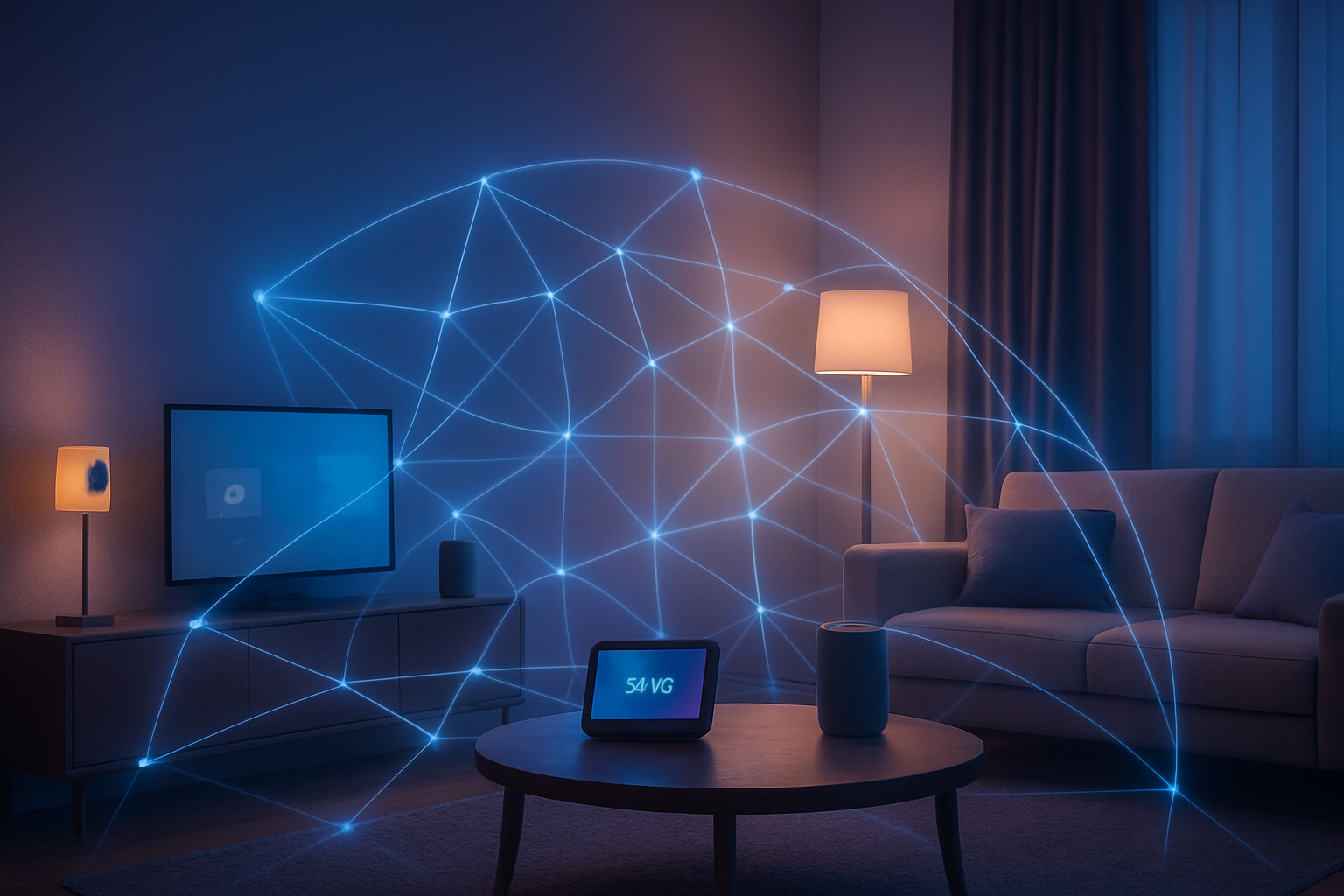
In a landmark shift for the consumer electronics industry, the long-standing "walled gardens" of the smart home have finally crumbled. As of late 2025, the release and widespread adoption of the Matter 1.5 and Thread 1.4 networking standards have effectively unified the once-fragmented ecosystems of the world’s largest tech giants. This transition marks the end of an era where consumers were forced to choose between "Works with HomeKit," "Works with Alexa," or "Works with Google Home," replacing proprietary silos with a single, interoperable mesh network that spans across brands.
The immediate implications of this shift are profound for both consumers and investors. By standardizing the "plumbing" of the smart home—the underlying mesh networks and communication protocols—Apple Inc. (NASDAQ: AAPL), Amazon.com, Inc. (NASDAQ: AMZN), and Alphabet Inc. (NASDAQ: GOOGL) have pivoted their competition from hardware exclusivity to artificial intelligence (AI) services. This move has unlocked a massive wave of device upgrades and new installations, driving the global smart home market toward a projected $147 billion valuation by the end of the year.
The Death of the Multi-Mesh Headache
The catalyst for this industry-wide transformation was the November 2025 release of Matter 1.5 and the preceding deployment of Thread 1.4. For years, the promise of Matter—a universal language for smart devices—was hampered by "multi-mesh" issues. A home with both an Apple HomePod and an Amazon Echo would often suffer from two separate, competing Thread networks that could not talk to each other, leading to latency and connectivity failures. Thread 1.4 solved this by introducing standardized credential sharing, allowing border routers from different manufacturers to merge into a single, robust mesh network for the first time.
This technical breakthrough was accompanied by the "Fabric Sync" feature in Matter 1.4, which reached full maturity this year. Fabric Sync allows for "Enhanced Multi-Admin" support, meaning a user can authorize a new smart lock or light bulb once, and it will automatically appear across all authorized platforms—Apple, Amazon, and Google—without the need for repetitive QR code scanning or manual setup. The timeline leading to this moment was a multi-year collaborative effort through the Connectivity Standards Alliance (CSA), which saw these traditional rivals set aside their differences to solve the fundamental friction that was holding back the smart home market.
Industry reaction has been overwhelmingly positive, with major retailers reporting a 20% surge in smart home category sales during the 2025 holiday season. The standardization has removed the "fear of obsolescence" that previously deterred mainstream consumers from investing heavily in smart home technology. No longer worried about whether a $300 smart lock will work if they switch from an iPhone to an Android device, consumers are finally treating smart home tech as a long-term utility rather than a risky hobby.
Winners, Losers, and the Battle for the "Brain"
While the underlying network is now unified, the battle for the "brain" of the home has only intensified. Apple Inc. (NASDAQ: AAPL) has emerged as a primary winner by leveraging its reputation for privacy. Even as it supports Matter 1.5’s new universal camera standards, Apple continues to market HomeKit Secure Video as a premium, privacy-first alternative. Analysts note that this strategy has helped Apple’s stock reach record highs near $275 in late 2025, as the company successfully converted smart home interoperability into "ecosystem stickiness" for its higher-margin services.
Amazon.com, Inc. (NASDAQ: AMZN) has taken a different route, focusing on the sheer scale of its "Works with Alexa" program. With the launch of the Echo Dot Max and Echo Show 11 in October 2025, Amazon introduced the AZ3 AI chip, designed specifically to handle the local processing required by Matter 1.5. Amazon is betting on its new "Alexa+" paid AI assistant to drive revenue, using the unified mesh network to ensure its AI can control every device in the home, regardless of who manufactured it. However, the company faces challenges in updating its massive backlog of older Ring and Blink cameras to the new standards, creating a potential opening for more agile competitors.
Alphabet Inc. (NASDAQ: GOOGL) has utilized the shift to push its "Gemini for Home" initiative. By using the standardized data provided by Matter 1.5, Google’s AI can now provide sophisticated summaries of home events across different device brands—such as noticing a package delivery on a Nest cam and automatically turning on a third-party smart light. This move has bolstered Google’s stock, which traded near $314 in late 2025, as investors see the smart home as a critical data engine for Google’s broader AI ambitions. Conversely, smaller manufacturers who relied solely on proprietary hubs have found themselves as the primary losers in this new landscape, forced to either adopt Matter or face irrelevance.
A New Era of Standardized Intelligence
The shift toward unified mesh standards fits into a broader industry trend of "utility standardization." Much like the transition to USB-C for charging or Wi-Fi for internet connectivity, the smart home has moved from a "feature" phase to a "utility" phase. This event mirrors historical precedents where market leaders realized that a fragmented market was smaller than a unified one. By breaking down the silos, Apple, Amazon, and Google have effectively expanded the total addressable market for all players, including global challengers like Xiaomi, which has used "Matter-first" strategies to capture an 8% global market share in 2025.
Regulatory pressure has also played a role. Authorities in the European Union and the United States have increasingly scrutinized the "gatekeeper" status of big tech companies. By proactively adopting open standards like Matter and Thread, these companies have managed to stay ahead of potential interoperability mandates, framing the move as a consumer-friendly innovation rather than a regulatory concession. This has created a ripple effect across the industry, forcing traditional appliance makers like Samsung and LG to also accelerate their adoption of unified standards to remain competitive in a world where the "app" no longer defines the experience.
Furthermore, this unification has cleared the way for advanced AI integration. In previous years, an AI assistant was only as smart as the devices it could talk to. In late 2025, the unified mesh network acts as a central nervous system for the home, allowing AI models to ingest data from a diverse array of sensors—soil moisture, air quality, and motion—to create truly "ambient" environments. This shift from manual control to predictive automation is the defining characteristic of the 2025 smart home market.
The Road to 2026: Predictive Homes and New Hardware
Looking ahead to 2026, the short-term focus will be on the "AI-ification" of these unified networks. With the networking hurdles cleared, the next strategic pivot for the Big Three will be the development of dedicated home AI hardware. Rumors are already circulating about an Apple "HomePad" smart display for early 2026, which would serve as a high-end command center for the Matter 1.5 ecosystem. Amazon is expected to further integrate Alexa+ into its Eero mesh systems, making the network itself the assistant.
The long-term challenge will be maintaining the balance between openness and differentiation. As the "plumbing" becomes invisible, companies must find new ways to justify their premium hardware prices. We may see a shift toward "feature-locked" capabilities, where basic functions are universal via Matter, but advanced AI-driven features—like person recognition or energy-saving optimizations—remain exclusive to specific brand pairings. This could lead to a new type of "soft silo," where the devices connect, but the best experiences still require staying within one ecosystem.
Investing in the Connected Future
The unification of smart home standards under Matter 1.5 and Thread 1.4 represents a watershed moment for the technology sector. The primary takeaway for investors is that the value in the smart home has shifted from the hardware itself to the intelligence layer that sits on top of it. Apple, Amazon, and Google have successfully navigated this transition, turning a potential threat to their walled gardens into an opportunity to expand their service ecosystems and deepen consumer reliance on their respective AI platforms.
Moving forward, the market will likely reward those who can best monetize the data and convenience provided by a fully connected home. Investors should watch for the adoption rates of paid AI assistants like Alexa+ and the success of new hardware categories that leverage the Matter 1.5 camera and closure standards. While the "Great Wall" has fallen, the battle for the smart home is far from over—it has simply moved to a higher, more sophisticated level of competition.
This content is intended for informational purposes only and is not financial advice.