As of late January 2026, the global agricultural landscape has undergone a seismic shift, with Brazil firmly establishing itself as the undisputed leader of the soybean complex. No longer just the world’s leading exporter of raw beans, Brazil has successfully transitioned into an industrial powerhouse, rapidly expanding its domestic crushing capacity to meet a soaring demand for biodiesel and high-protein animal feed. This transformation is redrawing the map of global trade, as Brazilian production hit a record-shattering 177 million metric tons for the 2025/2026 cycle, effectively sidelining traditional competitors in the United States and Argentina.
The immediate implications are profound: Brazil is now the primary price-setter for soybean derivatives, a role historically held by the Chicago Board of Trade (CBOT). With a domestic biodiesel mandate recently elevated to B15 and a B16 transition scheduled for March 2026, the country is internalizing more of its crop than ever before. This "crush boom" is tightening global supplies of soybean oil while flooding the market with competitive soybean meal, forcing global livestock producers and energy firms to pivot their procurement strategies toward South America.
The Industrialization of the Grain Belt: Brazil’s Crusher Revolution
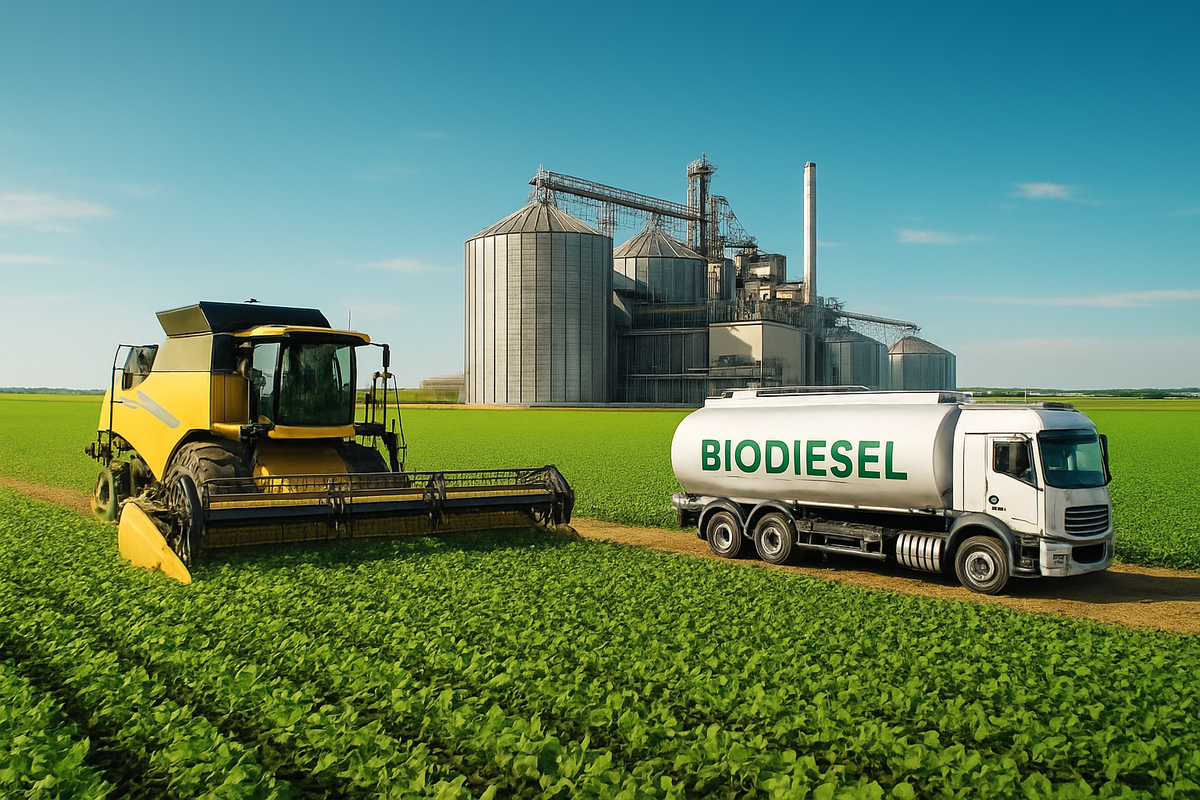
The current dominance of the Brazilian soy complex is the result of a multi-year capital expenditure cycle that reached its zenith in late 2025. Brazilian processors, led by a mix of multinational giants and domestic co-ops, have invested over R$5.9 billion ($1.1 billion USD) into crushing infrastructure. As of January 2026, total domestic crushing is projected to reach 61 million tons for the year, a 4% increase over 2025. This expansion is driven by the National Energy Policy Council’s aggressive roadmap toward decarbonization. Following the successful implementation of the B15 biodiesel blend in August 2025, the industry is already prepping for the B16 mandate.
The timeline leading to this dominance was accelerated by the 2024/2025 harvest, which provided the necessary surplus to justify massive industrial expansion. While the U.S. struggled with logistical bottlenecks and shifting climate patterns, Brazil’s "Northern Arc" ports—including Barcarena and Itaqui—reached full operational maturity, allowing for the seamless export of processed meal and oil. A key player in this movement is the privately held Grupo Potencial, which is currently finalizing the world’s largest integrated soybean-to-biodiesel complex in Paraná, set to begin full operations in the coming months.
Market reactions have been swift. In the last quarter of 2025, the premium for Brazilian soybean meal at the Port of Paranaguá became the global benchmark for physical trades, often decoupled from CBOT futures. This indicates a structural shift where the physical reality of Brazilian supply now outweighs the speculative sentiment of North American exchanges.
Agribusiness Titans and the Shift to South America
The shift toward Brazil has created a clear divide between winners and losers in the public markets. Bunge Global SA (NYSE: BG) has been one of the most aggressive movers, pivoting its strategy to focus on "low-carbon" soybean meal. By utilizing blockchain-based traceability to comply with the European Union Deforestation Regulation (EUDR), Bunge has captured a significant portion of the premium European market. Similarly, Archer-Daniels-Midland Company (NYSE: ADM) has expanded its crush capacity by nearly half a million metric tons across Mato Grosso do Sul and Minas Gerais to feed the growing domestic biodiesel thirst.
On the production side, SLC Agrícola (B3: SLCE3), Brazil’s largest listed farming group, has seen its valuation climb as it expands its land bank to over 400,000 hectares. By focusing on "asset-light" leasing models, the company has maximized its return on invested capital during this period of high commodity prices. Conversely, U.S.-based grain handlers and farmers are facing stiff headwinds. As China deepens its reliance on Brazilian soy—importing over 70% of its needs from Brazil in 2025—U.S. export volumes have plummeted to a projected 44.5 million metric tons for 2026, a 13% year-over-year decline.
Meat processing giants like JBS S.A. (B3: JBSS3) have also benefited from the surge in domestic crushing. The abundance of soybean meal, a byproduct of the biodiesel-driven oil extraction, has lowered feed costs for JBS’s massive poultry and pork operations in Brazil, providing them with a significant competitive advantage in global protein markets over U.S. competitors dealing with higher input costs.
The Geopolitical Soybean: A New Global Benchmark
This event fits into a broader trend of "south-south" trade dominance, where Brazil and China have solidified a bilateral agricultural pipeline that bypasses traditional Western intermediaries. The rise of Brazilian soybean meal as a global market indicator is a direct challenge to the financial hegemony of U.S. commodity exchanges. Traders in Southeast Asia and Europe are increasingly using "Paranaguá FOB" prices as their primary reference, signaling a maturation of the Brazilian market from a frontier producer to a sophisticated financial hub.
The regulatory environment has also played a crucial role. While the U.S. has seen policy volatility regarding renewable diesel tax credits, Brazil has maintained a steady, legislated increase in its biodiesel mandates. This has provided the price certainty required for multi-billion dollar industrial investments. Furthermore, Brazil’s proactive stance on environmental traceability—driven by the need to maintain access to the EU market—has turned a potential regulatory hurdle into a competitive moat.
Historically, this shift is comparable to the rise of the U.S. Corn Belt in the early 20th century. However, the speed of Brazil’s ascent, aided by modern biotechnology and massive Chinese infrastructure investment (via the Belt and Road Initiative), is unprecedented. The ripple effect is already being felt in Argentina, once the world's leading meal exporter, which now finds itself struggling to compete with Brazil's superior logistics and economies of scale.
Beyond the Bean: The Road to B20 and Decarbonization
Looking ahead to the remainder of 2026 and beyond, Brazil’s strategic pivot toward a "biorefinery" model is set to intensify. The government has already signaled its intent to accelerate the timeline for a B20 biodiesel mandate, potentially reaching it by 2028 rather than 2030. This would require an additional 15 to 20 million tons of crushing capacity, triggering another wave of infrastructure investment.
For investors and market participants, the challenge will be navigating the potential for "over-crushing." As Brazil processes more beans for oil to satisfy biodiesel mandates, the resulting surplus of soybean meal could depress global meal prices. This creates a strategic opportunity for global livestock producers but a challenge for U.S. and Argentine crushers who may find their margins squeezed. We may also see a pivot toward "Sustainable Aviation Fuel" (SAF) as the next frontier for Brazilian soy oil, with several pilot plants already under discussion for 2027.
A New Era in Global Commodities
Brazil’s dominance in the soybean complex is no longer a forecast; it is a reality. The country has successfully leveraged its natural productive advantages into a sophisticated industrial ecosystem that serves both the food and fuel needs of the 21st century. By January 2026, the "Brazilian Premium" has become a permanent fixture of the global market, reflecting the higher quality, traceability, and reliability of its supply chain.
As the market moves forward, investors should keep a close eye on Brazilian domestic policy regarding the B16-B20 transition and the pace of "Northern Arc" port expansions. The era of Chicago-centric grain trading is giving way to a more multipolar world, with Brazil at the center. For the global public companies involved, the ability to integrate into this Brazilian powerhouse will likely be the most significant determinant of their success in the coming decade.
This content is intended for informational purposes only and is not financial advice.