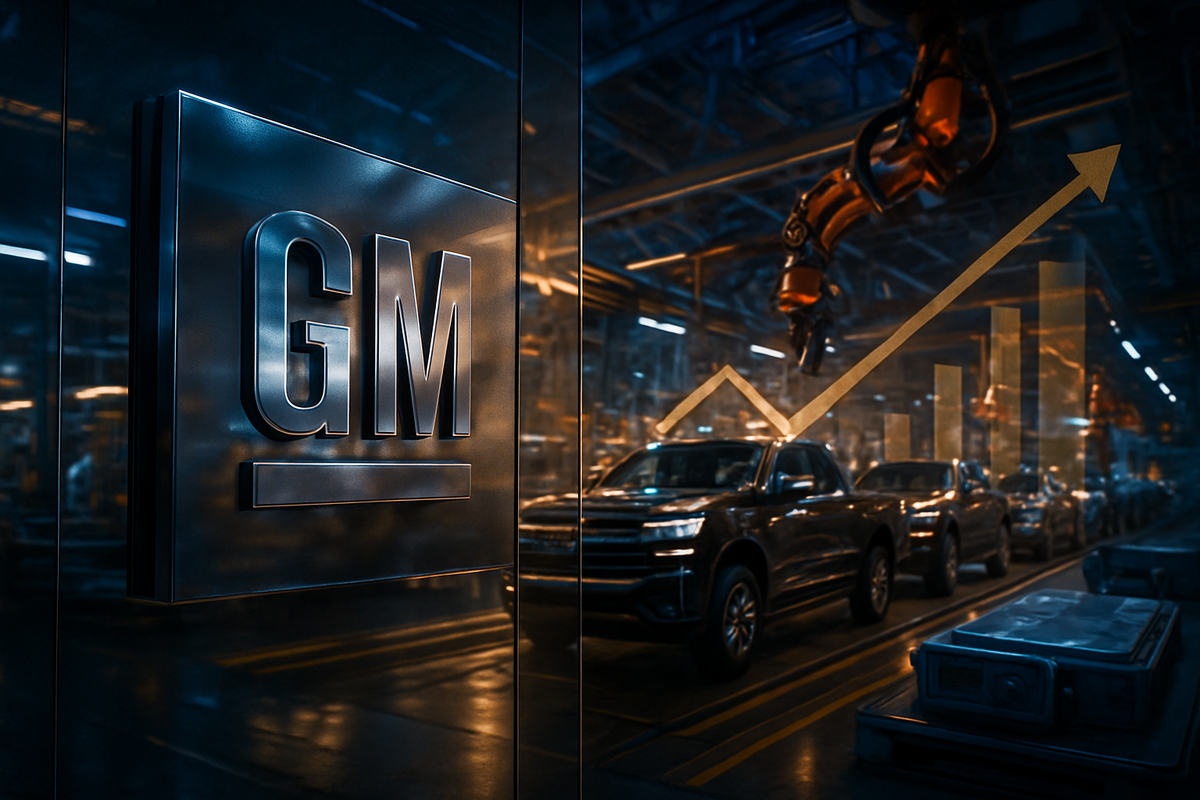
DETROIT — January 28, 2026 — General Motors (NYSE: GM) has once again defied industry skeptics, reporting a resilient fourth-quarter performance that underscores its transition from a volume-focused automaker to a lean, earnings-per-share powerhouse. On the heels of a fiscal year defined by record-breaking internal combustion engine (ICE) sales and a disciplined capital allocation strategy, the company announced today a fresh $6 billion share repurchase authorization and a 20% increase to its quarterly dividend. This move signals a definitive victory for CEO Mary Barra’s "reset" strategy, which began in late 2023 following a period of intense labor unrest and manufacturing hurdles.
Despite a cooling electric vehicle (EV) market and the expiration of key federal tax credits last September, GM’s Q4 results highlighted the immense profitability of its core truck and SUV business. The company posted a full-year 2025 adjusted EBIT of $12.7 billion, exceeding the midpoint of its previous guidance. More impressively, the company’s aggressive buyback campaign has successfully retired nearly 35% of its outstanding shares since 2023, driving adjusted earnings per share (EPS) to a record $10.60. For investors, the message is clear: while the road to electrification remains bumpy, the cash-generating engine of the traditional business remains more potent than ever.
A Legacy Reclaimed: The Timeline of GM’s Strategic Reset
The path to today’s blowout results began in November 2023, a period often referred to as the "Great Reset" in Detroit. Following a punishing strike by the United Auto Workers (UAW), General Motors (NYSE: GM) pivoted away from an "EV-only" narrative to focus on shareholder value. The initial $10 billion accelerated share repurchase program launched that winter set the stage for a three-year run of fiscal discipline. Throughout 2024 and 2025, GM meticulously cut costs, exiting underperforming ventures—including a significant scale-back of its Cruise robotaxi unit and a restructuring of its long-standing China joint ventures—to focus on its most profitable North American segments.
The fourth quarter of 2025 proved to be a critical test of this discipline. As federal $7,500 EV tax credits expired on September 30, 2025, the industry saw a localized collapse in EV demand, with GM’s own electric deliveries sliding 43% sequentially in the final three months of the year. However, the company’s "truck-first" strategy acted as a financial firewall. Chevrolet and GMC collectively recorded their sixth consecutive year of pickup truck leadership, with the Silverado and Sierra lines achieving a 20-year sales high. This dominance allowed GM to maintain industry-low incentives, averaging just 4.2% of the average transaction price, a far cry from the heavy discounting seen by competitors.
Key stakeholders, including institutional investors who had pushed for more conservative capital spending, have lauded the move. The newly announced $6 billion buyback follows the successful completion of the previous $10 billion and $6 billion authorizations, bringing the total capital returned to shareholders to over $23 billion in just over 26 months. Combined with the dividend hike to $0.18 per share, GM has transformed itself into a total-return story that few expected at the start of the decade.
Winners and Losers in the Post-Incentive Landscape
General Motors’ focus on high-margin ICE vehicles has positioned it as the clear winner among the "Big Three" in the current high-interest-rate environment. By prioritizing profits over the "volume at any cost" EV race, GM has widened its lead over Ford Motor Company (NYSE: F), which continues to grapple with higher structural costs and more volatile EV pricing strategies. While Ford has also moved toward returning cash to shareholders, GM’s superior inventory management and truck loyalty have given it a more consistent cash flow profile.
Conversely, the cooling of the EV sector and the loss of federal credits have placed immense pressure on pure-play EV manufacturers like Tesla, Inc. (NASDAQ: TSLA) and Rivian Automotive (NASDAQ: RIVN). As GM pivots toward a "demand-matched" production model—scaling back EV capacity while leaning into hybrids—it has avoided the massive inventory gluts and price wars that have eroded margins at Tesla. Meanwhile, Stellantis N.V. (NYSE: STLA) faces a more difficult road as it navigates a complex European regulatory environment and a North American lineup that has lacked the same level of refreshed product that has buoyed GM’s bottom line.
However, the "losers" in this shift may include the broader EV supply chain. GM’s decision to take a $7.2 billion special charge in late 2025 to realign its EV capacity and write down older battery assets suggests a slower-than-anticipated transition. This "reality check" has ripple effects for battery partners and mineral suppliers who had banked on GM’s previously aggressive 2035 all-electric timeline.
Navigating the Broader Shift: EPS over Electrons
The significance of GM's Q4 results extends beyond a simple earnings beat; it represents a fundamental shift in the global automotive industry's philosophy. For several years, the market valued legacy automakers based on their "EV potential." Today, the market has returned to valuing them on cash flow and shareholder returns. GM has successfully bridged these two worlds, using the "cash cow" of its ICE business to fund a measured transition to EVs while rewarding shareholders in the interim.
This trend fits into a broader industry pivot toward "agnostic powertrain" strategies. With regulatory environments in 2026 becoming more aligned with consumer demand rather than strict mandates, GM's decision to reintroduce plug-in hybrids (PHEVs) to its North American lineup has been viewed as a masterstroke of timing. By utilizing existing ICE platforms for hybrid duty, GM is able to meet tightening emissions standards without the capital intensity of a pure-battery-electric approach.
Historically, this era may be compared to the late 1990s, when SUVs first became the primary profit center for Detroit. The difference today is the level of capital discipline. Unlike the pre-2008 era, where profits were often wasted on bloated inventories or ill-fated acquisitions, the "New GM" is characterized by a "shrink-to-grow" mentality—reducing share count and focusing only on the highest-return market segments.
The Road Ahead: 2026 and the Hybrid Pivot
Looking toward the remainder of 2026, the primary challenge for GM will be navigating the "post-tax credit" world for EVs. Management has indicated that while they remain committed to a zero-emissions future, the pace will be dictated by the consumer. Investors should expect a strategic pivot toward a heavier mix of hybrid Silverados and Equinoxes, which are expected to debut later this year. These models are designed to bridge the gap for consumers who are wary of charging infrastructure but still desire fuel efficiency.
Short-term, the company faces potential headwinds from fluctuating commodity prices and the ongoing necessity of restructuring its international operations. The $7.2 billion in special charges taken in late 2025 to exit certain China assets indicates that GM is not afraid to take "short-term pain for long-term gain." The goal for 2026 is to achieve a "variable profit positive" status for the entire EV portfolio, even without the cushion of federal incentives—a milestone that would further decouple GM’s stock from the broader "EV gloom" of its peers.
Conclusion: A New Blueprint for Legacy Automakers
General Motors’ Q4 performance and the subsequent boost to shareholder returns mark a definitive turning point. The company has demonstrated that it is possible to navigate a technological disruption without sacrificing current profitability. By leveraging a record-breaking truck business to fund a massive reduction in share count, GM has created a "compounding machine" that has seen its stock price appreciate over 170% since the lows of late 2023.
Moving forward, the market will be watching two things closely: the successful integration of hybrid models into the North American fleet and the continued discipline of the capital allocation program. As long as GM continues to prioritize its "Earnings Per Share" over "Electric Vehicle Volume," it appears well-positioned to remain the dominant force in the domestic market. For investors, the takeaway is clear: the most valuable "battery" in the automotive sector right now isn't made of lithium—it’s the cash-generating power of the American truck.
This content is intended for informational purposes only and is not financial advice.