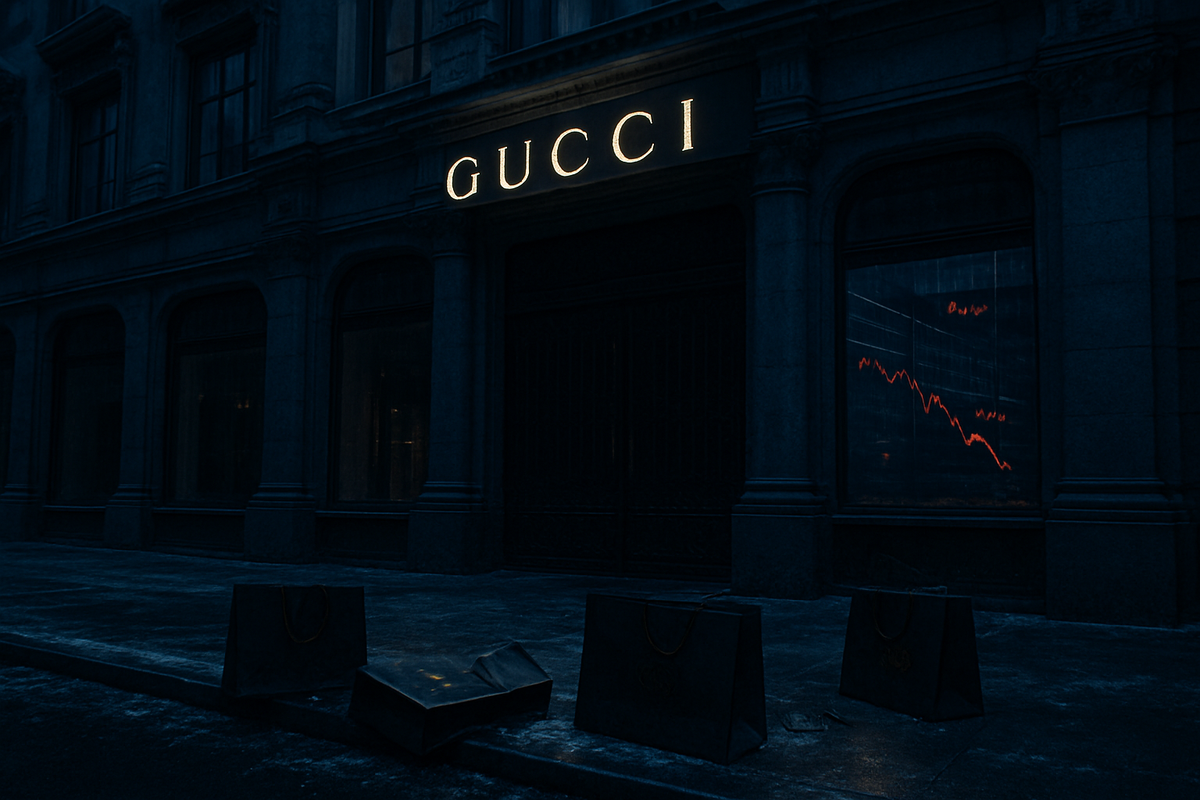
The early weeks of 2026 have delivered a seismic shock to the high-end retail sector, as the long-feared “Debt Wall” finally claimed its most prestigious victims. On January 13, 2026, Saks Global—the powerhouse formed by the ambitious merger of Saks Fifth Avenue, Neiman Marcus, and Bergdorf Goodman—filed for Chapter 11 bankruptcy protection. The filing followed a missed $100 million debt payment in December 2025, sending ripples through the global luxury market and signaling the end of an era for the traditional multi-brand department store model.
This collapse is not an isolated incident but the centerpiece of a broader wave of retail bankruptcies characterizing the first quarter of 2026. As high interest rates persist and luxury consumers shift their spending from physical goods to high-end experiences, the leveraged buyouts that defined the early 2020s have turned into financial traps. For the industry, the Saks Global filing represents more than just a restructuring; it is a forced evolution that is rewriting the rules of high-end commerce.
The Anatomy of a High-Fashion Failure
The downfall of Saks Global was set in motion shortly after the $2.7 billion acquisition of the Neiman Marcus Group in late 2024. While the merger was intended to create a consolidated luxury titan capable of rivaling European giants, it instead burdened the combined entity with a staggering $4.7 billion debt load. Throughout 2025, the company struggled with a "vicious spiral" of liquidity issues. By the third quarter, Saks Global began extending vendor payment terms to 40 days or more, leading to a catastrophic breakdown in relationships with the world’s most powerful fashion houses.
Major luxury conglomerates, including LVMH (OTC:LVMUY) and Kering (PAR:KER), reportedly began withholding inventory as unpaid invoices mounted. Chanel (PVT:CHNL) alone was cited in bankruptcy filings as being owed approximately $136 million. The result was a visible decline in the shopping experience: flagship stores in Manhattan and Beverly Hills faced "empty shelf" syndromes, driving away the very ultra-wealthy clientele the brand relied upon. Amazon (NASDAQ: AMZN), which held a 23% stake in the venture, has since characterized its investment as "presumptively worthless" during early court proceedings, citing gross financial mismanagement.
The timeline leading to the January filing was marked by desperate attempts to offload assets. Throughout 2025, Saks Global shuttered several underperforming Neiman Marcus locations and attempted to pivot to a digital-first strategy. However, the costs of maintaining sprawling real estate in an environment of declining foot traffic proved insurmountable. When the Federal Reserve maintained interest rates in late 2025 despite slowing inflation, the floating-rate debt held by Saks Global became a terminal illness, leading directly to the Chapter 11 petition filed in the Southern District of New York.
Winners and Losers in the Luxury Shakeout
In the wake of the Saks Global collapse, a clear divergence is emerging between "resilient" retailers and those caught in the debt trap. Nordstrom (NYSE: JWN) has emerged as a primary beneficiary of its rival's distress. With a significantly healthier balance sheet and a successful pivot toward its off-price division, Nordstrom Rack, the company has seen its stock rise 12% since the start of 2026. Analysts believe Nordstrom is successfully capturing "aspirational" shoppers who are fleeing the instability of Saks and Neiman Marcus, as well as high-end brands seeking more stable wholesale partners.
Conversely, the "losers" extend beyond the bankrupt entities themselves. Real estate investment trusts (REITs) with heavy exposure to luxury malls are facing a crisis of occupancy. Meanwhile, Macy’s (NYSE: M) finds itself in a precarious middle ground. While Macy’s has avoided bankruptcy thus far, it is currently in the midst of its "Bold New Chapter" restructuring, closing 14 more stores in early 2026. However, its luxury banner Bloomingdale’s remains a "green shoot" in its portfolio, benefiting from a flight to quality as Saks Global falters.
The most significant losers may be the small-to-mid-sized luxury brands that relied on Saks and Neiman Marcus for a majority of their U.S. distribution. With hundreds of millions in collective vendor debt now subject to bankruptcy court clawbacks and restructuring, many independent designers are facing their own liquidity crises. For these brands, the collapse of the "middleman" represents an existential threat to their wholesale-dependent business models.
A Structural Shift: The Rise of DTC and the 2026 Debt Wall
The crisis facing luxury department stores is a symptom of a much larger industry trend: the aggressive shift toward Direct-to-Consumer (DTC) models. For years, brands like Gucci and Louis Vuitton have been reducing their reliance on wholesale partners in favor of their own boutiques and e-commerce platforms. This allows brands to control their pricing, data, and brand image more tightly. The bankruptcy of Saks Global has only accelerated this trend, as fashion houses now view multi-brand retailers as a credit risk rather than a growth opportunity.
Furthermore, the "2026 Debt Wall" has proven to be a defining macroeconomic event for the retail sector. Many companies that survived the 2020 pandemic by taking on low-interest government-backed loans or private credit found themselves needing to refinance in 2025 and 2026 at triple the interest cost. This "Zombie Company" cull was predicted by economists, but the scale of the Saks Global failure has exceeded expectations. It serves as a stark reminder that in a high-interest-rate environment, luxury status is no protection against poor capital structure.
Historically, this event draws comparisons to the 2020 bankruptcy of Lord & Taylor or the 2019 collapse of Barneys New York. However, the Saks Global filing is larger in scope and suggests that the "department store" format itself—once the cornerstone of American luxury—may no longer be viable in its current form. Regulatory scrutiny is also expected to increase, with the FTC likely to look closer at future retail mergers to prevent the creation of "too big to fail" entities that leave vendors and landlords vulnerable.
The Road Ahead: Restructuring and Reinvention
In the short term, Saks Global will focus on a radical downsizing. The company has already announced the closure of the majority of its off-price locations, including Saks OFF 5TH and Neiman Marcus Last Call, to preserve cash for its full-price flagship operations. The goal is to emerge as a leaner, "ultra-luxury" entity that caters exclusively to the top 1% of earners. This strategy requires a massive $1.75 billion in debtor-in-possession (DIP) financing, which the company is currently negotiating with a consortium of banks.
Long-term, the surviving players in the market must adapt or face a similar fate. We are likely to see a "retail-as-a-service" model where department stores act more like landlords to luxury brands, leasing out space for brand-managed boutiques rather than buying inventory upfront. This would mitigate the financial risk for the retailer while allowing brands to maintain control. Additionally, the integration of AI-driven personalized shopping experiences will be a requirement for any retailer hoping to justify the high overhead of physical locations.
Market opportunities may emerge for tech-integrated retailers that can bridge the gap between digital convenience and physical luxury. Companies like Nordstrom are already experimenting with smaller "service hubs" that focus on styling and returns rather than carrying massive amounts of stock. The 2026 bankruptcy wave is clearing the field of inefficient competitors, potentially leaving a more profitable landscape for the survivors who can successfully navigate the transition from a wholesale model to an experiential one.
Final Assessment: A Permanent Change in the Luxury Guard
The bankruptcy of Saks Global on January 13, 2026, marks a turning point for the American retail landscape. It is the culmination of years of over-leverage, shifting consumer habits, and a fundamental breakdown in the wholesale relationship. The "Retail Apocalypse" of the previous decade has matured into a sophisticated "Luxury Reset," where only those with the strongest balance sheets and the most direct relationships with consumers will survive.
As we move through the first half of 2026, investors should keep a close eye on vendor sentiment and inventory levels at remaining department stores. The ability of retailers like Nordstrom and Macy's to manage their debt while investing in the "Bloomingdale's-style" high-performance banners will be the primary indicator of their long-term health. The era of the multi-brand giant may be ending, but the demand for luxury remains; it is simply finding new, more direct ways to reach the consumer.
The fallout from this bankruptcy wave will likely dictate retail strategy for the next decade. For now, the "Gilded Age" of the department store is over, replaced by a leaner, more fragmented, and digitally-driven market where cash is king and the brand is the only thing that matters.
This content is intended for informational purposes only and is not financial advice.