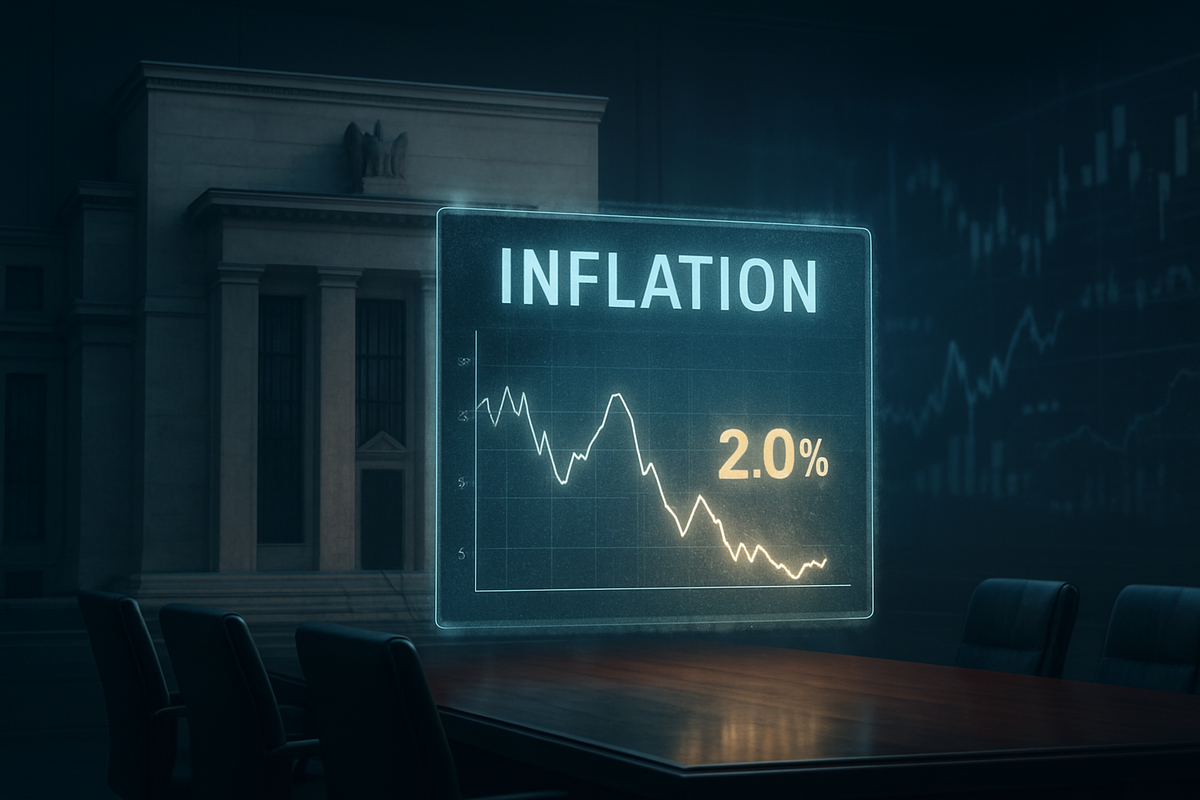
The Federal Reserve has effectively tapped the brakes on market expectations for an early spring rate cut, according to the minutes from the January 27-28 Federal Open Market Committee (FOMC) meeting released on February 18, 2026. While the central bank acknowledged that headline inflation has receded to 2.4% as of January, officials expressed a collective concern that the final descent to the 2% target remains "slower and more uneven than generally expected." This cautious stance has triggered a recalibration across global markets, as investors shift their focus toward a mid-year pivot.
The immediate implication of the minutes is a solidified "higher-for-longer" narrative that has sent ripples through the fixed-income market. Traders who were betting on a March or April easing have been forced to retreat, with CME FedWatch data now indicating a staggering 94% probability that rates will remain unchanged at the upcoming March 18 session. This pivot in sentiment reflects a Federal Reserve that is more concerned about the risk of cutting too early and reigniting price pressures than it is about the potential for a slight economic slowdown.
Detailed Coverage of the January FOMC Minutes
The release of the minutes on Wednesday afternoon provided a granular look at the internal debate within the Fed’s marble halls. Despite three rate cuts totaling 75 basis points in late 2025, the Committee appears to have reached a consensus that further easing must wait until "greater confidence" is achieved. The phrase "uneven" was used repeatedly to describe the disinflationary process, specifically highlighting "sticky" core services inflation and the lingering effects of trade tariffs on goods prices. For the first time in several quarters, the minutes even introduced the possibility of "upward adjustments" to the federal funds rate if progress stalls, a hawkish tilt that caught many off guard.
The timeline leading to this moment has been defined by a resilient U.S. consumer and a labor market that refuses to buckle under the weight of previous hikes. While December 2025 inflation sat at 2.7%, the January 2026 reading of 2.4% was seen by some as a victory, but the FOMC minutes clarified that "sustained demand pressures" are still a primary concern. Market reaction was swift; the S&P 500 (NYSE Arca: SPY), which had been flirting with the 7,000 level earlier in the day, pared its gains to close at 6,881.31, while the Nasdaq Composite struggled to maintain momentum despite strong performances from individual AI-related stocks.
Winners and Losers in a Persistent High-Rate Environment
In the wake of the Fed’s cautious outlook, the banking sector faces a complex reality. Large-cap institutions like JPMorgan Chase & Co. (NYSE: JPM) and Bank of America Corp. (NYSE: BAC) stand to benefit from sustained Net Interest Margins (NIM) as rates remain elevated. However, the minutes' mention of "two-sided risks" also raised the specter of increased credit defaults if the Fed is eventually forced into a surprise hike. For these financial giants, the "higher-for-longer" environment is a double-edged sword: it offers profitable lending spreads but increases the pressure on their loan portfolios as corporate and consumer debt costs stay high.
Conversely, the real estate sector and capital-intensive industries emerged as the primary losers of the day. Homebuilders such as Lennar Corp. (NYSE: LEN) and D.R. Horton Inc. (NYSE: DHI) saw their outlooks dimmed as the 10-year Treasury yield climbed to 4.08%. With mortgage rates likely to remain stuck in the 6.0% to 6.5% range for the foreseeable future, the "locked-in" effect on the housing market is expected to persist, deterring potential buyers and slowing transaction volumes. Similarly, high-growth technology firms that rely on future earnings saw their valuations discounted, though mega-cap leaders like NVIDIA Corp. (NASDAQ: NVDA) and Meta Platforms Inc. (NASDAQ: META) showed resilience due to their massive cash reserves and the ongoing artificial intelligence investment cycle.
Broader Significance and Historical Context
The Fed’s current stance marks a significant departure from the aggressive easing cycles seen in previous decades. By maintaining a hawkish pause, the FOMC is signaling a prioritize-inflation-first policy that mirrors the "Volcker-lite" approach of the early 1980s, albeit in a much more delicate economic environment. This "higher-for-longer" regime is a direct response to the fiscal stimulus and supply chain shocks of the mid-2020s, highlighting a structural shift in how the Fed manages the "neutral rate." The ripple effects are being felt most acutely in the fixed-income market, where a $16 billion sale of 20-year bonds on the day of the minutes' release saw surprisingly weak demand.
Regulatory and policy implications are also coming into focus. The Fed is navigating this "uneven" path while also preparing for a potential transition in leadership later in 2026. This transition adds a layer of political uncertainty to monetary policy, as the incoming Chair may have a different appetite for risk. Historically, such periods of "wait and see" by the Fed have often preceded significant market rotations, as investors move away from speculative "junk" debt and toward high-quality, cash-rich balance sheets that can weather a prolonged period without the crutch of cheap money.
The Path Forward: What to Watch Next
As we look toward the second quarter of 2026, the market’s gaze is fixed firmly on the June 16-17 FOMC meeting. The consensus has shifted from a total of four rate cuts in 2026 down to just one or two, likely starting in the summer. Strategic pivots will be required for institutional investors who had positioned for a more rapid easing cycle. Fixed-income portfolios may need to be de-risked or adjusted for a steeper yield curve, while equity investors will likely continue to favor "Mega-cap" tech as a safe haven, given their ability to generate high interest income on their billions in cash holdings.
The short-term challenge for the market will be the upcoming February CPI and PCE reports. Any evidence of a rebound in services inflation would likely push rate cut expectations even further into late 2026 or early 2027. We may see a period of consolidation in the indices as the "AI hype" meets the cold reality of restrictive monetary policy. Market participants should also keep a close eye on the commercial real estate (CRE) sector, which the minutes flagged as a persistent area of "immense strain" that could yet present a systemic risk to regional lenders.
Closing Thoughts on the Fed's "Uneven" Journey
The January FOMC minutes have served as a sobering reminder that the Federal Reserve is not yet ready to declare mission accomplished. The "uneven" path to 2% inflation means that the central bank is willing to tolerate a period of lower growth and higher borrowing costs to ensure that the inflation genie stays in the bottle. For investors, the takeaway is clear: the days of "easy money" are not returning anytime soon, and the mid-year pivot is the new battleground for market expectations.
Moving forward, the primary metric for success will not be headline growth, but the stabilization of core services inflation. Investors should watch for the March 18 meeting and any accompanying revisions to the "Dot Plot" of rate projections. As the narrative of 2026 shifts from "when will they cut" to "how long can they hold," quality and liquidity will remain the most valuable currencies in a market that is learning to live with the reality of 4% Treasury yields as the new normal.
This content is intended for informational purposes only and is not financial advice.