As of January 1, 2026, the global aluminum trade has entered a transformative new era. The European Union’s Carbon Border Adjustment Mechanism (CBAM) has officially transitioned from a three-year "transitional reporting phase" into its definitive "levy phase," effectively imposing the world’s first major carbon tax on imports. For the aluminum industry—one of the most energy-intensive sectors on the planet—this marks the end of voluntary ESG reporting and the beginning of a hard-coded financial reality where carbon intensity is as critical to the bottom line as the price of the metal itself.
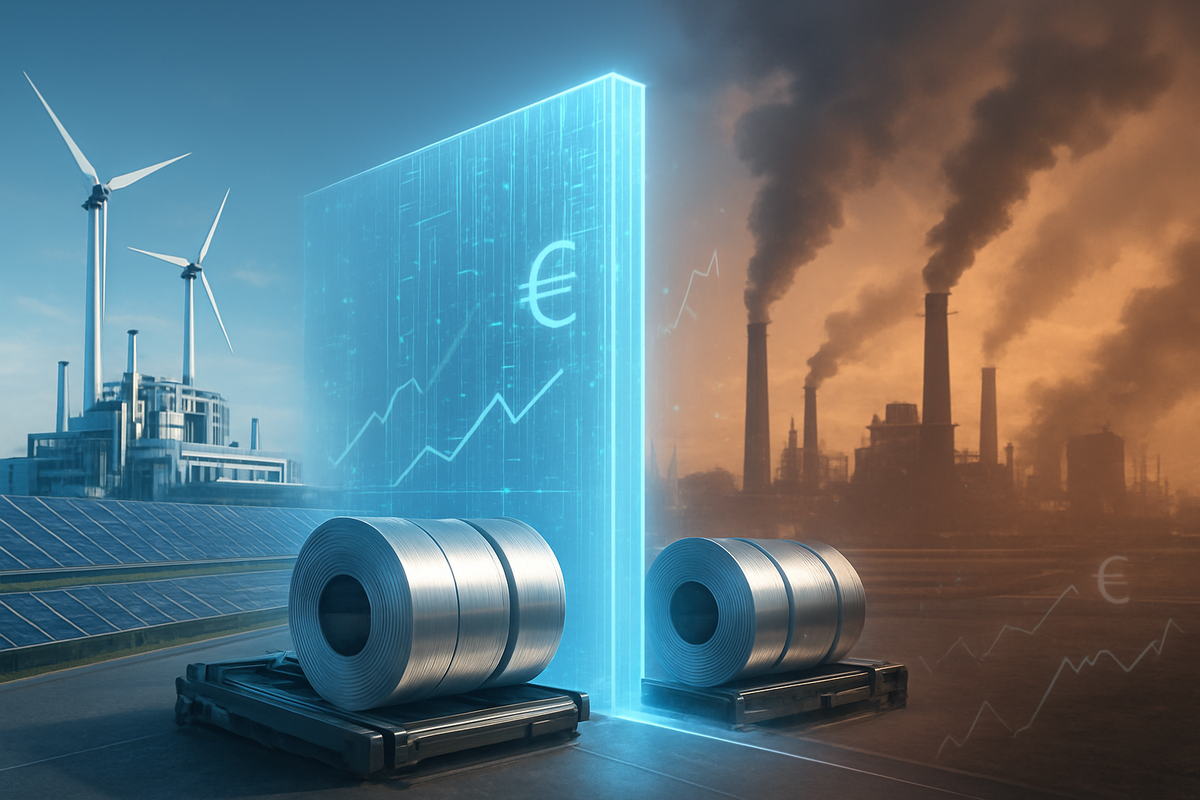
The immediate implications are already rippling through the London Metal Exchange (LME). Importers of primary aluminum into the EU are now required to purchase and surrender CBAM certificates, the price of which is pegged to the European Union Allowance (EUA) market. With carbon prices hovering between €80 and €85 per tonne of CO2e in early 2026, high-carbon producers from regions reliant on coal-fired power are facing sudden, steep surcharges that threaten to price them out of the European market entirely. Conversely, a "green premium" is rapidly solidifying, rewarding those who invested early in renewable energy and low-carbon smelting technologies.
The Shift from Data to Dollars: The 2026 Deadline
The journey to this moment began in October 2023, when the EU first required importers to report the embedded emissions of goods like steel, cement, and aluminum. After two years of data collection and administrative dry runs, the mechanism became legally binding on January 1, 2026. Under the current rules, "Authorized CBAM Declarants" must now account for every tonne of carbon emitted during the production of their imported goods. While the full weight of the tax is being phased in alongside the gradual reduction of free allowances for domestic EU producers—with a 2026 "CBAM factor" set at 97.5%—the financial burden is already significant.
The current system requires that the first annual declaration and surrender of certificates for 2026 emissions be finalized by September 30, 2027. However, the market is not waiting for the deadline. Financial instruments tied to CBAM compliance are already being traded, and third-party verification of emissions data has become a mandatory hurdle for any company wishing to avoid "punitive" default values set by the European Commission. These default values are intentionally high, designed to penalize companies that lack transparent supply chains, thereby forcing a global standard for emissions tracking.
Key players in this transition include the European Commission and major trade bodies like European Aluminium, which has spent years lobbying for a mechanism that prevents "carbon leakage"—the relocation of production to countries with laxer environmental rules. The reaction from global markets has been a mix of strategic pivoting and legal posturing. While some nations have threatened WTO challenges, the EU has maintained that the mechanism is non-discriminatory, as it mirrors the costs already borne by domestic European smelters under the Emissions Trading System (ETS).
Winners and Losers in a Carbon-Priced World
The implementation of CBAM has created a sharp divide between "green" and "grey" aluminum producers. Among the primary beneficiaries is Norsk Hydro ASA (OTCMKTS: NHYDY), which operates a vast portfolio of hydro-powered smelters in Norway. By early 2026, Norsk Hydro has doubled down on its Circal brand, which contains at least 75% post-consumer scrap. Because post-consumer scrap currently carries a near-zero emission rating under CBAM, Norsk Hydro is effectively able to bypass the bulk of the new levy, providing them a massive competitive edge over importers using primary metal from coal-heavy grids.
Alcoa Corporation (NYSE: AA) is also emerging as a strategic winner. In early 2026, Alcoa executives projected a net positive impact of roughly $10 per metric ton due to the rising "Rotterdam premium"—the regional surcharge for aluminum in Europe—outpacing their own carbon compliance costs. Alcoa's early investment in the ELYSIS joint venture, which aims to eliminate all direct greenhouse gas emissions from the smelting process using inert anodes, has positioned the company as a future-proof supplier for a CBAM-regulated world. Similarly, Rio Tinto (NYSE: RIO) has pivoted aggressively toward the Atlantic basin, recently securing a renewable-powered supply chain in Brazil through a partnership with the Aluminum Corporation of China Limited (SEHK: 2600), also known as Chalco, to serve the European market.
The "losers" in this new regime are primarily producers in Russia, India, and parts of China that rely on captive coal power plants. For these companies, the CBAM levy could add upwards of €300 to €400 per tonne to the cost of their metal, a margin-crushing figure in a commodity business. Middle Eastern producers like Emirates Global Aluminium (EGA) are in a middle ground; while they traditionally relied on natural gas, their rapid expansion into solar-powered "CelestiAL" aluminum is a direct attempt to mitigate the 2026 CBAM impact. Smaller, high-cost producers like Century Aluminum Company (NASDAQ: CENX) may face increased pressure if they cannot secure verified low-carbon energy sources for their global operations.
A Blueprint for Global Trade Decarbonization
The significance of CBAM extends far beyond the aluminum sector; it represents a fundamental shift in how international trade and environmental policy intersect. By placing a price on the carbon content of imports, the EU is effectively exporting its climate ambitions. We are seeing a "ripple effect" where other jurisdictions, including the United Kingdom and potentially the United States, are considering similar border adjustments to protect their own decarbonizing industries. This is no longer just a European regulation; it is the blueprint for a new global trade architecture.
Historically, commodities were priced based on purity and location. In 2026, "carbon provenance" has become the third pillar of pricing. This trend is forcing competitors and partners to integrate carbon accounting into their ERP systems. For example, global logistics and commodity giants like Glencore PLC (LSE: GLEN) have had to overhaul their trading desks to include "carbon analysts" who calculate the real-time CBAM liability of every vessel heading toward Rotterdam or Antwerp.
Furthermore, the 2026 rollout has highlighted the "Scrap Loophole" and "Resource Shuffling" as major policy challenges. To prevent companies from simply rerouting their clean power to Europe while using dirty power for other markets, the EU has introduced strict verification rules. The reclassification of pre-consumer scrap as a standalone product in January 2026 was a direct response to industry fears that primary metal was being "laundered" as scrap to evade the tax. This regulatory cat-and-mouse game will likely define trade policy for the next decade.
The Road Ahead: 2027 and the Indirect Emissions Question
While the 2026 levy currently focuses on direct emissions (Scope 1), the industry is already bracing for the next phase of the "Carbon Wall." The European Commission is scheduled to review the inclusion of indirect emissions—the CO2 generated by the electricity used to power smelters—as early as 2027. If indirect emissions are included, the cost for producers in coal-reliant regions will skyrocket even further, potentially leading to a total realignment of the global aluminum supply chain toward regions with abundant geothermal, hydro, or nuclear power.
In the short term, expect a surge in "green premiums" as European automotive and packaging companies scramble to secure verified low-carbon aluminum to meet their own 2030 net-zero targets. This will likely lead to a bifurcation of the market: a high-priced, "clean" market for Europe and a lower-priced, "dirty" market for regions without carbon border taxes. Strategic pivots are already underway, with companies like Rio Tinto exploring the first new primary aluminum smelters in Europe in decades—such as the Arctial project in Finland—specifically designed to take advantage of the CBAM-protected price environment.
Market Outlook and Investor Takeaways
The full implementation of CBAM in 2026 is a watershed moment for the financial markets. It has transformed carbon from a secondary ESG metric into a primary cost of goods sold. For investors, the takeaway is clear: the valuation of aluminum companies is now intrinsically linked to their energy source. Companies with "stranded assets" powered by coal face a precarious future, while those with access to renewable baseload power are sitting on a newfound competitive advantage.
Moving forward, the market will be watching the September 2027 surrender deadline closely to see how effectively the EU can enforce these rules against non-EU entities. Investors should also monitor the price of EUAs; as the carbon price rises, the "CBAM moat" for low-carbon producers widens. The era of cheap, carbon-intensive commodities is over in Europe, and the rest of the world may not be far behind. Watch for a flurry of M&A activity as "grey" producers look to acquire "green" assets to blend down their carbon profiles before the 2027 indirect emissions review.
This content is intended for informational purposes only and is not financial advice.