[ one to two paragraphs describing the current event and its immediate implications ]
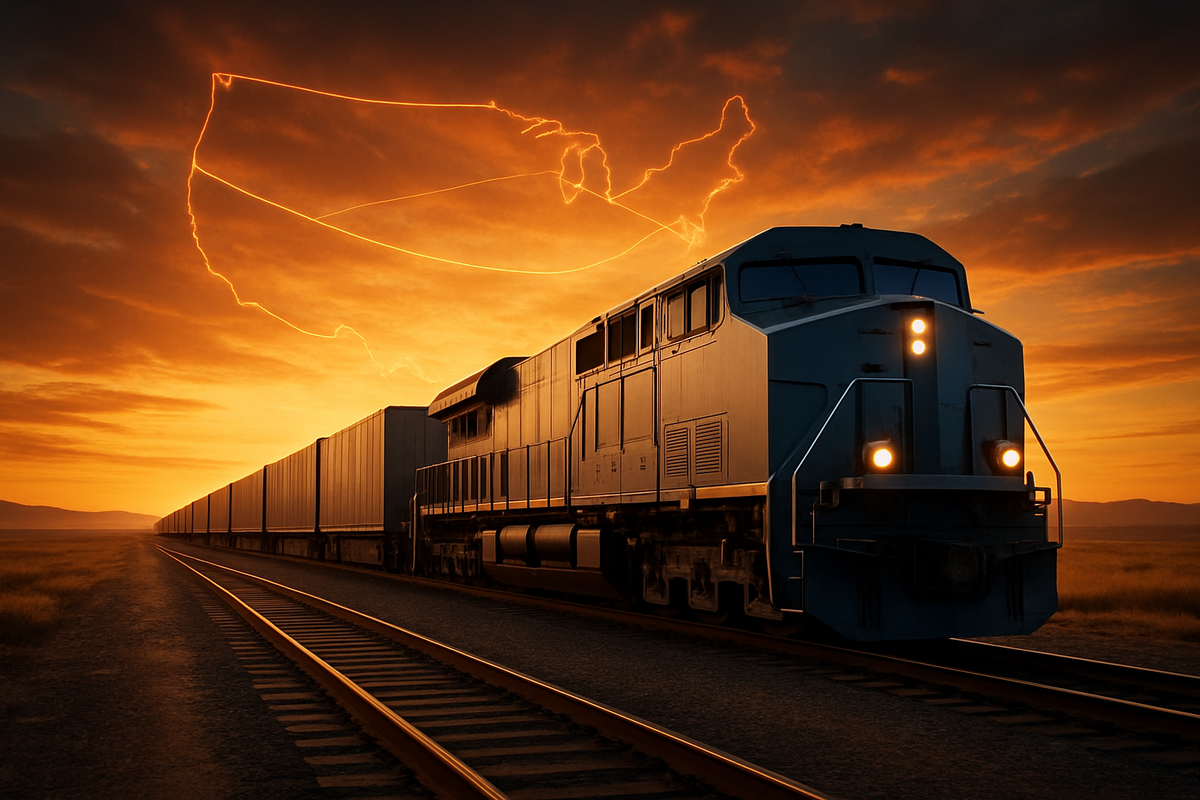
The American industrial landscape is currently witnessing its most significant upheaval in decades as Union Pacific (NYSE: UNP) continues its aggressive $85 billion pursuit of Norfolk Southern (NYSE: NSC). This historic bid, which aims to create the first truly transcontinental railroad in the United States, has sent shockwaves through the freight industry and the broader M&A market in early 2026. If successful, the merger would consolidate nearly half of the nation’s rail freight under a single banner, linking the Pacific Coast directly to the Atlantic Seaboard and effectively ending the era of the "Chicago Interchange."
However, the path to a unified rail giant is fraught with regulatory and political peril. As of early February 2026, the deal sits at a critical crossroads following a major setback from federal regulators. The immediate implications are profound: transportation costs for agricultural and industrial shippers are under intense scrutiny, while investors are bracing for a protracted legal battle that will test the limits of the Surface Transportation Board’s (STB) "Major Merger Rules."
The Genesis of a $85 Billion Gamble
The current saga began in earnest on July 29, 2025, when Union Pacific CEO Jim Vena surprised the market with a formal offer to acquire Norfolk Southern. The bid, valued at approximately $85 billion, was structured as a combination of one share of UNP stock plus roughly $89 in cash for every share of NSC. This represented a substantial premium over Norfolk Southern's market value, which had only recently begun to stabilize following the resolution of liabilities related to the 2023 East Palestine derailment. Leading up to this moment, Norfolk Southern had undergone a significant leadership transition, with Mark George taking the helm as CEO and implementing a rigorous productivity program that made the railroad a more attractive—and more efficient—acquisition target.
The timeline took a dramatic turn just weeks ago, in January 2026, when the Surface Transportation Board, led by Chairman Patrick Fuchs, formally rejected the initial merger application. The STB labeled the filing "incomplete," citing a lack of granular data regarding competitive impacts and market-share shifts across the 43 states where the combined entity would operate. This regulatory "yellow flag" has forced Union Pacific back to the drawing board, even as the company maintains that a single-line service would provide the efficiency needed to compete with the long-haul trucking industry.
Initial market reactions have been a volatile mix of optimism and skepticism. While Norfolk Southern’s stock price surged on the initial bid, it has since settled into a "merger-arb" pattern, trading at a discount to the offer price as the reality of a multi-year regulatory review sets in. Large institutional investors are largely supportive of the cost-saving synergies—estimated at $2.5 billion annually—but shipping advocacy groups and labor unions have voiced fierce opposition, fearing job cuts and reduced service frequency in smaller rural markets.
Winners, Losers, and the Battle for the Rails
In the high-stakes game of rail consolidation, the winners and losers extend far beyond the two primary parties. Union Pacific stands to win by finally bridging the East-West divide, gaining direct access to the lucrative mid-Atlantic ports and eliminating the delays associated with handing off freight to Eastern carriers. Norfolk Southern shareholders, meanwhile, are looking at a massive payday that values the company far above its historical trading multiples. Logistics technology firms and specialized rail-leasing companies are also expected to see a boost, as the combined entity would likely invest heavily in automation to justify the deal's high price tag.
Conversely, the potential losers are headed by CSX (NASDAQ: CSX), Norfolk Southern’s primary rival in the East. A combined UP-NS would possess a dominant competitive advantage, leaving CSX as the smaller, isolated Eastern player in a market dominated by a transcontinental behemoth. Similarly, Canadian Pacific Kansas City (NYSE: CP), which recently completed its own merger to connect Canada, the U.S., and Mexico, would find itself competing against a much larger domestic rival with deeper pockets and more extensive terminal access.
Beyond the carriers, the most vulnerable stakeholders are the "captive shippers"—manufacturers and farmers in regions where only one railroad provides service. Trade groups representing the chemical and agricultural sectors have already filed petitions with the STB, arguing that this merger would lead to higher freight rates and decreased service reliability. Furthermore, Berkshire Hathaway (NYSE: BRK.B), which owns BNSF Railway, faces a strategic dilemma: either stand by as its chief rival doubles in size or look for its own massive acquisition to maintain parity in the Western U.S.
A New Era of M&A and Regulatory Scrutiny
This event is not merely a corporate takeover; it is a fundamental shift that aligns with the broader industry trend of "precision scheduled railroading" (PSR) and the push for continental-scale logistics. Since the 2001 Major Merger Rules were established, the STB has maintained a high bar, requiring that any rail merger must not only preserve competition but enhance it. The Union Pacific bid is the first true test of this "enhanced competition" standard for a Class I merger of this magnitude. If approved, it would likely trigger a final round of industry-wide consolidation, potentially leaving the U.S. with just two or three massive rail systems.
The ripple effects are also being felt in the political sphere. A bipartisan group of nearly 50 House members has already urged a "rigorous and skeptical" review of the deal, reflecting a growing national concern over corporate concentration in critical infrastructure. Historically, this mirrors the intense scrutiny surrounding the failed merger between Burlington Northern and Santa Fe in the mid-1990s, though the current technological landscape—including the rise of autonomous trucking and green energy transport—provides a different economic context for the UP-NS argument.
Furthermore, the 2026 M&A landscape is uniquely positioned to support such a megadeal. With a series of Federal Reserve rate cuts throughout 2025 lowering the cost of capital, "jumbo" acquisitions that were sidelined during the high-interest era of 2023-2024 are now returning to the boardroom. The $85 billion bid serves as a bellwether for the industrial sector, signaling that large-cap companies are once again ready to use their balance sheets to secure long-term strategic dominance.
The Road Ahead: Integration or Interruption?
Looking ahead, the next six to twelve months will be dominated by Union Pacific’s revised filing with the STB. Industry analysts expect the company to offer significant concessions, potentially including "trackage rights" that would allow competitors like CSX or BNSF to use certain UP-NS lines to maintain competitive balance in the Midwest. These negotiations will be grueling, and any "strategic pivot" by Union Pacific will need to balance the demands of federal regulators with the expectations of shareholders who are already wary of the deal's premium price.
In the long term, if the merger is blocked, both railroads will need to find new ways to drive growth in a maturing market. Union Pacific might turn its attention toward intermodal technology and port infrastructure, while Norfolk Southern would likely continue its push for operational efficiency to prove it can thrive as a standalone entity. However, the most likely scenario involves a "conditional approval" late in 2026 or early 2027, which would require the combined company to sell off certain assets or guarantee fixed rates for certain types of commodities.
Market opportunities will emerge for tech companies providing the software needed to integrate these two massive, disparate networks. Integrating the "IT backbone" of two Class I railroads is a Herculean task that has historically led to service disruptions. Investors will be watching closely for any signs of "merger indigestion"—the operational hiccups that often follow such massive consolidations—while also looking for potential "bolt-on" acquisitions by the new rail giant in the logistics and drayage space.
Conclusion: Watching the Tracks in 2026
The Union Pacific-Norfolk Southern bid represents a watershed moment for American capitalism in 2026. It is a bold gamble that single-line efficiency can outweigh the traditional fears of monopolistic power. The key takeaway for the market is that the era of the "regional" Class I railroad may be coming to an end, replaced by a vision of a unified, continental logistics network that can compete with the flexibility of the trucking industry and the scale of international shipping lines.
Moving forward, the market remains in a state of "wait and see." The significance of this deal lies not just in the $85 billion price tag, but in its potential to permanently alter the movement of goods across North America. For investors, the coming months will require a close eye on STB filings and political rhetoric in Washington. The lasting impact of this bid will be measured by whether it results in a more efficient American supply chain or a more expensive one for the businesses and consumers who rely on it.
Investors should specifically watch for the "Phase 2" filing from Union Pacific expected in the second quarter of 2026. Any shifts in the deal structure, such as an increase in the cash component or the naming of specific divestitures, will provide the clearest signal yet of how likely this "Continental Colossus" is to become a reality.
This content is intended for informational purposes only and is not financial advice