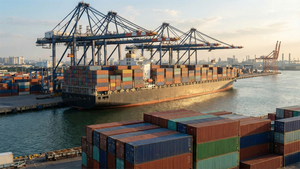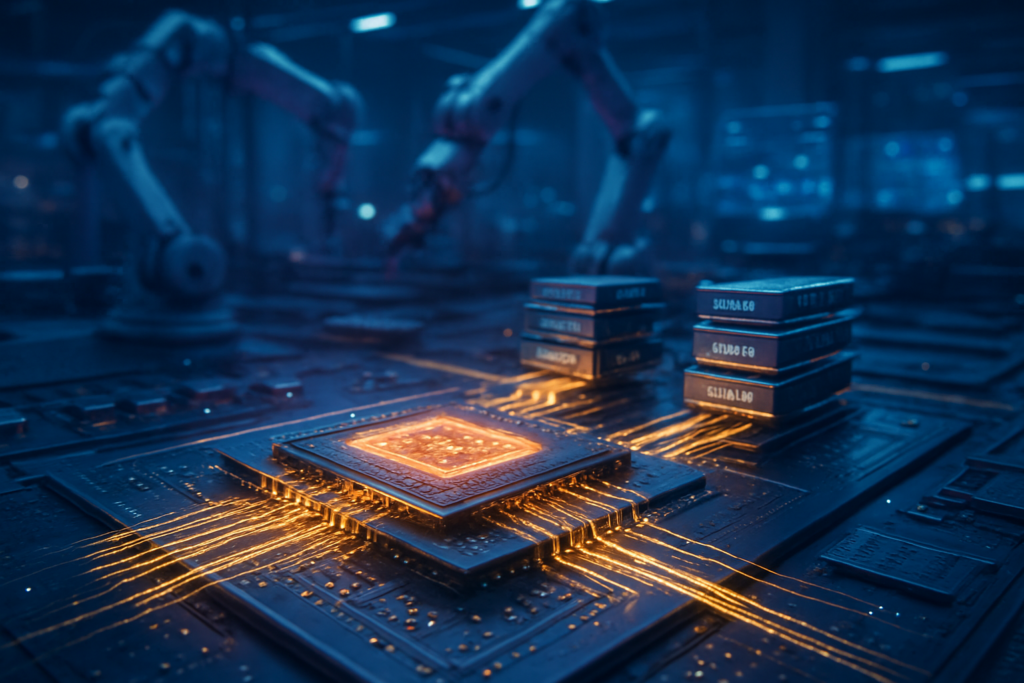
As of January 20, 2026, the artificial intelligence industry has reached a critical inflection point where the availability of cutting-edge silicon is no longer limited by the ability to print transistors, but by the physical capacity to assemble them. In a move that has sent shockwaves through the global supply chain, NVIDIA (NASDAQ: NVDA) has reportedly secured over 50% of the total advanced packaging capacity from Taiwan Semiconductor Manufacturing Co. (NYSE: TSM), effectively creating a "hard ceiling" for competitors and sovereign AI projects alike. This unprecedented booking of CoWoS (Chip-on-Wafer-on-Substrate) resources highlights a shift in the semiconductor power dynamic, where back-end integration has become the most valuable real estate in technology.
To combat this bottleneck and secure its own dominance in the memory sector, SK Hynix (KRX: 000660) has officially greenlit a 19 trillion won ($12.9 billion) investment in its P&T7 (Package & Test 7) back-end integration plant. This facility, located in Cheongju, South Korea, is designed to create a direct physical link between high-bandwidth memory (HBM) fabrication and advanced packaging. The crisis of 2026 is defined by this frantic race for "vertical integration," as the industry realizes that designing a world-class AI chip is meaningless if there is no facility equipped to package it.
The Technical Frontier: CoWoS-L and the HBM4 Integration Challenge
The current capacity crisis is driven by the extreme physical complexity of NVIDIA’s new Rubin (R100) architecture and the transition to HBM4 memory. Unlike previous generations, the 2026 class of AI accelerators utilizes CoWoS-L (Local Interconnect), a technology that uses silicon bridges to "stitch" together multiple dies into a single massive unit. This allows chips to exceed the traditional "reticle limit," effectively creating processors that are four to nine times the size of a standard semiconductor. These physically massive chips require specialized interposers and precision assembly that only a handful of facilities globally can provide.
Technical specifications for the 2026 standard have moved toward 12-layer and 16-layer HBM4 stacks, which feature a 2048-bit interface—double the bandwidth of the HBM3E standard used just eighteen months ago. To manage the thermal density and height of these 16-high stacks, the industry is transitioning to "hybrid bonding," a bumpless interconnection method that allows for much tighter vertical integration. Initial reactions from the AI research community suggest that while these advancements offer a 3x leap in training efficiency, the manufacturing yield for such complex "chiplet" designs remains volatile, further tightening the available supply.
The Competitive Landscape: A Zero-Sum Game for Advanced Silicon
NVIDIA’s aggressive "anchor tenant" strategy at TSMC has left its rivals, including Advanced Micro Devices (NASDAQ: AMD) and Broadcom (NASDAQ: AVGO), scrambling for the remaining 40-50% of advanced packaging capacity. Reports indicate that NVIDIA has reserved between 800,000 and 850,000 wafers for 2026 to support its Blackwell Ultra and Rubin R100 ramps. This dominance has extended lead times for non-NVIDIA AI accelerators to over nine months, forcing many enterprise customers and cloud providers to double down on NVIDIA’s ecosystem simply because it is the only hardware with a predictable delivery window.
The strategic advantage for SK Hynix lies in its P&T7 initiative, which aims to bypass external bottlenecks by integrating the entire back-end process. By placing the P&T7 plant adjacent to its M15X DRAM fab, SK Hynix can move HBM4 wafers directly into packaging without the logistical risks of international shipping. This move is a direct challenge to the traditional Outsourced Semiconductor Assembly and Test (OSAT) model, represented by leaders like ASE Technology Holding (NYSE: ASX), which has already raised its 2026 pricing by up to 20% due to the supply-demand imbalance.
Beyond the Wafer: The Geopolitical and Economic Weight of Advanced Packaging
The 2026 packaging crisis marks a broader shift in the AI landscape, where "Packaging as the Product" has become the new industry mantra. In previous decades, back-end processing was viewed as a low-margin, commodity phase of production. Today, it is the primary determinant of a company's market cap. The ability to successfully yield a 3D-stacked AI module is now seen as a greater barrier to entry than the design of the chip itself. This has led to a "Sovereign AI" panic, as nations realized that owning a domestic fab is insufficient if the final assembly still relies on a handful of specialized plants in Taiwan or Korea.
The economic implications are immense. The cost of AI server deployments has surged, driven not by the price of raw silicon, but by the "AI premium" commanded by TSMC and SK Hynix for their packaging expertise. This has created a bifurcated market: tech giants like Google (NASDAQ: GOOGL) and Meta (NASDAQ: META) are accelerating their custom silicon (ASIC) projects to optimize for specific workloads, yet even these internal designs must compete for the same limited CoWoS capacity that NVIDIA has so masterfully cornered.
The Road to 2027: Glass Substrates and the Next Frontier
Looking ahead, experts predict that the 2026 crisis will force a radical shift in materials science. The industry is already eyeing 2027 for the mass adoption of glass substrates, which offer better structural integrity and thermal performance than the organic substrates currently causing yield issues. Companies are also exploring "liquid-to-the-chip" cooling as a mandatory requirement, as the power density of 16-layer 3D stacks begins to exceed the limits of traditional air and liquid-cooled data centers.
The near-term challenge remains the construction timeline for new facilities. While SK Hynix’s P&T7 plant is scheduled to break ground in April 2026, it will not reach full-scale operations until late 2027 or early 2028. This suggests that the "Great Squeeze" will persist for at least another 18 to 24 months, keeping AI hardware prices at record highs and favoring the established players who had the foresight to book capacity years in advance.
Conclusion: The Year Packaging Defined the AI Era
The advanced packaging crisis of 2026 has fundamentally rewritten the rules of the semiconductor industry. NVIDIA’s preemptive strike in securing half of the world’s CoWoS capacity has solidified its position at the top of the AI food chain, while SK Hynix’s $12.9 billion bet on the P&T7 plant signals the end of the era where memory and packaging were treated as separate entities.
The key takeaway for 2026 is that the bottleneck has moved from "how many chips can we design?" to "how many chips can we physically put together?" For investors and tech leaders, the metrics to watch in the coming months are no longer just node migrations (like 3nm to 2nm), but packaging yield rates and the square footage of cleanroom space dedicated to back-end integration. In the history of AI, 2026 will be remembered as the year the industry hit a physical wall—and the year the winners were those who built the biggest doors through it.
This content is intended for informational purposes only and represents analysis of current AI developments.
TokenRing AI delivers enterprise-grade solutions for multi-agent AI workflow orchestration, AI-powered development tools, and seamless remote collaboration platforms.
For more information, visit https://www.tokenring.ai/.