The January 2026 rollout of Amazon.com, Inc. (NASDAQ: AMZN) Ring’s "Familiar Faces" AI has transformed the American front porch into the front line of a heated legal and ethical battle. While marketed as a peak convenience feature—allowing homeowners to receive specific alerts like "Mom is at the door" rather than a generic motion notification—the technology has triggered a massive backlash from civil rights groups, federal regulators, and state legislatures. As of early 2026, the feature's aggressive cloud-based facial recognition has led to a fragmented map of American privacy, where a consumer's right to AI-powered security stops abruptly at the state line.
The immediate significance of the controversy lies in the "bystander consent" problem. Unlike traditional security systems that record video for later review, the Familiar Faces system actively scans every human face that enters its field of view in real-time to generate a digital "faceprint." This includes delivery drivers, neighbors walking dogs, and children playing on the sidewalk—none of whom have consented to having their biometric data processed by Amazon’s servers. The tension between a homeowner’s desire for security and a passerby’s right to biometric anonymity has reached a breaking point, prompting a federal probe and several high-profile state bans.
The Tech Behind the Tension: Cloud-Based Biometric Mapping
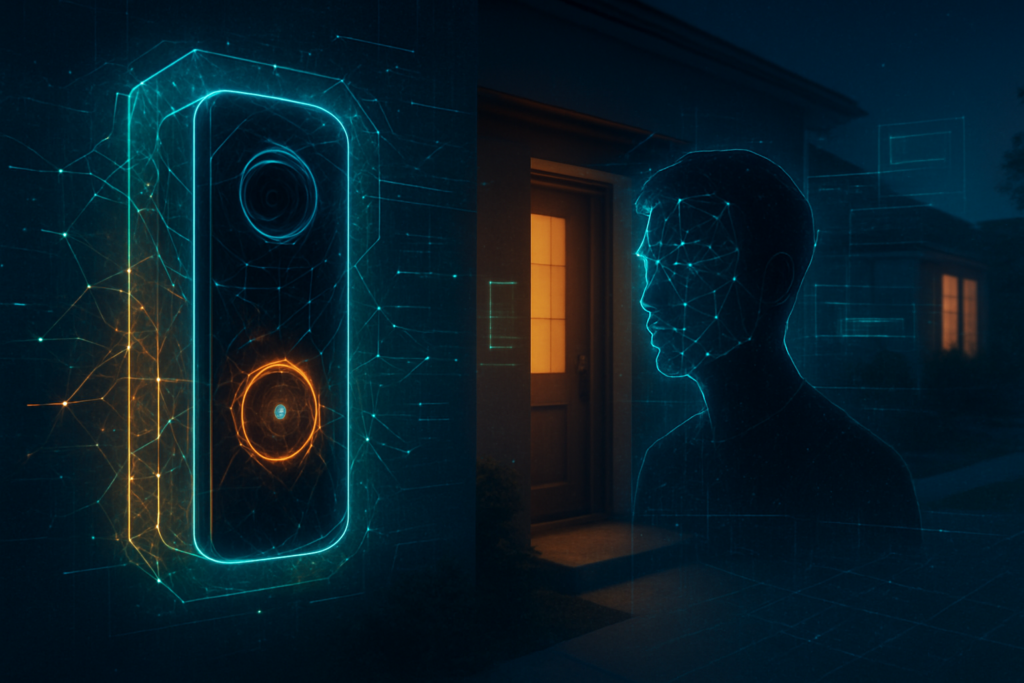
At its core, Ring’s "Familiar Faces" is an AI-driven enhancement for its flagship video doorbells and security cameras. Using cloud-based deep learning models, the system extracts a "faceprint"—a high-dimensional numerical representation of facial geometry—whenever a person is detected. Users can "tag" and name up to 50 specific individuals in a private library. Once tagged, the AI cross-references every subsequent visitor against this library, sending personalized push notifications to the user’s smartphone. While Amazon states the feature is disabled by default and requires a manual opt-in, the technical reality is that the camera must still scan and analyze the face of every person to determine if they are "familiar" or "unfamiliar."
This approach differs significantly from previous motion-sensing technologies, which relied on PIR (Passive Infrared) sensors or simple pixel-change detection to identify movement. While those older systems could distinguish a person from a swaying tree branch, they could not identify the identity of that person. Amazon’s shift to cloud-based facial recognition represents a move toward persistent, automated identity tracking. Initial reactions from the AI research community have been mixed; while many praise the high accuracy of the recognition models even in low-light conditions, others, such as researchers at the Electronic Frontier Foundation (EFF), warn that Amazon is effectively building a decentralized, national facial recognition database powered by private consumers.
To mitigate privacy concerns, Amazon has implemented a 30-day automatic purge of biometric data for any faces not explicitly tagged by the user. However, privacy advocates argue this is a half-measure. During a December 2025 Congressional probe led by Senator Ed Markey, experts testified that even if the biometric signature is deleted, the metadata—such as the time, frequency, and location of an "unidentified person's" appearance—remains, potentially allowing for the long-term tracking of individuals across different Ring-equipped neighborhoods.
Market Ripple Effects: The Rise of 'Edge AI' Competitors
The controversy surrounding Ring has created a significant opening for competitors, leading to a visible shift in the smart home market. Amazon’s primary rival in the premium segment, Alphabet Inc. (NASDAQ: GOOGL), has pivoted its Google Nest strategy toward "Generative AI for Home" via its Gemini models. Google’s approach focuses on natural language summaries of events (e.g., "The cat was let out at 2 PM") rather than persistent biometric tagging, attempting to distance itself from the "facial recognition" label while still providing high-level intelligence.
Meanwhile, Apple Inc. (NASDAQ: AAPL) has doubled down on its "privacy-first" branding. Apple’s HomeKit Secure Video handles facial recognition entirely on a local "Home Hub" (such as a HomePod or Apple TV), ensuring that biometric data never leaves the user’s home and is never accessible to Apple. This "Zero-Knowledge" architecture has become a major selling point in 2026, with Apple capturing a larger share of privacy-conscious power users who are migrating away from Amazon’s cloud-centric ecosystem.
The biggest winners in this controversy, however, have been "Edge AI" specialists like Eufy Security and Reolink. These companies have capitalized on "subscription fatigue" and privacy fears by offering cameras with on-device AI processing. Eufy’s BionicMind AI, for instance, performs all facial recognition locally on a dedicated home station. By early 2026, market data suggests that Amazon’s share of the smart camera market has slipped to approximately 26.9%, down from its 30% peak, as consumers increasingly opt for "local-only" AI solutions that promise no cloud footprint for their biometric data.
Wider Significance: The End of the 'Personal Use' Loophole?
The "Familiar Faces" controversy is about more than just doorbells; it represents a fundamental challenge to the "personal use" exemption in privacy law. Historically, laws like the Illinois Biometric Information Privacy Act (BIPA) and the Texas Capture or Use of Biometric Identifier (CUBI) Act have focused on how companies collect data from employees or customers. However, Amazon Ring places the AI tool in the hands of private citizens, who then use it to collect data on other private citizens. Amazon’s legal defense rests on the idea that the homeowner is the one collecting the data, while Amazon is merely a service provider.
This defense is being tested in real-time. Illinois has already blocked the feature entirely, citing BIPA’s requirement for prior written consent—a logistical impossibility for a doorbell scanning a delivery driver. In Texas, the feature remains blocked under similar restrictions. The "Delivery Driver Crisis" has become a central talking point for labor advocates, who argue that Amazon’s own drivers are being forced to undergo biometric surveillance by thousands of private cameras as a condition of their job, creating a "de facto" workplace surveillance system that bypasses labor laws.
The situation has drawn comparisons to the early 2010s debates over Google Glass, but with a more permanent and pervasive infrastructure. Unlike a wearable device that a person can choose to take off, Ring cameras are fixed elements of the urban and suburban landscape. Critics argue that the widespread adoption of this AI signifies a "surveillance creep," where technologies once reserved for high-security government installations are now normalized in residential cul-de-sacs, fundamentally altering the nature of public anonymity.
The Road Ahead: Federal Legislation and Non-Visual AI
As the legal battles in states like California and Washington intensify, experts predict a move toward federal intervention. A comprehensive federal privacy bill is expected to reach the House Committee on Energy and Commerce in the spring of 2026. This legislation could potentially override the current "patchwork" of state laws, either by setting a national standard for biometric consent or by carving out a permanent "residential security" exemption that would allow Amazon to resume its rollout nationwide.
In the near term, a new technological trend is emerging to bypass the facial recognition controversy: non-visual spatial AI. Companies like Aqara are gaining traction with mmWave radar sensors that can detect falls, track movement, and even monitor heart rates without ever using a camera lens. By moving away from visual identification, these "privacy-by-design" startups hope to provide the security benefits of AI without the biometric baggage.
Furthermore, the industry is watching the Federal Trade Commission (FTC) closely. Following a $5.8 million settlement in 2023 regarding Ring employees’ improper access to customer videos, the FTC has been monitoring Amazon’s AI practices under "algorithmic disgorgement" rules. If the FTC determines that Ring’s Familiar Faces models were trained on data collected without proper notice to bystanders, it could force Amazon to delete the underlying AI models—a move that would be a catastrophic setback for the company’s smart home ambitions.
Conclusion: A Turning Point for Residential AI
The controversy surrounding Amazon Ring’s "Familiar Faces" AI is a watershed moment for the consumer technology industry. It has forced a public reckoning over the limits of private surveillance and the ethics of cloud-based biometrics. The key takeaway from the early 2026 landscape is that "convenience" is no longer a sufficient justification for intrusive data collection in the eyes of a growing segment of the public and many state regulators.
As we move further into 2026, the success or failure of Ring’s AI will likely depend on whether Amazon can pivot to a more decentralized, "Edge-first" architecture similar to Apple or Eufy. The era of unchecked cloud-based biometric scanning appears to be closing, replaced by a more fragmented market where privacy is a premium feature. For now, the "Familiar Faces" saga serves as a reminder that in the age of AI, the most significant breakthroughs are often the ones that force us to redefine where our personal security ends and our neighbor's privacy begins.
This content is intended for informational purposes only and represents analysis of current AI developments.
TokenRing AI delivers enterprise-grade solutions for multi-agent AI workflow orchestration, AI-powered development tools, and seamless remote collaboration platforms.
For more information, visit https://www.tokenring.ai/.