The artificial intelligence landscape has been rocked this week by technical disclosures and leaked benchmark data surrounding the imminent release of DeepSeek V4. Developed by the Hangzhou-based DeepSeek lab, the upcoming 1-trillion parameter model represents a watershed moment for the industry, signaling a shift where Chinese algorithmic efficiency may finally outpace the sheer compute-driven brute force of Silicon Valley. Slated for a full release in mid-February 2026, DeepSeek V4 is specifically designed to dominate the "autonomous coding" sector, moving beyond simple snippet generation to manage entire software repositories with human-level reasoning.
The significance of this announcement cannot be overstated. For the past year, Anthropic’s Claude 3.5 Sonnet has been the gold standard for developers, but DeepSeek’s new Mixture-of-Experts (MoE) architecture threatens to render existing benchmarks obsolete. By achieving performance levels that rival or exceed upcoming U.S. flagship models at a fraction of the inference cost, DeepSeek V4 is forcing a global re-evaluation of the "compute moat" that major tech giants have spent billions to build.
A Masterclass in Sparse Engineering
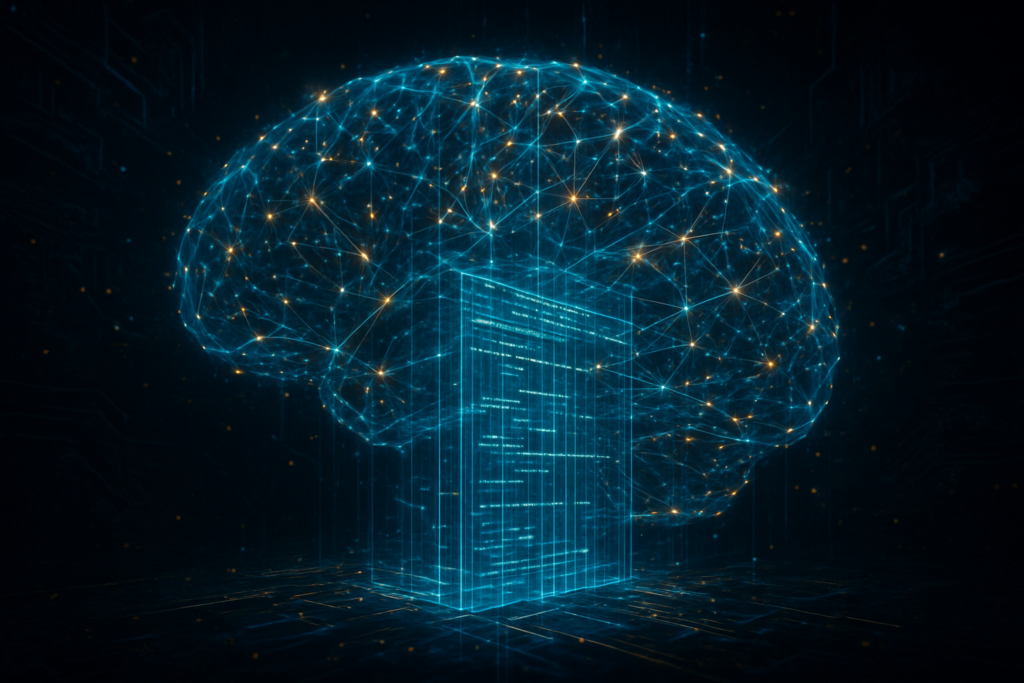
DeepSeek V4 is a technical marvel of sparse architecture, utilizing a massive 1-trillion parameter total count while only activating approximately 32 billion parameters for any given token. This "Top-16" routed MoE strategy allows the model to maintain the specialized knowledge of a titan-class system without the crippling latency or hardware requirements usually associated with models of this scale. Central to its breakthrough is the "Engram Conditional Memory" module, an O(1) lookup system that separates static factual recall from active reasoning. This allows the model to offload syntax and library knowledge to system RAM, preserving precious GPU VRAM for the complex logic required to solve multi-file software engineering tasks.
Further distinguishing itself from predecessors, V4 introduces Manifold-Constrained Hyper-Connections (mHC). This architectural innovation stabilizes the training of trillion-parameter systems, solving the performance plateaus that historically hindered large-scale models. When paired with DeepSeek Sparse Attention (DSA), the model supports a staggering 1-million-token context window—all while reducing computational overhead by 50% compared to standard Transformers. Early testers report that this allows V4 to ingest an entire medium-sized codebase, understand the intricate import-export relationships across dozens of files, and perform autonomous refactoring that previously required a senior human engineer.
Initial reactions from the AI research community have ranged from awe to strategic alarm. Experts note that on the SWE-bench Verified benchmark—a grueling test of a model’s ability to solve real-world GitHub issues—DeepSeek V4 has reportedly achieved a solve rate exceeding 80%. This puts it in direct competition with the most advanced private versions of Claude 4.5 and GPT-5, yet V4 is expected to be released with open weights, potentially democratizing "Frontier-class" intelligence for any developer with a high-end local workstation.
Disruption of the Silicon Valley "Compute Moat"
The arrival of DeepSeek V4 creates immediate pressure on the primary stakeholders of the current AI boom. For NVIDIA (NASDAQ: NVDA), the model’s extreme efficiency is a double-edged sword; while it demonstrates the power of their H200 and B200 hardware, it also proves that clever algorithmic scaffolding can reduce the need for the infinite GPU scaling previously preached by big-tech labs. Investors have already begun to react, as the "DeepSeek Shock" suggests that the next generation of AI dominance may be won through mathematics and architecture rather than just the number of chips in a cluster.
Cloud providers and model developers like Alphabet Inc. (NASDAQ: GOOGL), Microsoft (NASDAQ: MSFT), and Amazon (NASDAQ: AMZN)—the latter two having invested heavily in OpenAI and Anthropic respectively—now face a pricing crisis. DeepSeek V4 is projected to offer inference costs that are 10 to 40 times cheaper than its Western counterparts. For startups building AI "agents" that require millions of tokens to operate, the economic incentive to migrate to DeepSeek's API or self-host the V4 weights is becoming nearly impossible to ignore. This "Boomerang Effect" could see a massive migration of developer talent and capital away from closed-source U.S. ecosystems toward the more affordable, high-performance open-weights alternative.
The "Sputnik Moment" of the AI Era
In the broader context of the global AI race, DeepSeek V4 represents what many analysts are calling the "Sputnik Moment" for Chinese artificial intelligence. It proves that the gap between U.S. and Chinese capabilities has not only closed but that Chinese labs may be leading in the crucial area of "efficiency-first" AI. While the U.S. has focused on the $500 billion "Stargate Project" to build massive data centers, DeepSeek has focused on doing more with less, a strategy that is now bearing fruit as energy and chip constraints begin to bite worldwide.
This development also raises significant concerns regarding AI sovereignty and safety. With a 1-trillion parameter model capable of autonomous coding being released with open weights, the ability for non-state actors or smaller organizations to generate complex software—including potentially malicious code—increases exponentially. It mirrors the transition from the mainframe era to the PC era, where power shifted from those who owned the hardware to those who could best utilize the software. V4 effectively ends the era where "More GPUs = More Intelligence" was a guaranteed winning strategy.
The Horizon of Autonomous Engineering
Looking forward, the immediate impact of DeepSeek V4 will likely be felt in the explosion of "Agent Swarms." Because the model is so cost-effective, developers can now afford to run dozens of instances of V4 in parallel to tackle massive engineering projects, from legacy code migration to the automated creation of entire web ecosystems. We are likely to see a new breed of development tools that don't just suggest lines of code but operate as autonomous junior developers, capable of taking a feature request and returning a fully tested, multi-file pull request in minutes.
However, challenges remain. The specialized "Engram" memory system and the sparse architecture of V4 require new types of optimization in software stacks like PyTorch and CUDA. Experts predict that the next six months will see a "software-hardware reconciliation" phase, where the industry scrambles to update drivers and frameworks to support these trillion-parameter MoE models on consumer-grade and enterprise hardware alike. The focus of the "AI War" is officially shifting from the training phase to the deployment and orchestration phase.
A New Chapter in AI History
DeepSeek V4 is more than just a model update; it is a declaration that the era of Western-only AI leadership is over. By combining a 1-trillion parameter scale with innovative sparse engineering, DeepSeek has created a tool that challenges the coding supremacy of Claude 3.5 Sonnet and sets a new bar for what "open" AI can achieve. The primary takeaway for the industry is clear: efficiency is the new scaling law.
As we head into mid-February, the tech world will be watching for the official weight release and the inevitable surge in GitHub projects built on the V4 backbone. Whether this leads to a new era of global collaboration or triggers stricter export controls and "sovereign AI" barriers remains to be seen. What is certain, however, is that the benchmark for autonomous engineering has been fundamentally moved, and the race to catch up to DeepSeek's efficiency has only just begun.
This content is intended for informational purposes only and represents analysis of current AI developments.
TokenRing AI delivers enterprise-grade solutions for multi-agent AI workflow orchestration, AI-powered development tools, and seamless remote collaboration platforms.
For more information, visit https://www.tokenring.ai/.