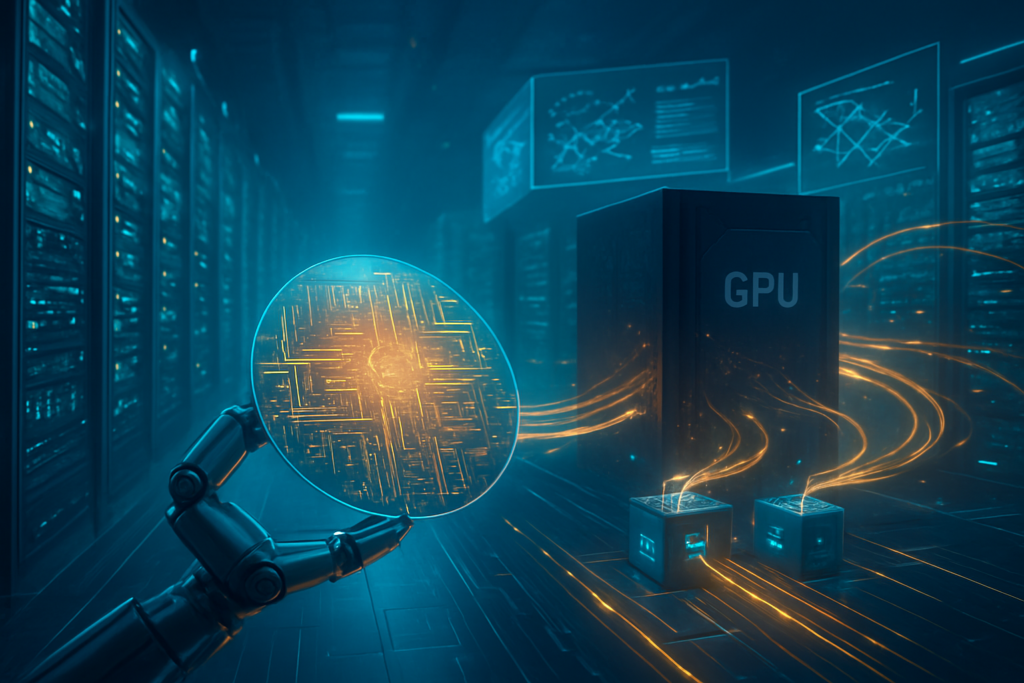
As of January 26, 2026, the artificial intelligence industry has reached a pivotal turning point in its infrastructure evolution. Microsoft (NASDAQ: MSFT) and Meta Platforms (NASDAQ: META) have officially transitioned from being NVIDIA’s (NASDAQ: NVDA) largest customers to its most formidable architectural rivals. With today's simultaneous milestones—the wide-scale deployment of Microsoft’s Maia 200 and Meta’s MTIA v3 "Santa Barbara" accelerator—the era of the "General Purpose GPU" dominance is being challenged by a new age of hyperscale custom silicon.
This shift represents more than just a search for cost savings; it is a fundamental restructuring of the AI value chain. By designing chips tailored specifically for their proprietary models—such as OpenAI’s GPT-5.2 and Meta’s Llama 5—these tech giants are effectively "clawing back" the massive 75% gross margins previously surrendered to NVIDIA. The immediate significance is clear: the bottleneck of AI development is shifting from hardware availability to architectural efficiency, allowing these firms to scale inference capabilities at a fraction of the traditional power and capital cost.
Technical Dominance: 3nm Precision and the Rise of the Maia 200
The technical specifications of the new hardware demonstrate a narrowing gap between custom ASICs and flagship GPUs. Microsoft’s Maia 200, which entered full-scale production today, is a marvel of engineering built on TSMC’s (NYSE: TSM) 3nm process node. Boasting 140 billion transistors and a massive 216GB of HBM3e memory, the Maia 200 is designed to handle the massive context windows of modern generative models. Unlike the general-purpose architecture of NVIDIA’s Blackwell series, the Maia 200 utilizes a custom "Maia AI Transport" (ATL) protocol, which leverages high-speed Ethernet to facilitate chip-to-chip communication, bypassing the need for expensive, proprietary InfiniBand networking.
Meanwhile, Meta’s MTIA v3, codenamed "Santa Barbara," marks the company's first successful foray into high-end training. While previous iterations of the Meta Training and Inference Accelerator (MTIA) were restricted to low-power recommendation ranking, the v3 architecture features a significantly higher Thermal Design Power (TDP) of over 180W and utilizes liquid cooling across 6,000 specialized racks. Developed in partnership with Broadcom (NASDAQ: AVGO), the Santa Barbara chip utilizes a RISC-V-based management core and specialized compute units optimized for the sparse matrix operations central to Meta’s social media ranking and generative AI workloads. This vertical integration allows Meta to achieve a reported 44% reduction in Total Cost of Ownership (TCO) compared to equivalent commercial GPU instances.
Market Disruption: Capturing the Margin and Neutralizing CUDA
The strategic advantages of this custom silicon "arms race" extend far beyond raw FLOPs. For Microsoft, the Maia 200 provides a critical hedge against supply chain volatility. By migrating a significant portion of OpenAI’s flagship production traffic—including the newly released GPT-5.2—to its internal silicon, Microsoft is no longer at the mercy of NVIDIA’s shipping schedules. This move forces a competitive recalibration for other cloud providers and AI labs; companies that lack the capital to design their own silicon may find themselves operating at a permanent 30-50% margin disadvantage compared to the hyperscale titans.
NVIDIA, while still the undisputed king of massive-scale training with its upcoming Rubin (R100) architecture, is facing a "hollowing out" of its lucrative inference market. Industry analysts note that as AI models mature, the ratio of inference (using the model) to training (building the model) is shifting toward a 10:1 spend. By capturing the inference market with Maia and MTIA, Microsoft and Meta are effectively neutralizing NVIDIA’s strongest competitive advantage: the CUDA software moat. Both companies have developed optimized SDKs and Triton-based backends that allow their internal developers to compile code directly for custom silicon, making the transition away from NVIDIA’s ecosystem nearly invisible to the end-user.
A New Frontier in the Global AI Landscape
This trend toward custom silicon is the logical conclusion of the "AI Gold Rush" that began in 2023. We are seeing a shift from the "brute force" era of AI, where more GPUs equaled more intelligence, to an "optimization" era where hardware and software are co-designed. This transition mirrors the early history of the smartphone industry, where Apple’s move to its own A-series and M-series silicon allowed it to outperform competitors who relied on off-the-shelf components. In the AI context, this means that the "Hyperscalers" are now effectively becoming "Vertical Integrators," controlling everything from the sub-atomic transistor design to the high-level user interface of the chatbot.
However, this shift also raises significant concerns regarding market concentration. As custom silicon becomes the "secret sauce" of AI efficiency, the barrier to entry for new startups becomes even higher. A new AI company cannot simply buy its way to parity by purchasing the same GPUs as everyone else; they must now compete against specialized hardware that is unavailable for purchase on the open market. This could lead to a two-tier AI economy: the "Silicon Haves" who own their data centers and chips, and the "Silicon Have-Nots" who must rent increasingly expensive generic compute.
The Horizon: Liquid Cooling and the 2nm Future
Looking ahead, the roadmap for custom silicon suggests even more radical departures from traditional computing. Experts predict that the next generation of chips, likely arriving in late 2026 or early 2027, will move toward 2nm gate-all-around (GAA) transistors. We are also expecting to see the first "System-on-a-Wafer" designs from hyperscalers, following the lead of startups like Cerebras, but at a much larger manufacturing scale. The integration of optical interconnects—using light instead of electricity to move data between chips—is the next major hurdle that Microsoft and Meta are reportedly investigating for their 2027 hardware cycles.
The challenges remain formidable. Designing custom silicon requires multi-billion dollar R&D investments and a high tolerance for failure. A single flaw in a chip’s architecture can result in a "bricked" generation of hardware, costing years of development time. Furthermore, as AI model architectures evolve from Transformers to new paradigms like State Space Models (SSMs), there is a risk that today's custom ASICs could become obsolete before they are even fully deployed.
Conclusion: The Year the Infrastructure Changed
The events of January 2026 mark the definitive end of the "NVIDIA-only" era of the data center. While NVIDIA remains a vital partner and the leader in extreme-scale training, the deployment of Maia 200 and MTIA v3 proves that the world's largest tech companies have successfully broken the monopoly on high-performance AI compute. This development is as significant to the history of AI as the release of the first transformer model; it provides the economic foundation upon which the next decade of AI scaling will be built.
In the coming months, the industry will be watching closely for the performance benchmarks of GPT-5.2 running on Maia 200 and the reliability of Meta’s liquid-cooled Santa Barbara clusters. If these custom chips deliver on their promise of 30-50% efficiency gains, the pressure on other tech giants like Google (NASDAQ: GOOGL) and Amazon (NASDAQ: AMZN) to accelerate their own TPU and Trainium programs will reach a fever pitch. The silicon wars have begun, and the prize is nothing less than the infrastructure of the future.
This content is intended for informational purposes only and represents analysis of current AI developments.
TokenRing AI delivers enterprise-grade solutions for multi-agent AI workflow orchestration, AI-powered development tools, and seamless remote collaboration platforms.
For more information, visit https://www.tokenring.ai/.