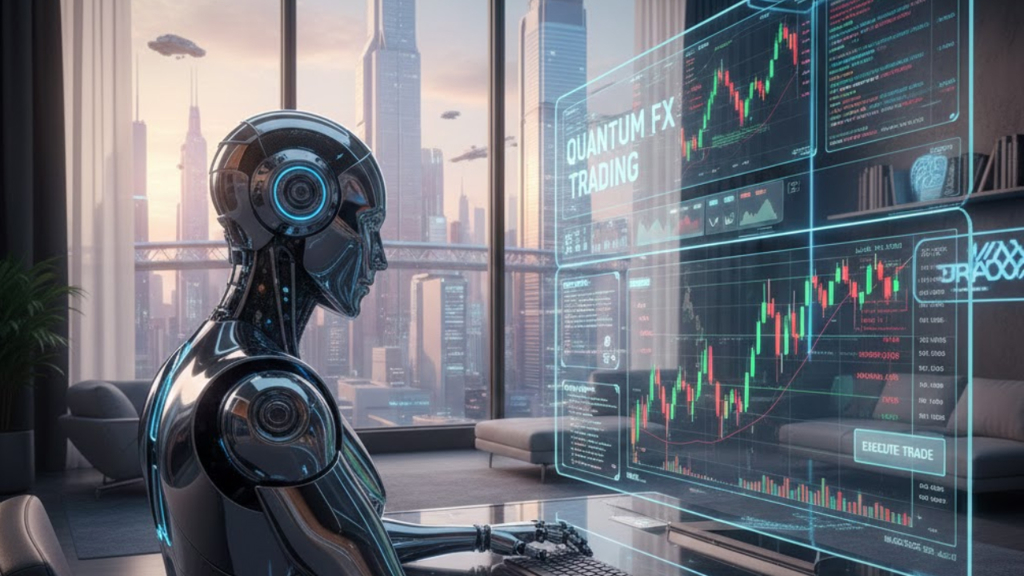
Forex trading is a huge market. Way bigger than most people might think. In fact – the market sees around $9 trillion a day traded five days a week, every week. Although the majority of people still trade manually, or with the help of guided systems, people are increasingly turning to automated trading systems or bots to do the hard work for them. In fact, estimates are a third of global forex trades are now placed automatically. To those new to the game this might sound like a money making machine. But is it really?
These automated systems can trade without emotion or sleep, and they can facilitate trades instantly without manual input or fear of slow responses or misclicking. However, they’re only as good as the inputs that made them and they do need some tweaking to keep up if there are dramatically changing market conditions. If not, when things go wrong they go can wrong but faster. Nevertheless, forex trading software has been a revolution for many traders and they can work wonders in some circumstances.
What these Systems Can and Can’t Do
Automated forex trading systems are not AI bots that replace the role of a trader. However, they are very good at being constantly online and monitoring market graphs to place trades at set conditions or times.
Waiting for some big news announcement to drop and you think you can get in before the market reacts, but it’s not in your time zone? Easy, just set up your forex auto trading software to make the trade at the time of the scheduled announcement.
The above is called trend watching, but other forex strategies can also make good use of automated software. Arbitrage – which is a lot harder to do today than it was – is basically only possible at scale using automated bots, as any trading platform pair discrepancies are usually fixed with milliseconds on the modern market. Scalping can also benefit from automation as it makes it infinitely easier to place dozens or even hundreds of small trades at once.
However, automated systems cannot react to market news before it hits currency prices. They can look at signals within forex graphs, but monitoring global geopolitical and economic events in real time is not something they can do (yet). Traders can combine automated platforms with generative AI research to quickly identify and parse significant news stories and then update their trading algorithm for the new conditions.
How Automated Systems Make Trading Decisions (An Overview)
Automated forex trading software is not (yet) AI-powered agents. Instead, traders or the software creators manually set up the software for certain tasks and conditions. The software has some ability to make its own decisions in set parameters – however these are all based on math, not judgements of external market factors.
The list of input parameters for a top trading bot will be extensive, but some of the options you’ll see regularly include:
- Price movements
- Stop-loss levels
- Take-profit level
- Currency pairs
- Risk limits
- Maximum open trades
- Position size
Traders can set their own values for any of these or set up a couple and let the bot deal with the rest. The best traders will make use of almost all options available, and regularly return to the automation system to tweak their choices.
Essentially, traders make the decisions and bots just execute them when pre-set market conditions or timings line up. Automated software can both open, close and manage hundreds of trades at once and they can run precisely 24 hours while markets are open.
Pros, Cons and What Makes Them Popular
The answer to why automated forex trading is popular is quite self explanatory. The promise of setting up a trading bot that can make passive income while the trader does other things with their time is something many people can’t ignore.
But the reality is, the set up takes some time and knowhow. A novice trader with a bot will just make the same mistakes but faster. However, for an experienced or professional trader automated systems can be huge.
On the plus side these trading systems are fantastic because:
- They trade far faster and infinitely longer than a human could do manually, which is essential for some strategies
- They don’t get tired and make bad judgements like impulse panic selling – they stick to the plan even if things look dicey
- They can multiple markets at once
- They never get the math wrong
On the flipside, trades have to be aware they are not automated money printers. Without a reasonable amount of monitoring and updating, automated trading systems can make bad trades if market conditions change and they’re not set up for it.
The reality is however, a lot of professional traders now use automated systems day in and day out. With up to a third or more of the trillions of dollars of daily global forex trades now automated, fully manual traders risk getting left behind.