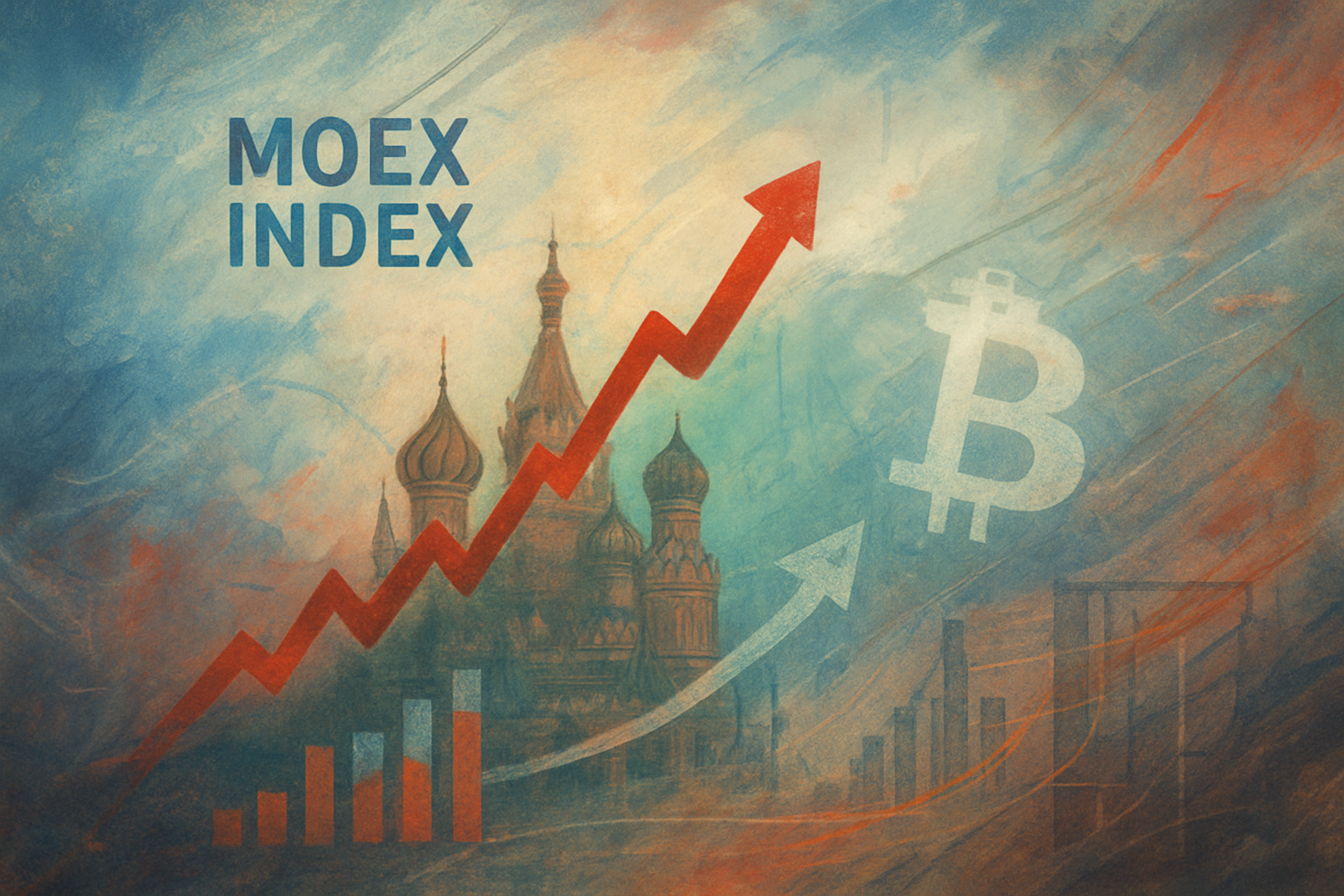
As December 2025 draws to a close, the Russian stock market, particularly the MOEX Index, presents a complex narrative of resilience and adaptation in the face of persistent geopolitical pressures and a fundamentally restructured economy. Despite a challenging year marked by international sanctions and a pivot to a war-driven economic model, the market has shown recent signs of recovery, offering a nuanced view of investor sentiment and the nation's economic fortitude. This performance carries significant implications for both domestic and international stakeholders, signaling a deepening divergence from global financial norms and a strategic reorientation towards new economic partnerships.
The immediate implications are multifaceted. While the MOEX Index has seen an uptick in recent weeks, suggesting a degree of investor confidence or perhaps a lack of viable alternatives for domestic capital, the underlying economic conditions remain fraught with challenges. High inflation, elevated interest rates, and ongoing labor shortages continue to exert pressure, indicating that the market's current stability may be more a reflection of internal dynamics and state support rather than a return to pre-sanction normalcy. The market's trajectory in late 2025 highlights Russia's ongoing efforts to insulate its financial system and foster self-sufficiency, but also underscores the long-term costs associated with its geopolitical stance.
Detailed Coverage: A Market Under Pressure Finds Its Footing
The Russian stock market has demonstrated a largely positive trend in December 2025, building on recent gains despite the intricate web of geopolitical complexities and internal economic factors. As of December 11, 2025, the MOEX Russia Index (IMOEX) climbed to 2752 points, marking a 1.17% gain from the previous session. This upward movement contributed to an 8.52% gain over the past month and a 10.42% increase compared to the same time last year, suggesting a cautious rebound after earlier pressures. However, it's crucial to note that the year-to-date performance for the MOEX Russia Index (IMOEX) still shows a return of -6.55%, contrasting with its all-time high of 4292.68 reached in October 2021.
The timeline leading up to this moment reveals a market continuously reacting to a dynamic environment. The index had previously fallen below 2,800 in September and tested year-to-date lows around 2,550 in October 2025, primarily due to a pessimistic outlook for the Russian economy, tightening sanctions, and increased scrutiny against major energy companies. The market's current stability in December reflects a period of adaptation, where domestic retail investors have become the dominant force, replacing the international capital that largely exited after 2022. This shift means that liquidity, rather than traditional valuation fundamentals, often drives price movements within the market.
Key players and stakeholders involved in this evolving landscape include the Central Bank of Russia (CBR), which has aggressively raised interest rates to combat inflation (reaching 21% in October 2024), and the Russian government, which continues to channel significant spending into the military-industrial complex. Major Russian companies such as Gazprom (MOEX: GAZP), Lukoil (MOEX: LKOH), and Sberbank (MOEX: SBER) remain central to the market's performance, with their share prices reflecting both the broader market sentiment and specific impacts of sanctions and global commodity prices. For instance, on December 11, 2025, Gazprom saw a 1.29% gain, while Lukoil increased by 1.14%.
Initial market reactions to these developments have been mixed. While the recent uptick in the MOEX Index suggests some investor optimism, particularly concerning potential de-escalation of tensions, the market remains susceptible to volatility. Reports of new sanctions or shifts in the Russia-Ukraine conflict negotiation process can quickly reverse gains. The EU's move to phase out Russian gas imports by 2027 also casts a long shadow over the energy sector, a critical component of the Russian economy and stock market.
Companies Navigating a Shifting Landscape: Winners and Losers
The current economic and geopolitical climate has created a distinct set of winners and losers within the Russian public company landscape. Companies aligned with government priorities, shielded from international sanctions, or capable of capitalizing on domestic demand and import substitution are generally better positioned to thrive. Conversely, those heavily exposed to Western markets, technology, or financial systems, or struggling with high domestic costs, face significant headwinds.
Likely Winners:
- Defense and Military-Industrial Complex Companies: With military outlays surging to around 6% of GDP in 2024, companies involved in weapons production, critical defense technology, and shipbuilding are direct beneficiaries of state contracts and heightened demand. Government investment and preferential loans are channeled into this sector, ensuring a steady stream of business.
- Domestic IT and Software Developers: The exodus of Western IT firms and new sanctions restricting foreign IT services have created a significant vacuum. Russian IT companies, supported by government mandates for using domestic software from 2025, are experiencing substantial revenue growth, particularly in enterprise management software, operating systems, and information security.
- Consumer Goods and Retail (Domestic Focus): Despite overall economic challenges, the Russian consumer market has shown resilience. Major Russian retail chains like Magnit (MOEX: MGNT), which saw a 20% turnover growth in 2024, and domestic food producers are expanding their market share as consumers increasingly turn to Russian-made goods and online grocery platforms.
- Companies with Strong Ties to "Friendly" Countries: As Russia reorients its trade flows, companies facilitating increased exports and imports with nations like China and India are likely to benefit. This includes energy companies exporting to these markets and logistics firms supporting new trade routes.
Likely Losers:
- Companies Reliant on Western Technology and Imports: Sectors dependent on foreign supplies, such as advanced manufacturing and specialized electronics, struggle with sanctions on technology. Limited success in import substitution for many high-tech products leads to reduced productivity, increased costs, and lower quality alternatives.
- Companies with Significant Exposure to Western Financial Systems: Expanded secondary sanctions target foreign financial institutions transacting with sanctioned Russian entities, increasing the risk of doing business with Russia. High domestic interest rates (21% by November 2024) make borrowing costly, impacting investment and potentially leading to bankruptcies, particularly for micro and small enterprises.
- Traditional Energy Companies (especially those focused on Western markets/technology): While still a major revenue source, the energy sector faces ongoing sanctions, price caps, and Europe's diversification away from Russian gas. Companies like Rosneft (MOEX: ROSN) and Lukoil (MOEX: LKOH) have seen their stocks affected by US sanctions, and projects like Arctic LNG 2 face hurdles in accessing Western technology.
- Companies in Sectors Affected by Labor Shortages and Rising Costs: Russia is experiencing acute labor shortages, leading to increased wages that outpace productivity. This, combined with higher tariffs and logistics costs, negatively affects companies' financial standing. The construction sector, for example, has been particularly hard hit by rising mortgage rates and reduced government subsidies.
Wider Significance: A Fragmented Global Economy and De-dollarization
The current performance of the Russian stock market in December 2025 carries profound wider significance, reflecting not just the state of Russia's economy but also broader global industry trends, the evolving landscape of international relations, and a significant recalibration of financial systems. It underscores a deepening fragmentation of the global economy and an accelerating trend towards de-dollarization.
The market's trajectory is deeply intertwined with global energy market trends. While some global energy prices have softened, natural gas has shown resilience. Russia's forced pivot of fossil fuel exports from Europe to Asian markets, primarily China and India, has reshaped global commodity flows. This reorientation highlights the flexibility of commodity markets but often means discounted rates for Russian exports. Europe, in turn, has accelerated its energy transition, aiming to end reliance on Russian energy by 2027, fostering a more decentralized global energy landscape. This shift creates opportunities for other energy producers but also contributes to global price volatility.
Ripple effects are evident across various sectors. China and India have become primary purchasers of Russian fossil fuels, often benefiting from discounted prices, while other global crude traders adjust to these new patterns. In the financial sector, the exclusion of major Russian banks from SWIFT has fueled the rise of alternative payment systems like China's CIPS and Russia's SPFS, with trade increasingly settled in non-dollar currencies such as the yuan, AED, and INR. This empowers non-Western banks as intermediaries for trade finance, signaling a long-term shift towards a more fragmented global financial system with hardening spheres of influence.
Regulatory and policy implications are significant. Western nations continue to tighten sanctions on Russia, targeting its defense industry, banking sector, and energy exports, including measures like lowering the Oil Price Cap and prohibiting Russian LNG purchases by 2027. Russia has responded with countermeasures, such as "In" accounts to facilitate foreign investment and restrictions on foreign entities conducting research on its consumer market. A critical wider implication is the acceleration of global de-dollarization efforts. The freezing of Russian foreign exchange reserves in 2022 prompted many nations to reassess their reliance on the US dollar, leading to increased gold reserves and a growing proportion of cross-border trade settled in non-dollar currencies.
Historically, the Russian stock market's response to sanctions and conflict echoes past geopolitical events. The sharp declines following the 2022 sanctions, with stocks like Sberbank (MOEX: SBER) and Gazprom (MOEX: GAZP) experiencing substantial depreciation, mirror the immediate market downturns seen in other crises. However, Russia's adaptation, through strategic fiscal policies, import substitution, and realignment with non-Western economies, draws parallels to countries like Iran under sustained international pressure. This adaptation, however, comes with costs, including slower economic growth, reduced foreign investment, and potential technological stagnation.
What Comes Next: Navigating a Period of Stagnation and Strategic Adaptation
The short-term and long-term outlook for the Russian stock market and economy in late 2025 and beyond is characterized by a mix of resilience, strategic adaptation, and persistent challenges. While some forecasts suggest a degree of stability, others warn of prolonged stagnation.
In the short term (late 2025 - early 2026), the Russian economy is expected to experience an ongoing slowdown, with a significant risk of stagnation or even a recession. The World Bank projects Russia's GDP growth will not exceed 1% annually through 2028, citing high inflation and elevated interest rates as primary dampeners. The Central Bank of Russia (CBR) forecasts near-zero GDP expansion by late 2025. This environment suggests continued volatility for the stock market, highly sensitive to geopolitical developments, sanctions, and oil price fluctuations. While temporary rallies may occur, new sanctions, particularly on major energy companies, could trigger sharp declines.
Looking at the long term, predictions diverge. Some analyses anticipate continued positive growth, accelerating in 2027–2028, driven by robust domestic and consumer demand. Conversely, many foresee prolonged stagnation due to capacity constraints, increasing borrowing costs, stricter sanctions, and lower energy prices. Russia's long-term economic potential is seen as degraded by the ongoing conflict and policies prioritizing political objectives. A critical long-term challenge is an acute labor shortage, exacerbated by military mobilization and emigration, impacting nearly all sectors. For the stock market, Russia aims to bolster capitalization, attract equity capital through IPOs (potentially from 2027 onwards), and enhance corporate governance, with retail investors increasingly becoming a key driving force.
Potential strategic pivots are central to Russia's future. The government is focused on an independent economic strategy, supporting domestic businesses, and mitigating external pressure. There's a strong emphasis on expanding trade and technological cooperation with "friendly" partners like China and India, and strengthening alignment with the BRICS bloc. Domestically, efforts are underway to strengthen the banking system, increase stock market capitalization, and promote import substitution and technological sovereignty, particularly in pharmaceuticals and microelectronics. New trade corridors, such as the North-South corridor with Iran and India, are being developed to ensure long-term trade stability.
Emerging market opportunities exist in sectors like hydrocarbons, petrochemicals, nuclear energy, green technologies, and agriculture, where global demand for Russian products remains robust. The e-commerce market also shows substantial growth potential. However, significant challenges persist, including persistent inflation, acute labor shortages, high borrowing costs, reduced corporate profitability outside the defense sector, and technological isolation due to sanctions. The economy's dependence on oil and gas revenues remains a vulnerability.
Various scenarios and outcomes are possible. A stagnation scenario is widely predicted, with GDP growth at or below 1% for several years. A "trade-war" scenario assumes an escalation in global trade conflicts, leading to slower global growth and reduced demand for Russian commodities. An optimistic (government-aligned) scenario posits continued positive GDP growth, potentially outpacing some sanctioning countries. The impact of sanctions will continue to be a defining factor, with a full and rapid lifting unlikely. Conversely, additional sanctions could significantly impact export revenues. A peace talks/resolution scenario could trigger market rallies and attract increased foreign investment, but the ultimate economic impact would depend on the extent of sanctions relief and accompanying structural changes.
Wrap-up: A Market in Transition, Demanding Vigilance
The Russian stock market and economy in December 2025 are firmly in a period of transition, characterized by a unique blend of internal resilience and external pressures. While the MOEX Index has shown recent positive movements, the underlying narrative is one of a market fundamentally reshaped by geopolitical isolation, a war-driven economic model, and persistent macroeconomic challenges.
Key takeaways from the past year include the remarkable, albeit costly, adaptation of the Russian economy to sanctions, the increasing dominance of domestic retail investors, and the strategic reorientation of trade and financial ties towards non-Western partners. Inflation remains a primary concern, prompting aggressive interest rate hikes by the Central Bank of Russia (CBR), which in turn impact investment and growth. Labor shortages, fueled by military mobilization and emigration, present a significant structural impediment to productivity.
Moving forward, the market is expected to operate in a "low-growth, high-inflation equilibrium." Growth prospects for 2026 remain subdued, unlikely to exceed 2%, with some experts warning of potential stagflation, banking crises, and increasing bankruptcies. The lasting impact of this period will be Russia's fundamental economic restructuring around military production, which, without addressing, could lead to profound destabilization even if sanctions were to ease. Structural constraints, including restricted market access, unfavorable demographics, and limited access to advanced technologies, will continue to impede innovation and long-term growth. For international investors, Russia remains a high-inflation, high-yield, high-risk environment, largely unsuitable for conventional long-term capital formation.
What investors should watch for in the coming months includes the intensity and enforcement of international sanctions, particularly on Russia's energy trade and "shadow fleets," which will significantly influence economic stability. Fluctuations in global oil prices will remain crucial, given the economy's reliance on hydrocarbon revenues. Investors should closely observe the CBR's monetary policy decisions and their effectiveness in stabilizing prices. Government spending, particularly the balance between military and non-defense outlays, and the ruble's stability against major currencies will serve as key indicators of economic health. Finally, the performance of the corporate sector, especially businesses outside the military-industrial complex facing rising costs and taxes, will offer insights into the broader business resilience and adaptation capacity.
This content is intended for informational purposes only and is not financial advice