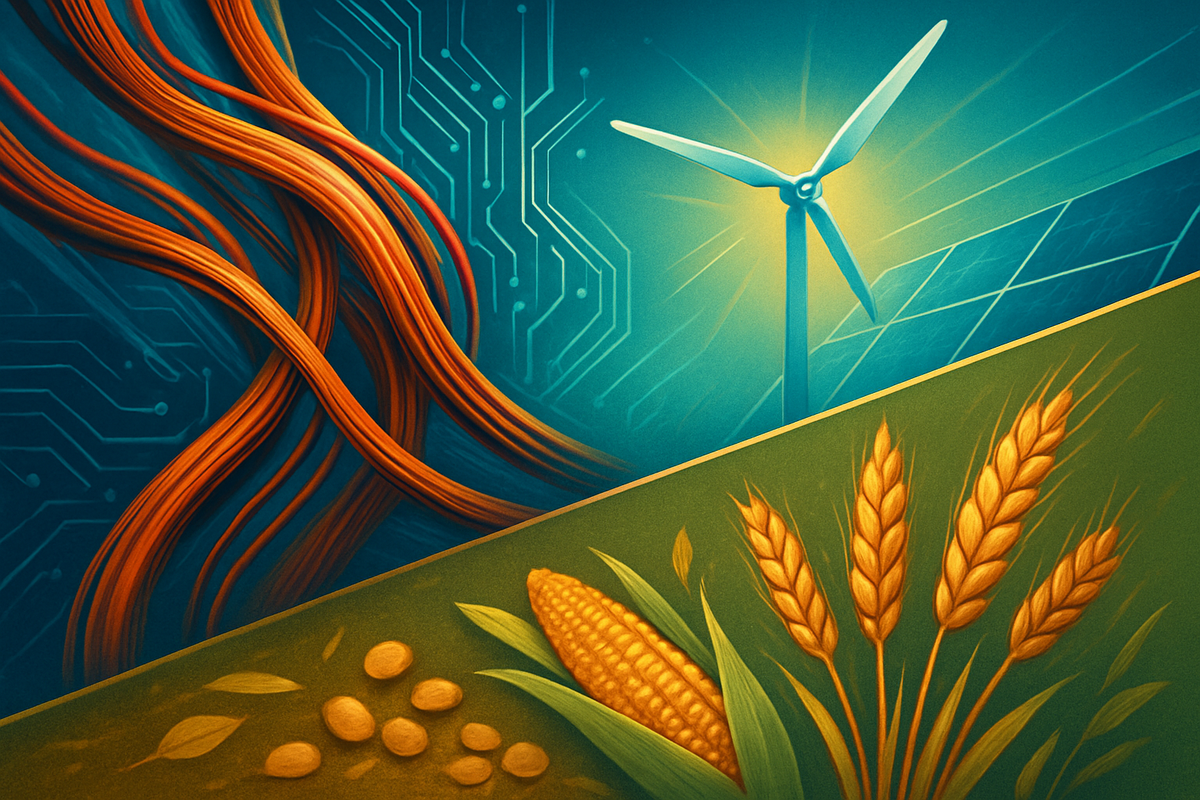
As of December 2025, global commodity markets are exhibiting a fascinating and complex "great divergence," challenging the conventional wisdom of a unified supercycle. While the allure of gold and the volatility of oil often dominate headlines, a deeper look reveals a nuanced landscape where industrial raw materials are experiencing robust, supercycle-like growth, even as other crucial commodities, particularly in the agricultural and energy sectors, face downward price pressures. This dynamic environment is forcing industries worldwide to adapt to shifting input costs and re-evaluating supply chain resilience, while central banks grapple with the implications for global inflation and monetary policy.
The ongoing debate centers on whether the current strength in specific sectors signals the dawn of a new, prolonged commodity supercycle—driven primarily by the relentless demands of the green energy transition, electrification, and the expansion of digital infrastructure—or merely represents a temporary, albeit significant, blip in an otherwise moderating market. The implications of this divergence are profound, affecting everything from manufacturing costs and food prices to national economic strategies and the investment outlook for the coming years.
The Great Divergence: Industrial Metals Surge, Grains Soften
The defining characteristic of the commodity landscape in late 2025 is the stark contrast in performance across different raw material categories. Leading the charge in what many are calling a "new supercycle" are industrial metals, whose prices have seen significant increases, driven by structural demand shifts rather than transient factors.
Copper, often dubbed "Dr. Copper" for its perceived ability to predict economic health, has surged to new all-time highs, advancing approximately 27% in 2025. This meteoric rise is fueled by the insatiable demand from artificial intelligence (AI) infrastructure, the accelerating global energy transition (including electric vehicles and renewable energy grids), and broad infrastructure development projects. The International Energy Agency (IEA) has warned of a potential 30% supply shortfall—amounting to 12-15 million tons—by 2035, underscoring the long-term supply challenges facing this critical metal. Similarly, Tin prices remain at historically high levels, experiencing a 40% surge in 2025. Its indispensable role in clean technologies and ongoing export restrictions, particularly from Myanmar, continue to underpin its elevated valuation. Silver (NYSE: SLV), while often grouped with precious metals, is seeing record high prices primarily due to exploding industrial demand from solar panels, electric vehicles, 5G devices, and semiconductor manufacturing, where industrial applications account for about 56% of its total consumption. Even Aluminum is experiencing moderate price increases, buoyed by ongoing infrastructure demand and EU restrictions on Russian aluminum. The notable exception in the industrial metals complex is Iron Ore, which has seen declines due to the protracted crisis in China's real estate sector.
Conversely, the agricultural commodities sector presents a more subdued picture, with softening prices for many staples due to ample supply. The overall agricultural index remained largely stable in 2025 but is projected to fall slightly in 2026. Grains like Wheat, Corn, and Soybeans have experienced sharp drops in 2025, with the grains index down 10.8%. Wheat prices, for instance, reached nearly a two-month low on December 12, 2025, pressured by expectations of rising global supply from record crops in Argentina and Australia, alongside a rebound in EU and Russian output. Similarly, the U.S. is producing a record corn crop in the 2025/2026 season, increasing supplies and putting downward pressure on prices, despite strong ethanol production and export demand. Soybean prices were also down, affected by building product levels and mixed weather reports from South America, coupled with reduced purchases from China. However, Beverages such as Coffee and Cocoa bucked this trend, experiencing a strong rebound (17.8%) in 2025 due to weather issues (e.g., frost warnings in Brazil for coffee, poor West African harvests for cocoa), with cocoa prices hitting a 60-year high in early 2025. Livestock markets, particularly cattle, are in a promising spot with strong demand, rising 14% in 2025.
In the broader energy sector (excluding oil), prices are generally declining. European and U.S. Natural Gas prices are decreasing, primarily due to ample supply and milder weather conditions, potentially leading to a surplus in Q1 2026. Coal prices are expected to drop by 27% in 2025 and an additional 5% in 2026 as its consumption for power generation slows in developing economies.
Corporate Fortunes: Winners and Losers in the Commodity Crosscurrents
The "great divergence" in commodity prices is creating a distinct bifurcation in corporate fortunes, with companies heavily reliant on industrial metals facing different realities than those in agricultural or certain energy sectors.
Winners are predominantly found within the mining and materials companies focused on industrial and precious metals. Major diversified miners like BHP Group (NYSE: BHP), Rio Tinto (NYSE: RIO), and Glencore (OTC: GLNCY) are poised to benefit significantly from elevated copper, aluminum, and silver prices. Their revenues and profit margins are likely to swell, enabling increased capital expenditure on exploration and development of new mines, as well as potential shareholder returns through dividends and buybacks. Specialized miners focusing on specific high-demand metals, such as Freeport-McMoRan (NYSE: FCX) for copper, are experiencing boom times. Furthermore, companies involved in the renewable energy infrastructure, electric vehicle manufacturing, and semiconductor industries are seeing robust demand for their products, even if they face higher input costs. For example, EV manufacturers like Tesla (NASDAQ: TSLA) and renewable energy developers might see increased costs for battery components and grid infrastructure, but the overarching market growth driven by policy and consumer demand continues to provide a strong tailwind. Technology giants investing heavily in AI data centers, which are highly copper-intensive, will also drive demand, benefiting the supply chain.
Conversely, Losers are emerging in sectors that cannot easily pass on increased raw material costs or are exposed to declining commodity prices. Manufacturers of consumer goods, electronics, and construction companies that rely heavily on industrial metals are facing compressed profit margins. While demand for their end products remains strong, the escalating cost of inputs like copper, tin, and aluminum forces them to either absorb higher costs or raise consumer prices, potentially impacting demand elasticity. Companies in the food processing and agricultural input sectors might see mixed results. While lower grain prices could reduce raw material costs for some food processors, volatility in commodities like coffee and cocoa due to weather events can create significant cost uncertainties. Agricultural equipment manufacturers and fertilizer companies might face headwinds if farmers' profitability is squeezed by lower grain prices, potentially leading to reduced investment in new machinery or inputs. Furthermore, companies heavily invested in natural gas and coal production are experiencing declining revenues and profitability due to ample supply and reduced demand, particularly in regions transitioning away from fossil fuels. This puts pressure on traditional energy companies with significant exposure to these commodities, such as some smaller, regional natural gas producers.
The strategic response from companies is critical. Many are focusing on supply chain resilience, seeking to diversify their sources, build inventory buffers, and even explore nearshoring or reshoring options to mitigate risks from geopolitical tensions, climate events, and logistical inefficiencies. Vertical integration or long-term supply agreements are also becoming more attractive strategies for securing critical raw materials at more predictable prices.
Wider Significance: A New Economic Paradigm?
The current commodity market dynamics extend far beyond individual corporate balance sheets, signaling potential shifts in broader industry trends, regulatory frameworks, and even geopolitical alignments. The "great divergence" suggests a move towards a new economic paradigm where the traditional drivers of commodity demand are being reshaped by the imperatives of climate change, technological advancement, and national security.
The most significant broader trend is the accelerating green energy transition. The surging prices of industrial metals like copper, nickel, lithium, and silver are not merely cyclical; they reflect a fundamental, structural increase in demand driven by global decarbonization efforts. Every electric vehicle, wind turbine, solar panel, and smart grid requires significantly more of these metals than their fossil-fuel counterparts. This long-term demand shift is likely to sustain elevated prices for these "transition metals" for years to come, fundamentally altering the economics of energy production and consumption. Similarly, the rapid expansion of digital infrastructure and AI is creating unprecedented demand for copper and other conductive materials, integrating technology and commodity markets more tightly than ever before.
The ripple effects are evident across industries. Automotive manufacturers are grappling with the dual challenge of securing critical battery materials and managing the higher costs of copper wiring in EVs. Construction companies face increased costs for building materials, potentially impacting infrastructure project budgets and timelines. The electronics industry is seeing input costs for semiconductors and devices rise, with potential implications for consumer prices. Competitors in these sectors are likely to differentiate themselves not just on innovation but also on their ability to secure stable and cost-effective raw material supplies.
Regulatory and policy implications are also substantial. Governments worldwide are increasingly recognizing the strategic importance of critical minerals. This is leading to policies aimed at securing domestic supply chains, promoting recycling initiatives, and fostering international partnerships to ensure access to these vital resources. The European Union's restrictions on Russian aluminum, for example, highlight how geopolitical tensions can directly impact commodity flows and prices. Furthermore, environmental regulations are influencing mining practices, pushing for more sustainable extraction methods, which can add to production costs but are necessary for long-term viability.
Historically, commodity supercycles have been linked to periods of rapid industrialization or post-war reconstruction. The current situation draws parallels with past cycles driven by massive infrastructure build-outs, but with a distinct "green" and "digital" overlay. Unlike previous cycles that were often fueled by broad-based industrial growth, this one appears more targeted, driven by specific technological and environmental transitions. This makes historical comparisons complex, as the underlying demand drivers are fundamentally different. The long-term impact on inflation also differs; while previous supercycles led to broad inflationary pressures, the current divergence means inflation might be more concentrated in manufactured goods and technology, while food and some energy costs moderate.
What Comes Next: Navigating a Divergent Future
Looking ahead, the commodity markets are poised for continued divergence, presenting both significant opportunities and formidable challenges for businesses, investors, and policymakers. The short-term outlook (next 6-12 months) will likely see sustained strength in industrial metals, while the long-term trajectory (3-5 years and beyond) hinges on the pace of the green transition and global economic growth.
In the short-term, the demand for transition metals like copper, silver, and tin is expected to remain robust, driven by ongoing investments in renewable energy, EV production, and digital infrastructure. This will keep prices elevated, forcing industries reliant on these materials to continue optimizing supply chains and potentially passing on costs. Conversely, agricultural commodity prices, particularly grains, are likely to remain subdued due to ample supply, although weather events and geopolitical tensions could introduce volatility. Natural gas and coal prices are expected to continue their downward trend, providing some relief on energy costs in certain regions. Central banks, like the U.S. Federal Reserve, which initiated rate cuts in late 2025, may find more room for monetary easing if overall commodity price declines (especially in energy and some food items) temper headline inflation, even as industrial goods inflation persists.
For the long-term, the trajectory of industrial metals appears set for a prolonged period of elevated demand. The sheer scale of the global energy transition means that new mining projects will be essential, and the lead times for these projects are often a decade or more, suggesting that supply will struggle to keep pace with demand. This could lead to a sustained "green supercycle" for these specific commodities. Companies in the mining sector will need to ramp up exploration and production, potentially through significant capital investments or mergers and acquisitions. Strategic pivots will be crucial for manufacturers, who must invest in material efficiency, explore alternative materials, and deepen relationships with suppliers.
Market opportunities will emerge for companies specializing in advanced recycling technologies for critical minerals, as well as those providing innovative solutions for sustainable mining and processing. Investors may find attractive opportunities in mining companies with strong reserves of transition metals and those developing new technologies to reduce material intensity in manufacturing. Challenges include the potential for resource nationalism, increased geopolitical competition for mineral resources, and the environmental and social impacts of expanded mining operations.
Potential scenarios and outcomes vary. In an optimistic scenario, technological innovation in material science and efficient recycling could help alleviate supply pressures, leading to a more balanced market. In a pessimistic scenario, persistent supply deficits for critical metals could hinder the green transition, leading to higher costs, slower adoption of clean technologies, and increased inflationary pressures in key industrial sectors. A "two-speed" global economy might emerge, where countries with secure access to critical minerals thrive, while others struggle.
Wrap-Up: Navigating a New Era of Commodity Dynamics
The commodity markets in late 2025 are not merely experiencing a cyclical upturn but are undergoing a profound structural transformation, characterized by a "great divergence." The key takeaway is that while the overall commodity complex might see moderating prices driven by ample supply in agriculture and some energy sectors, a targeted and powerful "green and digital supercycle" is clearly underway for industrial metals like copper, tin, and silver. This is fundamentally reshaping industrial economics and global supply chains.
Moving forward, investors should watch for continued capital expenditure announcements from major mining companies, technological advancements in material science and recycling, and evolving government policies regarding critical mineral security. The interplay between sustained demand for transition metals and the more volatile or subdued outlook for other commodities will define market movements. Businesses must prioritize supply chain resilience and strategic sourcing, while policymakers must balance the imperatives of economic growth, inflation control, and the green transition.
The lasting impact of this period will likely be a more segmented commodity market, where the drivers for each raw material are increasingly distinct, reflecting the diverse and sometimes conflicting demands of a global economy in transition.
This content is intended for informational purposes only and is not financial advice