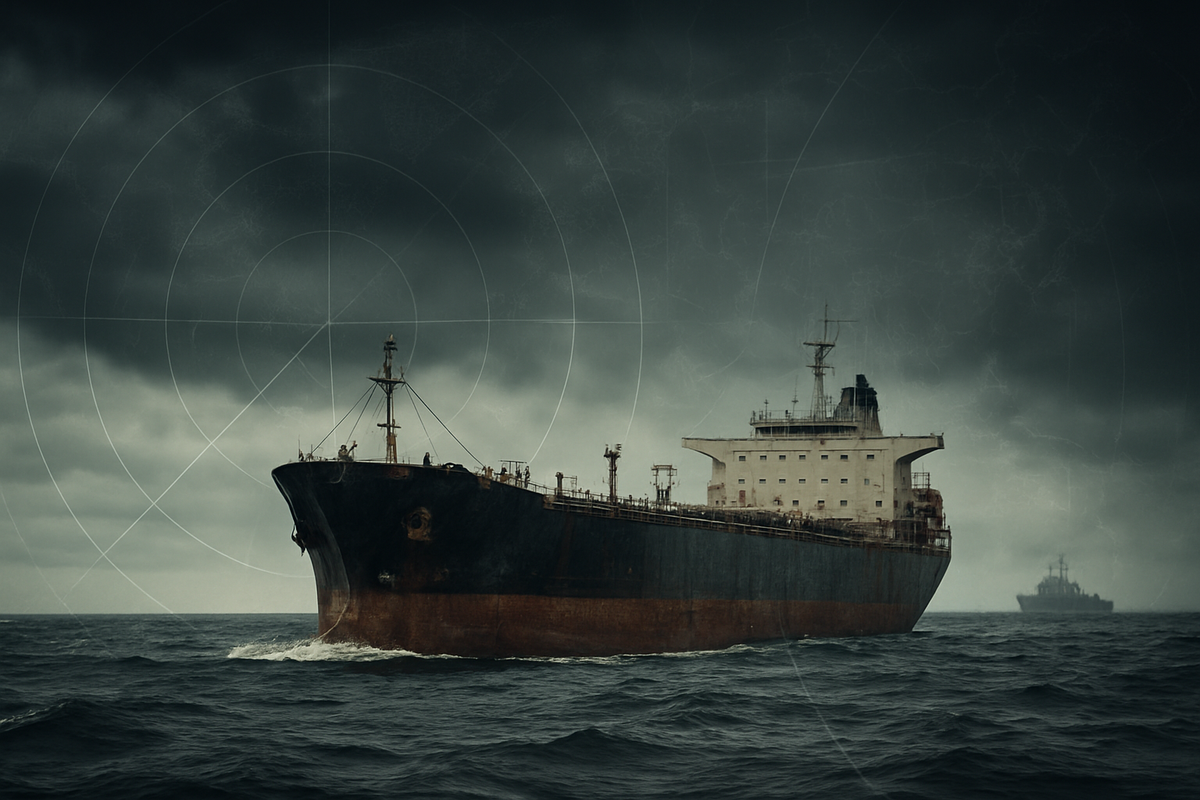
The United States has dramatically escalated its offensive against the "shadow fleet" of tankers engaged in illicit oil transport, culminating in the recent physical seizure of a vessel off the coast of Venezuela. This bold move, alongside a barrage of new sanctions, signals a significant hardening of Washington's stance against entities circumventing restrictions on oil from sanctioned nations like Russia, Iran, and Venezuela. The immediate implications are a surge in operational risks for non-compliant shippers, a potential increase in costs for illicit oil, and a noticeable ripple effect across global energy supply chains and prices.
This intensified crackdown, coming just as of December 12, 2025, is poised to reshape the landscape of international oil trade, forcing a reckoning for those who have profited from opaque shipping practices. The actions underscore a concerted effort by the US to choke off financial lifelines to adversarial regimes and disrupt activities deemed to support "narco-terrorism" and other illicit operations, with profound consequences for the stability and pricing of a critical energy commodity.
Unprecedented Enforcement: The Seizure of the Skipper and Sweeping Sanctions
The most striking development occurred on December 11, 2025, when US commandos executed a daring seizure of the oil tanker Skipper off the coast of Venezuela. This 332-meter vessel, laden with an estimated 2 million barrels of crude oil, including cargo destined for a Cuban state oil importer, had a history of evading sanctions. Previously known as the M/T Adisa, it had been blacklisted by the US in November 2022 for its alleged involvement in smuggling Iranian crude on behalf of Iran's Revolutionary Guard and Lebanon's Hezbollah. The Skipper was observed engaging in common shadow fleet tactics, such as manipulating its Automated Identification System (AIS) to conceal its location and the true origin of its cargo.
Further amplifying this pressure, the US Treasury Department followed up on December 12, 2025, by announcing fresh sanctions targeting Venezuela. These measures specifically curbed three nephews of President Nicolás Maduro's wife, six crude oil tankers, and several shipping companies linked to them. The Treasury cited these entities for "deceptive and unsafe shipping practices" and for providing financial support to what it describes as Maduro's "corrupt narco-terrorist regime."
These recent actions are part of a broader, year-long offensive. Earlier in 2025, the US implemented several key measures. On January 10, 2025, the Treasury unveiled its most extensive shipping sanctions in years, blacklisting over 180 vessels and dozens of entities and individuals involved in Russian oil and gas trades. This package notably included 183 tankers—155 of which were identified as part of the shadow fleet or owned by Russia-based operators—along with Russian insurers Ingosstrakh and Alfastrakhovanie Group. Russian oil giants Gazprom (MCX: GAZP) and Surgutneftegas (MCX: SNGS) were also named, and the provision of US petroleum services to persons in the Russian Federation was prohibited from February 27. Subsequent legislative efforts, such as a bipartisan bill introduced on April 9, 2025, and the "SHADOW Fleets Act" in September 2025, aimed to further intensify enforcement, authorizing cargo confiscation and expanding intelligence sharing. On November 21, 2025, the US also launched a comprehensive crackdown on the Iranian oil ecosystem, blacklisting front companies and six vessels tied to a "global architecture" enabling Iran's military, including its oil-sales arm Sepehr Energy Jahan Nama Pars, to finance operations through clandestine crude sales.
The "shadow fleet" itself emerged and rapidly expanded following the G7 price cap on Russian oil, imposed in December 2022 in response to Russia's invasion of Ukraine. This cap aimed to limit Russia's oil revenues while keeping its crude flowing to global markets. However, lax initial enforcement allowed for widespread circumvention, leading Russia, Iran, and Venezuela to increasingly rely on this clandestine network of older, anonymously owned, and often poorly insured vessels. By December 2023, estimates suggested the shadow fleet had tripled in size since early 2022, comprising 1,100 to 1,400 ships employing deceptive practices like AIS manipulation and ship-to-ship transfers to obscure cargo origins.
The immediate market reaction to the Skipper seizure was palpable. January Nymex WTI crude oil prices rose by 21 cents per barrel, adding approximately $1/barrel from its session low, underscoring the market's sensitivity to disruptions in oil supply, even from illicit sources. The Venezuelan government swiftly denounced the seizure as an "act of international piracy," with President Maduro claiming the crew was "kidnapped" and the ship "stolen," while the White House reiterated its firm stance against oil financing "narcoterrorism." More broadly, previous aggressive US sanctions against vessels transporting Russian oil in January 2025 had already impacted trade flows, increasing spot rates for very large crude carriers (VLCCs) and raising insurance and operational costs for Iranian shipments, though Russia had shown resilience in maintaining crude exports.
Corporate Fortunes Diverge: Winners and Losers in the Wake of the Crackdown
The US crackdown on the shadow fleet is creating a stark bifurcation within the global maritime and energy sectors, clearly delineating winners and losers based on their adherence to international sanctions and transparent operating practices. Companies involved in illicit trade face severe and escalating consequences, while compliant entities across shipping, oil production, insurance, and related services stand to benefit from reduced competition and increased demand for legitimate services.
On the losing side are primarily the shadow fleet operators and their facilitators. These entities face direct asset seizures, crippling financial penalties, and significant operational disruptions. When a tanker is sanctioned, its activity plummets, with port calls falling by over half and travel distances shrinking dramatically. Key players facing such pressures include Russia's state-owned shipping giant Sovcomflot (MCX: FLOT) and its subsidiaries like SUN Ship Management. UAE-based firms like Fornax Ship Management and Stream Ship Management Fzco, which have taken over management of sanctioned tankers, are under intense scrutiny. Hong Kong-based Prominent Shipmanagement Limited, Sunne Company Limited, and Sino Ship Management Company Limited, along with Vietnam-based Sao Viet Petrol Transportation Company Limited, have all been specifically sanctioned for operating vessels involved in illicit oil transport. Furthermore, a vast network of Iranian-linked entities, including UAE-based Luan Bird Shipping Service, Mars Investment, Moon Line Plastics, and Alsafeenah Althahabya; Panama-registered Loire Shipping; Greek firm Altomare; Germany's BPT Berlin Petroleum Trading; Dubai-based Shandong Independent Energy Trading; and India-based RN Ship Management, have been blacklisted for enabling Iran's military to finance its operations through clandestine crude sales.
Oil producers in sanctioned nations are also taking a direct hit. Companies like Russia's Gazprom Neft (MCX: SIBN) and Surgutneftegas (MCX: SNGS), which collectively account for significant oil output, are grappling with sanctions that restrict equipment and software purchases, increase production costs, and limit market access. Larger Russian players such as Rosneft (MCX: ROSN) and Lukoil (MCX: LKOH) have also faced sanctions by the US in late 2025, further complicating their export strategies. Venezuelan and Iranian state oil companies, long reliant on shadow fleets, will find it increasingly difficult and costly to export their crude. Non-compliant insurers and financial institutions, such as Russia's Ingosstrakh Insurance and Alfastrakhovanie Group, sanctioned for providing non-G7 insurance coverage, face a loss of legitimacy and an inability to operate in international markets. Similarly, flag states of convenience like Gabon, the Cook Islands, and Laos, which have historically hosted many shadow fleet vessels, face mounting international pressure and reputational damage. Foreign commodity traders involved in selling sanctioned oil above price caps are also being directly targeted, facing asset freezes and disruption of their trading networks.
Conversely, the crackdown presents significant opportunities for compliant shipping companies. With the shadow fleet increasingly sidelined, the overall pool of available tonnage shrinks, leading to higher freight rates and appreciation in asset values for legitimate tankers. Values for older crude tankers, for instance, have seen an approximate 21.45% rise, and one-year time charter rates for Very Large Crude Carriers (VLCCs) have increased by about 30%. This creates a favorable environment for transparent operators. Oil producers in non-sanctioned countries like those in the Middle East (e.g., Saudi Arabia, UAE), the United States, Canada, and Brazil are poised to fill the supply gaps, potentially gaining market share and boosting revenues.
Legitimate insurers that maintain robust compliance standards, such as members of the International Group of P&I Clubs, will see increased business from shipowners seeking reliable and sanctions-compliant coverage. Reputable classification societies will also gain credibility and business. Compliant financial institutions will become preferred partners, benefiting from enhanced trust and avoiding the severe penalties associated with secondary sanctions. Furthermore, specialized maritime analytics and monitoring companies like Windward and Vortexa, which provide advanced technology for vessel tracking and identifying deceptive practices, are experiencing a surge in demand for their critical services, playing an increasingly vital role in global maritime security and compliance. Even ship registries that actively deregister sanctioned vessels and demonstrate a commitment to international maritime law, such as Panama, the Marshall Islands, and Barbados, can enhance their reputations and attract higher-quality fleets.
Broader Implications: Reshaping Global Maritime Governance and Energy Flows
The US crackdown on the shadow fleet represents a profound shift in global sanctions enforcement, carrying far-reaching implications for international trade, energy markets, regulatory frameworks, and geopolitical stability. This intensified campaign, targeting illicit oil shipments from Russia, Iran, and Venezuela, is not merely a series of isolated actions but a strategic effort to redefine the boundaries of maritime governance and the flow of critical energy commodities.
This enforcement drive is deeply intertwined with several overarching trends in the maritime and energy industries. Firstly, the explosive growth and inherent risks of the shadow fleet itself have become undeniable. Estimates suggest this clandestine network now comprises an astonishing 17% of all international tankers, largely consisting of older, often poorly maintained vessels (many over 15 years old) operating with inadequate or fabricated insurance. This poses significant maritime safety and environmental hazards, as evidenced by a rising number of collisions and oil spills. Secondly, the crackdown directly impacts global oil markets. The shadow fleet has long displaced demand for conventional, compliant tonnage by offering sanctioned crude and products at discounted rates, primarily to major buyers like China and India. The US aims to tighten the available compliant fleet, which is expected to disrupt these trade flows and potentially increase the cost of illicit oil due to the heightened risk of seizure. Thirdly, the pressure on the marine insurance market is immense. Shadow fleet vessels often rely on low-tier or state-backed insurers that may not cover major incidents, or resort to fabricated insurance documents. Western countries and the European Union are increasingly demanding proof of valid insurance for vessels transiting their waters, making opaque operations less viable and leading to rising claims and anticipated rate hikes for legitimate Protection and Indemnity (P&I) Clubs.
The ripple effects of this crackdown extend across the geopolitical and economic landscape. For sanctioned nations like Russia, Iran, and Venezuela, the primary objective is to curb their oil revenues, which fund their respective regimes. While these nations have consistently adapted to sanctions by expanding their shadow fleets and seeking alternative buyers, the physical seizure of vessels, such as the Skipper, directly undermines their oil export capabilities. Major buyers like China, India, and Turkey, who are significant importers of sanctioned crude, face increasing pressure from the US secondary sanctions regime, which can penalize foreign financial institutions. This potent deterrent may compel them to adhere more closely to price caps or seek compliant shipping options. Within the shipping industry, the removal of vessels from the fleet—either due to sanctions or their migration to the shadow fleet—reduces overall tonnage availability. This supply tightness is contributing to elevated freight rates for compliant tankers across various segments and imposing increased compliance burdens on shipowners and operators. Furthermore, third-party enablers in countries like the UAE and Turkey, which have played significant roles in managing and facilitating the shadow fleet, are facing intensified scrutiny, with the US considering broadening secondary sanctions to target banks and intermediaries in these jurisdictions.
On the regulatory and policy front, the crackdown is driving substantial changes. The US is demonstrating a willingness to employ more assertive enforcement tactics, including physical interdiction in international waters, marking a significant escalation from previous financial penalties. There is a growing focus on insurance and transparency, with European coastal states and the EU implementing reforms that require all vessels traversing their waters to provide proof of valid insurance, directly addressing the risks posed by uninsured tankers. However, the US's direct seizure operations, particularly the Skipper incident, have been denounced by Venezuela as "acts of international piracy" and raise complex questions under international law. The legal justifications for such extraterritorial enforcement actions will set important precedents and influence the future boundaries of unilateral action in international waters. This has also spurred calls for international cooperation, with the International Maritime Organization (IMO) formally defining "dark ships" and expressing a desire for new enforcement mechanisms to address the challenges posed by these fleets.
Historically, there are precedents for maritime sanctions enforcement, such as UN-mandated embargoes against Iraq (1990-2003) and Southern Rhodesia (1965-1976). The seizure of the Iranian tanker "Grace 1" (later "Adrian Darya 1") off Gibraltar in 2019 under EU sanctions against Syria also serves as a recent high-profile example. However, the current crackdown on the shadow fleet, characterized by its scale, sophistication, and the US's willingness to use physical force in international waters, marks a significant escalation compared to most previous enforcement actions. It highlights an ongoing "Red Queen's Race" where sanctioning powers continuously adapt to counter evasion tactics, pushing the boundaries of international law and maritime enforcement.
The Road Ahead: Navigating a Fractured and High-Stakes Energy Landscape
The US crackdown on the shadow fleet, characterized by its aggressive enforcement and physical interdictions, is fundamentally reshaping the global maritime and energy landscapes. As of December 12, 2025, the future promises a period of heightened volatility, strategic realignments, and a clearer delineation between compliant and illicit trade.
In the short-term (next 6-12 months), we can expect heightened enforcement and risk for all actors involved in the shadow fleet. The explicit risk of vessel seizure, rather than just financial penalties, significantly increases the "cost of doing business" for operators and facilitators. This will likely translate into soaring maritime insurance premiums for vessels in high-risk regions or those suspected of illicit activities. Consequently, the shipping industry, financial institutions, and related service providers will face increased scrutiny and demand for due diligence. Flag states like Panama, which frequently appear on expanded sanction lists, will face mounting pressure to deregister non-compliant ships. This will contribute to continued oil price and freight rate volatility, with reduced availability of compliant tankers driving up spot rates for various crude carriers, including Very Large Crude Carriers (VLCCs). Sanctioned crude will likely trade at even wider discounts to attract buyers willing to absorb the amplified risks. In response, the shadow fleet is expected to continue its pattern of adaptation and evasion, employing more sophisticated AIS manipulation, frequent ship-to-ship transfers in remote waters, and further diversification of shell companies and flags of convenience to circumvent detection.
Looking at the long-term (beyond 12 months), a fractured global shipping market is likely to solidify. The emerging "three-tier market" of clear, grey, and shadow fleets will reflect deeper geopolitical divides. While compliant fleets operate within traditional frameworks, the shadow fleet will persist outside conventional norms, potentially increasing global safety and environmental risks due to its reliance on aging, unmaintained vessels. Strategic pivots by sanctioned regimes are also anticipated, as they seek to further develop their own parallel maritime infrastructure, localized insurance, and alternative payment mechanisms, potentially leveraging non-aligned nations. The broadened enforcement scope of the US is also on the horizon; efforts may extend beyond oil to other sanctioned goods or even non-oil sectors that facilitate illicit trade, with legislative measures like the proposed "SHADOW Fleets Act" aiming to expand penalties to include Russian LNG projects and its defense industrial base. These aggressive enforcement actions, particularly physical interdictions, could also lead to geopolitical ramifications, including diplomatic protests, legal challenges in international bodies, and potential retaliatory measures from sanctioned states or their allies, further destabilizing global maritime security.
These developments present both market opportunities and challenges. Opportunities will emerge for compliant shipping companies, which stand to benefit from reduced competition and higher freight rates. The demand for advanced maritime intelligence and technology, such as satellite tracking and risk models, will surge as companies and authorities seek to identify and avoid sanctioned vessels. Increased oil market volatility may also accelerate investments in diversified energy supply chains and cleaner technologies as nations prioritize energy security. Conversely, challenges include significantly increased operational costs and risks for shadow fleet operators, who face vessel seizures and difficulties accessing essential services. Buyers of sanctioned crude, particularly in China and India, will face disruptions in securing consistent supply and may incur higher costs or be forced to seek alternative legitimate sources. Across the board, there will be an increased compliance burden for all actors in the maritime ecosystem, coupled with persistent environmental and safety concerns due to the continued operation of an aging, poorly maintained, and uninsured shadow fleet.
Comprehensive Wrap-Up: A New Era of Maritime Enforcement
The US crackdown on the shadow fleet in late 2025 marks a decisive and unprecedented shift towards more aggressive, real-world enforcement. The physical seizure of vessels signals a new era where the risks for illicit maritime operations are no longer confined to financial penalties but extend to the complete loss of assets. While the shadow fleet has grown substantially, comprising a considerable portion of global tanker capacity, the US and its allies are demonstrating a renewed and robust commitment to disrupting its activities through expanded sanctions and direct interdictions.
The market moving forward will be characterized by fragmentation and increased volatility. The distinction between "clear," "grey," and "shadow" fleets will become sharper, profoundly influencing routing, insurance, and pricing across the maritime sector. Compliant shipping will likely experience sustained elevated freight rates and improved profitability, while the shadow fleet will face escalating operational costs and risks, leading to higher price discounts for sanctioned oil. Global oil supply chains, particularly for major consumers like China and India who have relied on discounted sanctioned crude, will remain susceptible to disruptions as enforcement actions intensify.
This crackdown is more than just sanctions enforcement; it's a recalibration of energy geopolitics and maritime security. The United States is actively redefining the boundaries of acceptable maritime trade, asserting its authority to interdict vessels engaging in deceptive practices in international waters. The lasting impact will likely be a more complex and risky operating environment for non-compliant actors, pushing for greater transparency and robust due diligence requirements across the entire maritime industry. It also underscores the inherent tension between global energy demand, geopolitical objectives, and the profound risks posed by a parallel, unregulated shipping system to environmental safety and international maritime law. The ultimate effectiveness of this campaign will largely depend on sustained, coordinated international efforts and the willingness of all stakeholders to absorb potential market disruptions.
What Investors Should Watch For in Coming Months:
- Continued Enforcement Actions: Monitor for any further US vessel seizures, expanded sanctions lists, and the targeting of facilitators, including insurers, financiers, and classification societies. Any new legislative initiatives, such as the proposed SHADOW Fleets Act, will also be crucial.
- Oil Price and Freight Rate Movements: Keep a close eye on crude oil prices, particularly for Urals crude, and tanker freight rates (especially VLCCs). Sustained high rates could indicate successful tightening of the compliant fleet.
- Responses from Key Players: Observe how major buyers like China and India adapt their crude import strategies. Also, watch for counter-strategies from sanctioned nations like Russia, Iran, and Venezuela, including new evasion tactics or diplomatic pushback.
- Shipping Company Performance: Investors should analyze the financial performance of compliant shipping companies, which may see increased demand and profitability, versus those with any exposure to risky, non-compliant trades.
- Geopolitical Developments: Broader geopolitical tensions, particularly in the Middle East and the ongoing conflict in Ukraine, will continue to influence sanctions enforcement and oil market stability.
- Regulatory Harmonization: While the US is leading, the alignment and coordination of sanctions efforts with the EU and UK will be key to long-term effectiveness. Investors should watch for any further multilateral agreements or divergences in enforcement.
This content is intended for informational purposes only and is not financial advice