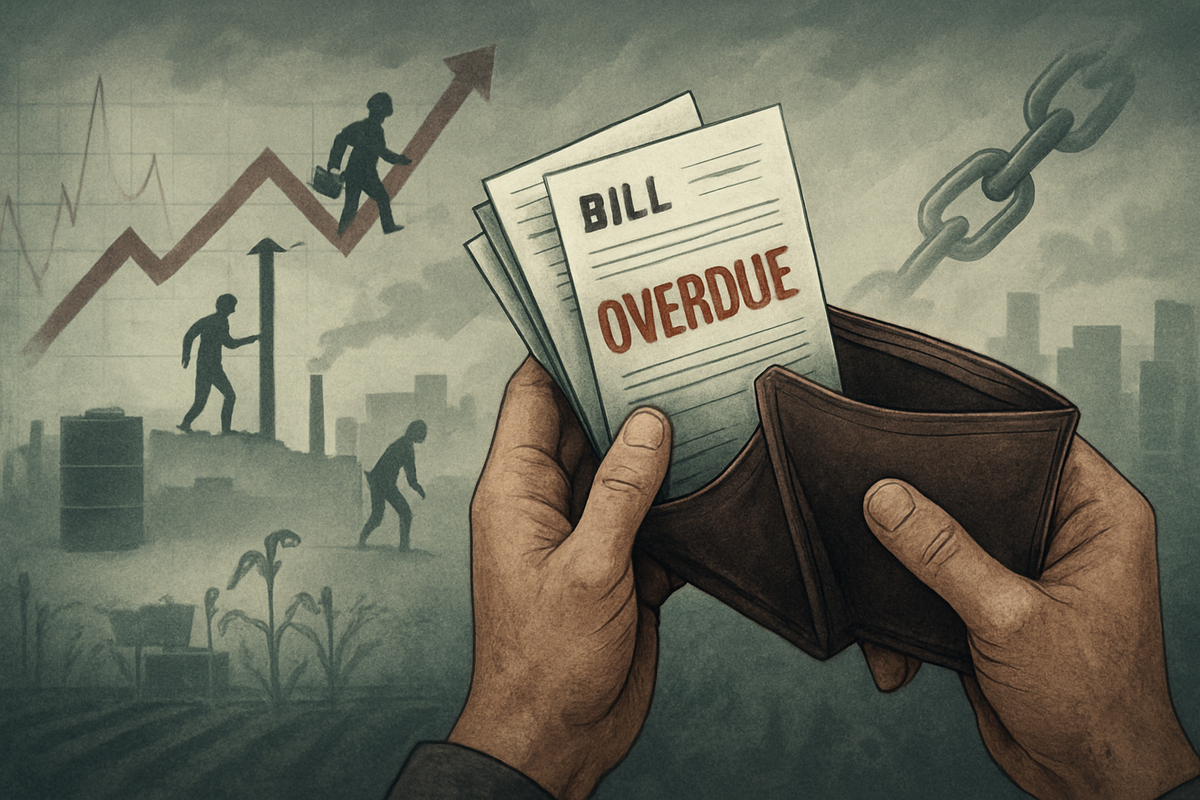
The Federal Reserve Bank of New York's latest "Quarterly Report on Household Debt and Credit," released in early November 2025, paints a stark picture of escalating financial distress among U.S. households. With total household debt soaring to a record $18.59 trillion and delinquency rates remaining stubbornly high, the report serves as a potent warning sign for the broader economy. This growing anxiety among consumers is poised to significantly dampen spending, particularly among lower and middle-income segments, potentially ushering in an economic slowdown and fundamentally altering demand dynamics across key commodity markets.
The report, covering data up to September 30, 2025, arrives just weeks before the current date of December 8, 2025, offering a timely and concerning snapshot of the nation's financial health. As household budgets tighten and confidence wanes, the ripple effects are expected to extend from Main Street to global markets, impacting everything from energy consumption to the demand for industrial metals and agricultural products, while simultaneously bolstering the appeal of safe-haven assets.
A Nation Under Strain: The Alarming Details of Household Financial Distress
The New York Fed's November 2025 report highlights a confluence of worrying trends that collectively underscore a deepening financial vulnerability for many American families. Total household debt surged by $197 billion in the third quarter of 2025 alone, reaching an unprecedented $18.59 trillion. This record debt accumulation was driven by increases across all major categories, including mortgage balances ($137 billion rise to $13.07 trillion), credit card balances ($24 billion rise to $1.23 trillion), and student loans ($15 billion rise to $1.65 trillion). Alarmingly, home equity lines of credit (HELOC) also saw an $11 billion increase, suggesting a growing reliance on home equity to bridge financial gaps.
Beyond the sheer volume of debt, the report points to elevated delinquency rates, with 4.5% of outstanding debt in some stage of delinquency. A particularly concerning aspect was the rise in early delinquencies for both credit card debt and student loans. Student loan delinquencies stood out at a staggering 9.4% of aggregate student debt, a figure partly attributed to the recent resumption of payments and credit bureau reporting after a prolonged pause. This level of financial distress, according to the report, has not been witnessed since the aftermath of the Great Recession, signaling a potentially precarious economic environment.
Federal Reserve Chair Jerome Powell has previously characterized the current economic landscape as "K-shaped," where higher-income households continue to exhibit robust spending, while lower-income families grapple with increasing financial strain. This divide is exacerbated by several factors, including rising healthcare costs, the disruption of SNAP food assistance due to a recent government shutdown, persistent job market uncertainties, and the expiration of Affordable Care Act subsidies. Consumer sentiment, as measured in November 2025, plummeted to a near-record low, reflecting widespread unhappiness with high prices, the soaring cost of living, and growing anxieties about future income and employment prospects. A significant 44% of Americans reported their household expenses exceeding their income, with housing costs (44%) and basic necessities like food (35%) being primary concerns. These findings suggest an immediate market reaction of cautious consumer behavior, with forecasts already anticipating a substantial slowdown in Q4 2025 consumer spending growth. The Fed's decision to cut interest rates in October 2025 further underscored concerns about "downside risks to employment" and overall economic health.
Companies Navigating the Shifting Sands of Consumer Demand
The pervasive financial worries gripping U.S. households are set to redraw the landscape for public companies, particularly those deeply intertwined with consumer spending and commodity markets. As consumers become more discerning and budget-conscious, companies across various sectors will experience a divergence in fortunes, with some poised to benefit from shifts in demand while others face significant headwinds.
In the energy sector, the outlook appears generally bearish for 2026, primarily due to an anticipated global oil surplus. Integrated oil and gas majors like ExxonMobil (NYSE: XOM) and Chevron (NYSE: CVX), with substantial exposure to crude oil production and refining, could see reduced profitability. A decline in global oil prices, coupled with modest consumer demand for transportation fuels, would likely impact their upstream and downstream segments. Conversely, natural gas and LNG exporters, such as Cheniere Energy (NYSE: LNG), may prove more resilient. Increased global demand for LNG, particularly as U.S. export capacity expands, could tighten the domestic market and bolster Cheniere's position. Furthermore, renewable energy developers like NextEra Energy (NYSE: NEE) are less susceptible to short-term discretionary spending trends, with their growth tied to long-term energy transition policies and growing electricity demand from data centers.
The industrial metals sector presents a mixed picture. Companies heavily reliant on general industrial demand or those with significant exposure to iron ore, like Rio Tinto (ASX: RIO) and BHP Group (ASX: BHP), could face challenges due to global growth concerns and a slowdown in China's property sector. However, the accelerating global shift towards renewable energy and electrification is creating robust demand for specific metals. Copper producers, such as Freeport-McMoRan (NYSE: FCX), are expected to benefit significantly from copper's critical role in solar energy, electric vehicles, and AI infrastructure. Similarly, U.S. steel producers like Nucor (NYSE: NUE) anticipate a modest rebound in domestic demand, driven by ongoing infrastructure projects and a recovery in auto production, even with a shift towards more steel-intensive petrol and hybrid models.
Within the agricultural sector, companies focused on premium or discretionary food products, especially those in the "away-from-home" foodservice industry, are likely to experience reduced demand as consumers cut back. Agricultural input suppliers, such as Corteva (NYSE: CTVA), might also face pressure as farmers, grappling with high fertilizer costs and squeezed margins, potentially reduce spending on seeds and crop protection. On the flip side, staple food and value-oriented brands are set to gain. Companies with broad portfolios of affordable, essential food items and private-label options, such as Conagra Brands (NYSE: CAG) and Kraft Heinz (NASDAQ: KHC), are well-positioned as shoppers prioritize value. Furthermore, if consumers trade down from more expensive meats, poultry and pork producers like Pilgrim's Pride (NASDAQ: PPC) could see relative strength in demand.
Finally, the precious metals sector is poised for a bullish run. Heightened economic uncertainty and declining real interest rates, coupled with strong central bank accumulation and geopolitical tensions, are expected to drive gold prices to new highs. This makes gold mining companies like Newmont (NYSE: NEM) and Barrick Gold (NYSE: GOLD) potential winners, directly leveraging rising gold values. Silver mining and streaming companies, such as Pan American Silver (NYSE: PAAS) and Wheaton Precious Metals (NYSE: WPM), are also set to benefit from both silver's safe-haven appeal and its surging industrial demand in solar energy, electric vehicles, and electronics. In this environment, the precious metals sector is largely seen as a beneficiary, offering a safe haven for investors amidst broader economic anxieties.
Broader Economic Currents and Global Repercussions
The escalating financial anxieties among U.S. households in late 2025 are not isolated incidents but rather symptoms of deeper, interconnected economic currents with profound wider significance. These concerns, detailed in the New York Fed's report, are poised to trigger ripple effects across global markets, influence regulatory responses, and draw unsettling parallels to historical periods of economic strain.
At the heart of these household worries are several persistent macroeconomic trends. Inflation remains a stubborn adversary, with the annual rate rising to 3% in September 2025 and forecasts suggesting it could climb further before gradually receding. This "sticker shock" is particularly acute for essential goods like groceries, utilities, and housing, eroding purchasing power despite the Federal Reserve's efforts. Compounding this is a decelerating job market, with monthly payroll gains slowing and the unemployment rate steadily climbing to 4.3% by August 2025, with projections for further increases into 2026. This weakening labor market directly impacts real disposable incomes and consumer confidence. While the Federal Reserve has initiated interest rate cuts in 2025, bringing the federal funds rate to 3.75%-4.00% by October, the overall high-interest-rate environment has already contributed to soaring consumer debt, particularly credit card balances. Furthermore, the implementation of new tariff policies by the U.S. in 2025 has directly led to increased consumer prices, with a significant majority of Americans reporting tariff-related price hikes. These tariffs are fueling inflationary pressures and are estimated to cost the average American household an additional $2,100 annually, contributing to both price volatility and broader economic uncertainty.
These domestic pressures are not confined to U.S. borders; they send ripple effects across the global economy. A significant pullback in U.S. consumer spending, which historically accounts for roughly 70% of its GDP, directly translates to reduced global demand for goods and services. The escalating tariff regime and retaliatory measures from trading partners are disrupting established global supply chains, increasing costs for international businesses, and diminishing overall trade flows. Economies heavily reliant on U.S. demand, particularly in Asia and Germany's automotive and machinery sectors, face increased vulnerability. The uncertainty surrounding trade policies is also driving volatility in commodity markets, impacting prices for everything from cocoa beans to coffee.
In response to declining consumer sentiment and the broader economic challenges, regulatory and policy implications are already taking shape. The Federal Reserve's proactive interest rate cuts in 2025 signal its commitment to supporting employment amidst "downside risks," with further cuts anticipated into 2026. On the fiscal front, the possibility of additional stimulus measures is being debated, particularly as midterm elections approach, alongside discussions about extending expiring tax provisions and introducing new deductions to support manufacturers. The impact of tariffs on consumer sentiment and prices may also prompt revisions in trade policy, although the current administration has shown a strong inclination towards protectionist measures. Addressing housing affordability is also emerging as a critical policy concern, as rising housing payments contribute significantly to household financial stress.
Historically, the current economic climate draws comparisons to several challenging periods. The combination of below-trend GDP growth and persistently high inflation has led some to characterize it as "stagflation lite," echoing the stagflationary environments of the 1970s and early 1980s, when oil shocks and difficult monetary policy trade-offs defined the era. The rising interest rates preceding the current slowdown also bring to mind past recessions, such as the Great Recession (2007-2009), where a housing downturn and high oil prices crippled consumer spending. Perhaps most strikingly, the extensive tariff policies implemented in 2025 have been likened to the Smoot-Hawley Tariff Act of 1930. This historical precedent demonstrates how steep tariffs can invite retaliatory measures, drastically reduce global trade, and exacerbate economic downturns, imposing significant costs on domestic consumers and businesses and altering geopolitical trajectories. The direct impact of tariffs on commodity prices, as seen with cocoa and coffee, further underscores this parallel.
The Road Ahead: Navigating an Uncertain Economic Terrain
The path forward for the U.S. economy and global commodity markets, shaped by the pervasive financial anxieties of American households, is marked by both persistent challenges and emerging opportunities. Businesses, policymakers, and investors alike must prepare for a dynamic landscape requiring strategic adaptation and foresight in the short and long term.
In the short term (2025-2026), U.S. consumer spending is expected to moderate, with real growth projected to slow. This deceleration will be driven by a weakening job market, persistent inflation, the full resumption of student loan payments, and restrictive immigration policies. The "K-shaped" recovery in consumer spending is likely to intensify, with higher-income households continuing to spend robustly, while middle and lower-income families face ongoing financial stress, leading to rising delinquency rates in some consumer debt categories. Commodity markets, too, are anticipated to experience a general decline in prices, with global commodity prices projected to fall by approximately 7% in both 2025 and 2026. Energy prices, particularly crude oil, face downward pressure from oversupply, though natural gas markets may see momentum from robust LNG demand. Metals like copper and aluminum, however, could see price support from clean energy transition demand, while agricultural prices are expected to ease due to ample supplies. Gold, as a safe-haven asset, is forecast for further gains amidst economic uncertainty.
Looking to the long term (beyond 2026), consumer spending will hinge on the sustained ability of households to manage debt, the trajectory of inflation, and the overall health of the labor market. While affluent consumer spending could continue to buoy overall consumption, persistent affordability concerns and potentially higher taxes to address federal debt could constrain spending for a broader segment of the population. For commodity markets, structural shifts, such as the significant expansion of U.S. LNG export capacity and continued investment in renewable energy, will sustain demand for specific energy and industrial metals. Commodities are expected to play an increasingly prominent role in portfolios due to ongoing supply-demand imbalances and geopolitical risks.
To navigate this evolving environment, businesses must implement strategic pivots and adaptations. Financial resilience and robust monitoring of economic indicators will be paramount. Embracing innovation and integrating advanced technologies like AI and data analytics will be crucial for enhancing operational efficiency and gaining market insights. Supply chain optimization, including diversification and localization, will be essential to mitigate disruptions and offset the impact of tariffs. Furthermore, a focus on strategic talent management, workforce adaptation, and customer-centric approaches will enable companies to respond effectively to shifting consumer needs and behaviors. Integrating sustainability as a core business strategy will also be vital as consumer preferences evolve.
Market opportunities may emerge in sectors benefiting from significant investment in AI infrastructure and the green energy transition, driving demand for specific technologies and metals. A potential rollback of certain regulations, particularly in financial services, could foster investment. Conversely, significant challenges loom, including persistent inflationary pressures, exacerbated by tariffs, which will continue to erode purchasing power. A weakening labor market and increased federal debt, potentially leading to higher long-term taxation, will also constrain economic growth. The ongoing geopolitical risks and policy uncertainty, particularly around trade, will require constant recalibration from businesses.
Following the November 2025 elections and a likely Republican sweep, potential economic scenarios and outcomes include a moderate growth trajectory for the U.S. economy (1.5-2% GDP growth for 2026), supported by AI investments but constrained by tariffs and tighter immigration policies. Inflation is expected to linger above the Fed's 2% target, potentially peaking near 3.2% in early 2026 due to tariffs and immigration restrictions. The Federal Reserve is anticipated to continue its rate-cutting agenda, aiming for a federal funds rate around 3% by late 2026. The "K-shaped" economic trajectory, with diverging experiences for different income brackets, is likely to persist, making broad-based economic stability a continuous challenge. Businesses will need to prioritize supply chain resilience, localization, and agile responses to policy shifts to thrive in this nuanced and uncertain future.
Conclusion: A Precarious Path Forward
The New York Fed's November 2025 report on escalating U.S. household financial worries serves as a critical bellwether for the nation's economic trajectory. The confluence of record household debt, elevated delinquency rates, persistent inflation, a cooling labor market, and the disruptive force of new tariff policies paints a picture of a consumer base under considerable strain. This financial vulnerability is poised to significantly dampen overall consumer spending, driving a broader economic slowdown and fundamentally reshaping demand dynamics across various commodity markets.
Moving forward, the market will likely be characterized by a "K-shaped" economic experience, with higher-income households demonstrating resilience while lower and middle-income segments face continued headwinds. This divergence will necessitate strategic adaptation from businesses, particularly those in discretionary consumer goods and services, and those heavily reliant on global supply chains impacted by trade policies. While certain sectors like precious metals and those tied to the green energy transition may find opportunities, the overarching environment will demand agility, innovation, and a keen understanding of evolving consumer behavior and macroeconomic shifts.
Investors should closely watch key indicators in the coming months, including consumer sentiment surveys, inflation data, unemployment figures, and the Federal Reserve's monetary policy decisions. The impact of ongoing trade policies and any potential fiscal stimulus measures will also be crucial in shaping the economic outlook. The current environment, with its echoes of past periods of economic distress and trade protectionism, underscores the importance of a diversified portfolio and a cautious yet opportunistic approach. The resilience of the American consumer, though currently challenged, will ultimately determine the depth and duration of these economic headwinds.
This content is intended for informational purposes only and is not financial advice