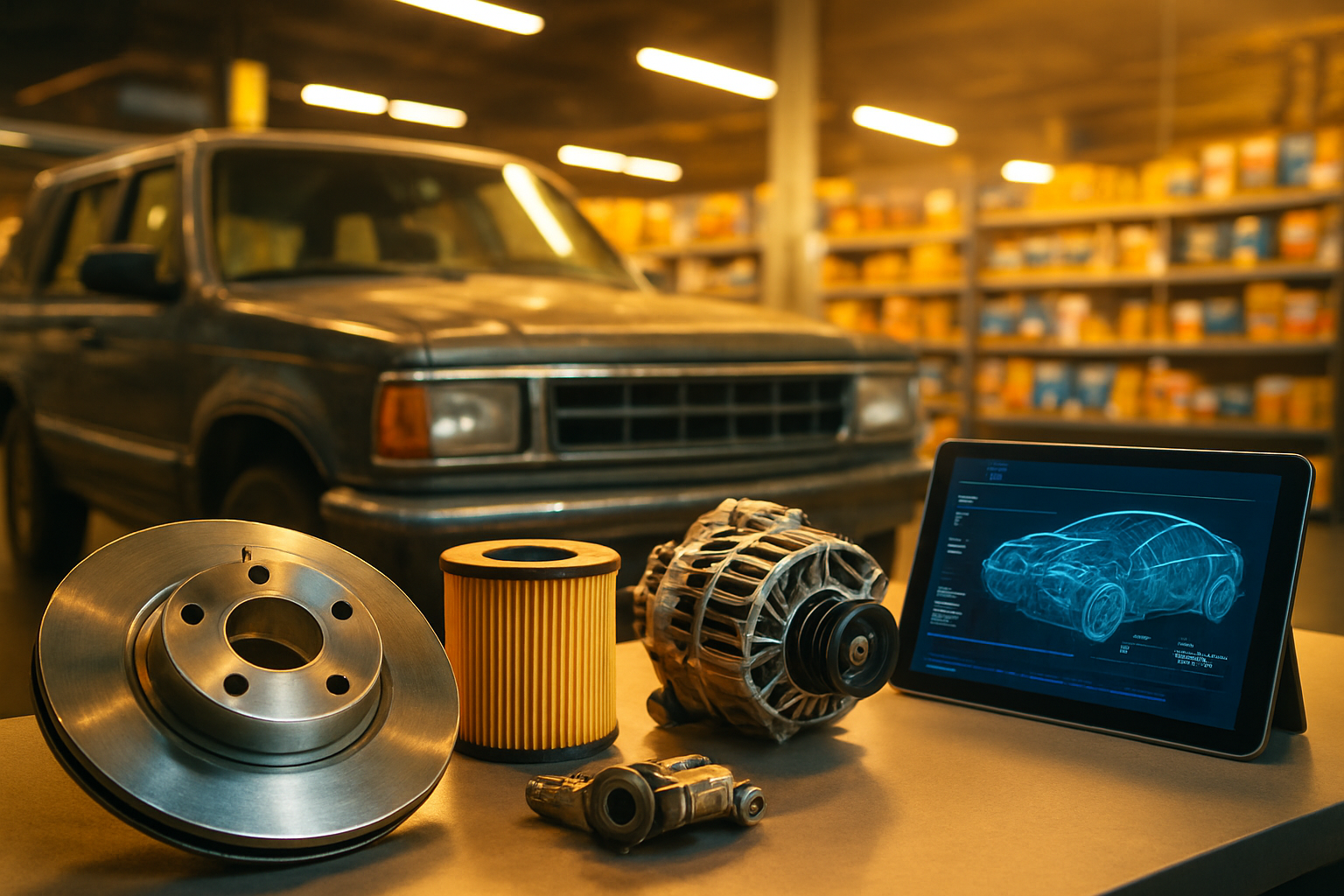
As of January 1, 2026, the American automotive landscape has reached a historic turning point. For the first time in history, the average age of light vehicles on U.S. roads has hit a staggering 13.0 years. This milestone marks the culmination of a decade-long trend that has transformed the "clunker" from a symbol of economic struggle into a cornerstone of a multi-billion dollar industry. What was once seen as a "rust belt" liability is now driving a "riches" era for the aftermarket auto parts sector.
The immediate implications are profound. Consumers, squeezed by high financing rates and the elevated cost of new vehicles, are choosing to repair rather than replace. This shift in behavior has decoupled the auto parts industry from the traditional cyclicality of the broader economy. While new car sales have remained tepid, the demand for brake pads, alternators, and suspension systems is surging, creating a resilient "consumer utility" sector that is outperforming many high-growth tech stocks in the early days of 2026.
The Road to 13 Years: A Perfect Storm of Durability and Debt
The journey to a 13-year average vehicle age has been fueled by a "perfect storm" of macroeconomic pressures and engineering advancements. Following the supply chain disruptions of the early 2020s, new car prices spiked and never truly retreated. By 2025, even with inflation stabilizing, the interest rates on auto loans remained significantly higher than the near-zero levels of the previous decade. This made the average monthly payment on a new car a financial non-starter for millions of American households. Simultaneously, the durability of modern internal combustion engines has improved significantly, allowing vehicles to remain functional far longer than their predecessors from the 1990s or early 2000s.
The timeline leading to this moment was punctuated by a critical shift in 2024 and 2025, where the "sweet spot" of the aftermarket—vehicles aged 6 to 14 years—became the largest segment of the total vehicle population. These are cars whose original manufacturer warranties have expired, but whose owners are committed to keeping them on the road for another five or more years. Industry data from late 2025 showed that major wear-and-tear components began failing at record rates, not because of poor quality, but because the sheer volume of aging vehicles reached a critical mass.
Key stakeholders, including major retail chains and independent repair shops, have spent the last 24 months preparing for this surge. Initial market reactions in late 2025 saw a flight to quality, with investors pouring capital into companies that possess the most robust distribution networks. The industry is no longer just selling parts; it is providing the essential service of mobility to a population that cannot afford to upgrade.
Winners and Losers in the Repair Revolution
The clear frontrunners in this environment are the "Big Three" of the aftermarket. O’Reilly Automotive (NASDAQ: ORLY) has emerged as the gold standard, recently celebrating a 33-year streak of positive same-store sales growth. Following a strategic 15-for-1 stock split in mid-2025 to increase retail accessibility, ORLY has seen its market capitalization swell as it captures more of the high-margin "Professional" (Pro) installer market. Their ability to deliver parts to local garages within hours has made them indispensable to the nation’s mechanics.
AutoZone (NYSE: AZO) has similarly thrived, reporting annual sales of nearly $19 billion as of their last fiscal year. Under the leadership of CEO Phil Daniele, AutoZone has aggressively expanded its footprint, opening hundreds of new stores through 2025 and into 2026. While AutoZone remains a powerhouse in the Do-It-Yourself (DIY) segment, its rapid expansion into Mexico and Brazil has provided a secondary growth engine that shields it from domestic economic fluctuations. Meanwhile, Genuine Parts Company (NYSE: GPC), the parent of NAPA Auto Parts, has leveraged its 69-year dividend growth streak to remain a favorite for income-seeking investors, with its automotive segment significantly outperforming its industrial divisions.
On the other side of the ledger, Advance Auto Parts (NYSE: AAP) continues to navigate a complex turnaround. After selling its Worldpac division for $1.5 billion in late 2024 to shore up its balance sheet, the company has spent 2025 closing over 500 underperforming locations. While the stock has shown signs of life in early 2026, it remains a "show-me" story for many analysts. The "losers" in this scenario are not necessarily the retailers, but rather the new car dealerships that rely heavily on trade-ins and new vehicle financing, as their inventory sits longer on lots while the service bays remain the only profitable part of their business.
Broader Industry Significance and the "Maintenance" Mindset
This event fits into a broader trend of "maintenance over replacement" that is appearing across various consumer sectors, from electronics to housing. In the automotive world, this has led to a regulatory push for "Right to Repair" legislation, which has gained significant traction in early 2026. As vehicles become more complex and software-dependent, the aftermarket industry is lobbying heavily to ensure that independent shops have the diagnostic tools necessary to keep 13-year-old cars running.
The ripple effects are also being felt by original equipment manufacturers (OEMs). Companies like Ford and GM are being forced to pivot their parts-and-service departments to compete more directly with the likes of NAPA and O'Reilly. Historically, when vehicle ages reached previous highs (such as during the 2008 financial crisis), the aftermarket saw a temporary spike. However, the 2026 phenomenon feels more permanent, as it is driven by a structural change in vehicle longevity and a long-term shift in consumer debt tolerance.
What Lies Ahead: The EV Transition and Digital Shifts
Looking toward the remainder of 2026 and beyond, the industry faces a looming challenge: the electrification of the fleet. While the average age of internal combustion engine (ICE) vehicles is at a record high, the growing number of electric vehicles (EVs) will eventually change the parts mix. EVs have fewer moving parts, which could theoretically reduce demand for traditional items like spark plugs or oil filters. However, the short-term reality is that the "ICE tail" is much longer than previously anticipated, and the complexity of EV components (sensors, batteries, specialized tires) may actually drive higher ticket prices for repairs.
Market opportunities will emerge in the digital space. Auto parts e-commerce is expected to continue its rapid growth through 2026, with "buy online, pick up in store" (BOPIS) becoming the standard consumer expectation. Companies that can bridge the gap between a digital storefront and a physical distribution hub will be the ones to dominate the next decade. Strategic pivots toward advanced driver-assistance system (ADAS) recalibration and battery health diagnostics will be required for any retailer looking to survive past the 2030 mark.
Wrap-Up: A Resilient Sector in a Changing World
The rise of the 13-year-old vehicle is more than just a statistical curiosity; it is a testament to the resilience of the American consumer and the reliability of modern engineering. The aftermarket auto parts sector has successfully transitioned from a defensive play to a primary growth driver for 2026. Key takeaways for investors include the continued dominance of companies with strong logistics networks like O'Reilly and AutoZone, and the ongoing transformation of Advance Auto Parts as a potential recovery play.
Moving forward, the market will be characterized by steady, non-cyclical demand. Investors should watch for quarterly same-store sales figures and the progress of "Right to Repair" legislation as key indicators of the sector's health. While the "Rust to Riches" story is currently at its peak, the ability of these companies to adapt to an increasingly digital and electric future will determine if this goldmine remains open for years to come.
This content is intended for informational purposes only and is not financial advice.