The financial world has been gripped by intense anticipation over the release of the December Consumer Price Index (CPI) data, a reading that many investors consider the most pivotal economic report of the mid-decade. Following a historic and paralyzing 43-day federal government shutdown in late 2025, the U.S. markets have been operating in a "data blackout" that left both the Federal Reserve and Wall Street flying blind. This latest inflation report, finally providing a clear look at the economy’s pulse, is more than just a monthly update; it is the ultimate stress test for the narrative of a "soft landing" and the primary catalyst for the Fed’s 2026 interest rate trajectory.
The immediate implications of this data release have already begun to ripple through the bond and equity markets. With the government back in operation but the economy still shaking off the cobwebs of the fourth-quarter disruption, the December CPI provides the first verifiable evidence of whether the inflation dragon has truly been slayed or if the shutdown merely masked a resurgence in price pressures. For the Federal Reserve, the reading serves as the final piece of the puzzle before their high-stakes meeting later this month, directly influencing whether they will stick to a restrictive "pause" or finally provide the relief of rate cuts that the market so desperately craves.
Navigating the Data Blackout: A Timeline of Turbulence
The road to the December CPI release was paved with unprecedented administrative chaos. From October 1 to mid-November 2025, the U.S. government underwent its longest shutdown in history, a 43-day impasse that shuttered the Bureau of Labor Statistics (BLS). This created a massive void in economic reporting; the October CPI was skipped entirely, and the November figures were largely based on fragmented statistical estimates. As a result, the December reading, released on January 13, 2026, became the subject of intense "payback effect" speculation—the theory that missing price increases from the autumn would suddenly flood the data as collection normalized.
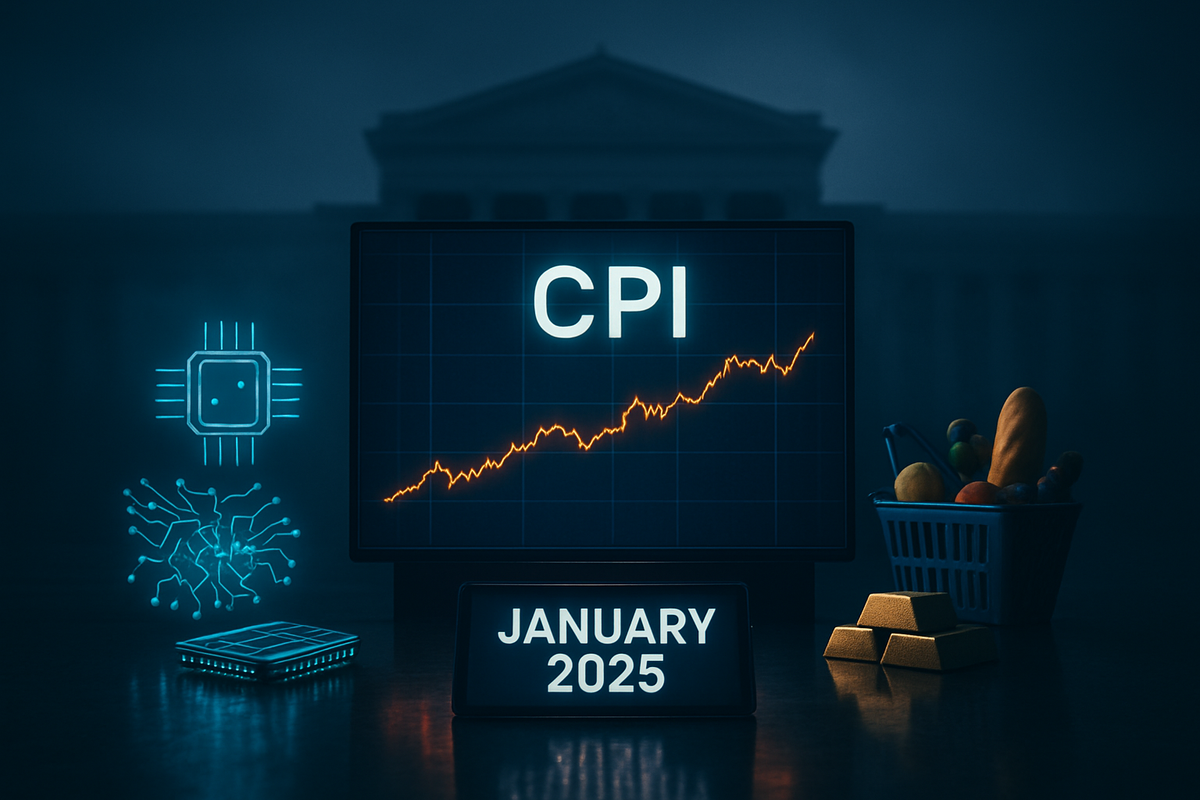
The released data showed headline inflation held steady at 2.7% year-over-year, while Core CPI—which strips out volatile food and energy costs—ticked down slightly to 2.6%. While these numbers suggest stability, they arrived alongside a labor market that is beginning to cool, with unemployment rising toward 4.6%. The Bureau of Labor Statistics noted that the December figures were particularly difficult to compile, as staff worked overtime to reconcile three months of disparate pricing data from retailers and service providers. The result was a report that markets analyzed with both relief and deep skepticism, as it confirmed that "sticky" inflation remains a persistent threat despite the broader economic slowdown.
Key stakeholders, including Treasury Secretary and Fed Chair Jerome Powell, have spent the last week defending the integrity of these numbers against a backdrop of intense political friction. The market reaction was initially one of extreme volatility; the S&P 500 swung violently upon the release as algorithmic traders struggled to interpret the mixed signals of stable headline inflation versus a 3.1% surge in food prices. Investors are now forced to reconcile a resilient CPI with a Congressional Budget Office (CBO) estimate that the shutdown shaved 1.5% off the fourth-quarter GDP, creating a confusing environment where inflation remains high even as growth stalls.
Winners and Losers in the Post-Shutdown Economy
The clarity—or lack thereof—provided by the December CPI has created a distinct divide among public companies. Growth-oriented tech giants, such as Nvidia (NASDAQ: NVDA) and Taiwan Semiconductor Manufacturing Company (NYSE: TSM), have found themselves in a precarious position. While AI demand remains a powerhouse for their bottom lines, these "long-duration" assets are highly sensitive to interest rate expectations. A "sticky" CPI reading that delays Fed rate cuts puts pressure on their valuations, even as Micron Technology (NASDAQ: MU) battles a 238% surge in memory prices that further complicates the inflationary picture for the tech sector.
In the banking sector, the impact is equally bifurcated. JPMorgan Chase & Co. (NYSE: JPM) recently saw its stock price stumble due to weaker-than-expected fee revenue, even as Goldman Sachs Group Inc. (NYSE: GS) enjoyed a surge in trading revenue driven by the very volatility this CPI data created. Traditional lenders like Bank of America (NYSE: BAC) are watching the Fed closely; a prolonged pause in rate cuts keeps their net interest margins high, but if the economy tips into a shutdown-induced recession, the risk of loan defaults could quickly outweigh those gains.
Retailers and consumer staples companies are also on the front lines. Walmart Inc. (NYSE: WMT) and Kroger Co. (NYSE: KR) are navigating a difficult landscape where food inflation remains stubbornly high, specifically in beef prices which have surged nearly 18%. Meanwhile, Amazon.com Inc. (NASDAQ: AMZN) stands to benefit if the CPI data eventually leads to rate cuts, as lower borrowing costs typically spur the discretionary spending that drives their marketplace. Conversely, home improvement giants like Home Depot Inc. (NYSE: HD) and Lowe's Companies Inc. (NYSE: LOW) remain hostage to the mortgage market; until CPI data gives the Fed room to lower rates, the housing market—and their sales—will likely remain in a deep freeze.
Broader Significance: Policy, Politics, and Precedent
The anticipation and subsequent release of this CPI data fit into a larger, more concerning trend of economic data politicization. Unlike the "transitory" inflation debates of years past, the 2026 economic landscape is colored by a reported "criminal investigation" into Fed Chair Jerome Powell and public threats to the central bank's independence. In this environment, the CPI data is not just a measure of prices; it is a political football. Any sign that the Fed is "failing" to hit its 2% target is being used as leverage by critics, complicating the Fed’s ability to act solely on economic merit.
Historically, the late 2025 shutdown draws parallels to the 2018-2019 government impasse, but with much higher stakes. In 2019, inflation was well-contained; in 2026, the Fed is trying to guide the economy down from the highest inflation spike in forty years. The "data gap" caused by the shutdown has made the Fed’s "data-dependent" mantra almost impossible to follow, forcing them to rely on lagging indicators and "nowcasting" models that may not capture the true state of the American consumer.
Furthermore, the ripple effects extend to the global stage. As the U.S. dollar reacts to CPI-driven rate expectations, international competitors and partners are forced to adjust. The surge in gold prices to over $4,000 an ounce as of January 19, 2026, suggests that many investors no longer trust traditional fiat stability during these periods of data uncertainty. The high anticipation for the December CPI was essentially a proxy for a broader anxiety about the stability of U.S. economic institutions and their ability to function under extreme political and administrative stress.
What Comes Next: The Road to the January FOMC
As the market digests the December CPI, all eyes shift to the Federal Open Market Committee (FOMC) meeting on January 27–28, 2026. Currently, the market-implied probability of a rate cut this month is a mere 5%. The consensus is firmly in favor of a "pause," with the Fed funds rate holding at 3.50% to 3.75%. However, the December data has set the stage for a potential pivot in June. If subsequent reports in Q1 2026 show that the December stability was not a fluke, the Fed may finally feel confident enough to begin a cycle of easing.
In the short term, investors should prepare for continued volatility in the logistics and transport sectors. Companies like J.B. Hunt Transport Services Inc. (NASDAQ: JBHT), United Parcel Service Inc. (NYSE: UPS), and FedEx Corp. (NYSE: FDX) are already signaling a slowdown in transcontinental load volumes. This "freight recession" often serves as a leading indicator of cooling consumer demand, which could eventually pull CPI numbers lower than the 2% target, potentially forcing the Fed to cut rates faster than currently anticipated to avoid a hard landing.
Strategically, the next few months will require a pivot toward "quality" and "defensiveness." If inflation remains sticky at 2.7% while GDP growth is hampered by the shutdown's aftermath, the "stagflation" word—so feared in previous decades—may return to the Wall Street lexicon. Investors will likely favor companies with strong pricing power and clean balance sheets that can weather a "higher for longer" interest rate environment while the political dust settles in Washington.
Conclusion: A Market in Transition
The saga of the December CPI data serves as a stark reminder of the fragile relationship between government stability and market confidence. The high anticipation was justified; the 43-day shutdown created a vacuum that allowed speculation to run rampant. While the actual numbers showed a degree of resilience, the underlying "stickiness" in services and food prices ensures that the Federal Reserve's battle is far from over. The path to a 2% inflation target remains blocked by structural issues that a mere "data correction" cannot solve.
Moving forward, the market is likely to remain in a defensive crouch. The Federal Reserve's "wait-and-see" approach is now the only viable strategy as they attempt to parse the noise from the signal in post-shutdown data. For investors, the takeaway is clear: the era of easy, predictable data-driven gains has been replaced by a more complex landscape defined by political risk, institutional friction, and a cooling labor market.
In the coming months, the most important indicators to watch will be the "real-time" data points that don't rely on the BLS—private sector payrolls, credit card spending, and shipping volumes. As we look toward the June FOMC meeting, the December CPI will be remembered as the moment the market realized that the return to "normalcy" would be a much longer and more arduous journey than anyone had anticipated.
This content is intended for informational purposes only and is not financial advice