The Great Commodity Divergence: Broad Funds Rally While Precious Metals Face 'Breathtaking' Volatility
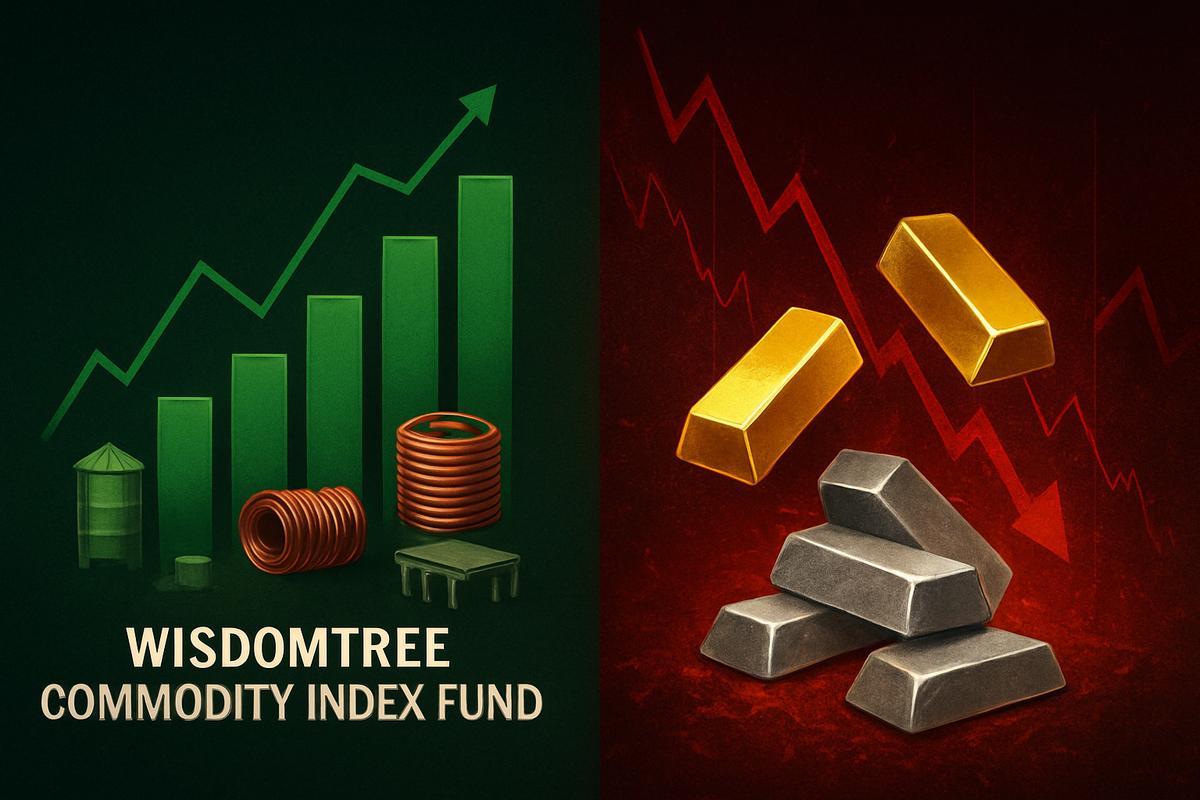
As investors navigate the opening weeks of 2026, the commodity markets have transformed into a tale of two realities. While broad-based commodity vehicles like the WisdomTree Commodity Index Fund (NYSE Arca: GCC) have surged a remarkable 10.7% year-to-date as of early February, the precious metals sector has been rocked by what traders are calling a "breathtaking" meltdown. This sharp divergence has caught many retail investors off guard, particularly those who flooded into gold and silver after a record-breaking 2025.
The immediate implications are clear: the "all-weather" diversification offered by multi-commodity funds is winning the day, while specialized precious metals exposure has become a minefield of volatility. The crash on January 30, 2026—already being dubbed "Smackdown Friday"—has wiped out billions in paper wealth, leading to a massive reassessment of risk in the metals space and highlighting the dangers of excessive leverage in mining equities.
The Meltdown: A Timeline of the January Correction
The first few weeks of 2026 saw gold and silver reach levels that many analysts deemed unsustainable. By mid-January, gold had surged past $5,500 per ounce, while silver peaked at a staggering $119 per ounce. This parabolic move was largely fueled by aggressive speculative buying from retail traders and massive leveraged positions held by overseas investors. However, the music stopped abruptly on January 30, 2026, when the CME Group (NASDAQ: CME) announced a sharp hike in margin requirements for silver and gold futures, effectively forcing overextended traders to liquidate their positions.
The result was a violent correction. The iShares Silver Trust (NYSE Arca: SLV) experienced a single-day drop of nearly 30%—its worst performance since the early 1980s—while the SPDR Gold Shares (NYSE Arca: GLD) plummeted roughly 12%. This "metals meltdown" was exacerbated by the exit of major speculative cohorts in Asian markets, who had used high leverage to ride the 2025 rally. While gold and silver were crashing, the WisdomTree Commodity Index Fund (NYSE Arca: GCC) remained resilient, bolstered by its diversified holdings in agriculture and industrial metals, which have stayed firm due to supply disruptions and strong seasonal demand.
Winners and Losers: Miners vs. Bullion
The current market environment has highlighted the stark difference between holding physical commodities and investing in the companies that extract them. One of the biggest stars of the previous year, the Jupiter Gold & Silver Fund, had reported a staggering 176% one-year return prior to the January crash. However, because the fund holds a significant concentration of mining stocks, it was hit disproportionately hard during the correction. Miners often act as a leveraged play on the underlying metal, but they also carry operational risks that can lead to underperformance during sharp market turns.
Analysts are now warning that mining equities like Newmont Corporation (NYSE: NEM) and Barrick Gold (NYSE: GOLD) face a "leverage paradox." While these companies benefit when prices rise, they are also grappling with rising extraction costs, energy prices, and labor shortages in 2026. During the "Smackdown Friday" event, many mining stocks fell significantly further than the metals themselves, confirming fears that miners can be the "ultimate trap" during a rapid deleveraging event. Conversely, the "winners" in this scenario are the diversified funds like GCC and the Invesco DB Commodity Index Tracking Fund (NYSE Arca: DBC), which avoided the concentrated carnage of the precious metals sector.
Wider Significance: The End of Speculative Foam?
This event fits into a broader trend of "positioning resets" that have defined the mid-2020s. Following years of low interest rates and high liquidity, the early 2026 volatility suggests that the "speculative foam" is finally being scrubbed from the commodity markets. The regulatory intervention by the CME echoes historical precedents like the 2011 silver crash and the 1980 Hunt Brothers event, where margin changes were the primary catalyst for a trend reversal.
The ripple effects are already being felt across the financial industry. Institutional desks are shifting their focus toward "harder" assets and away from the equity-linked leverage of mining stocks. There is also a growing policy discussion regarding the influence of high-frequency trading and retail-led "squeezes" in the silver market. For the broader market, the strength of the WisdomTree Commodity Index Fund (NYSE Arca: GCC) indicates that while the "precious" part of the commodity complex is in turmoil, the fundamental demand for raw materials—driven by infrastructure needs and energy transition—remains robust.
What Comes Next: A Search for Stability
In the short term, the precious metals market is likely to remain in a period of consolidation as the remaining leveraged positions are worked through. Investors should watch for a stabilization in the iShares Silver Trust (NYSE Arca: SLV) and SPDR Gold Shares (NYSE Arca: GLD) as a sign that the "meltdown" phase has ended. However, the path forward for mining stocks is more uncertain. If extraction costs continue to rise alongside a volatile metal price, the divergence between bullion and miners could widen further, necessitating a strategic pivot for funds that have traditionally relied on mining leverage.
Longer-term, 2026 may be remembered as the year that commodity diversification became a necessity rather than an option. The success of the WisdomTree Commodity Index Fund (NYSE Arca: GCC) suggests that a balanced approach—incorporating energy, grains, and softs—is the only way to survive the "breathtaking" swings now common in the metals space. Market participants should prepare for a scenario where "value" in commodities is found not in record-high prices, but in the stability of supply chains and diversified asset allocations.
Final Assessment: The Lesson of 2026
The "Metals Meltdown" of early 2026 serves as a stark reminder of the risks inherent in crowded trades. While a 176% one-year return from funds like Jupiter Gold & Silver is impressive, it came with a level of risk that many retail investors failed to fully appreciate until the January crash. The 10.7% YTD gain of the WisdomTree Commodity Index Fund (NYSE Arca: GCC), while more modest, represents a far more sustainable path for those looking to hedge against inflation and geopolitical uncertainty.
Moving forward, the market will be watching closely to see if the precious metals correction spills over into other asset classes or if it remains a contained "reset" of speculative positioning. For investors, the takeaway is clear: avoid the trap of chasing parabolic moves in specialized sectors and respect the operational risks of mining stocks. As we head further into 2026, diversification remains the most potent weapon in a volatile commodity landscape.
This content is intended for informational purposes only and is not financial advice.