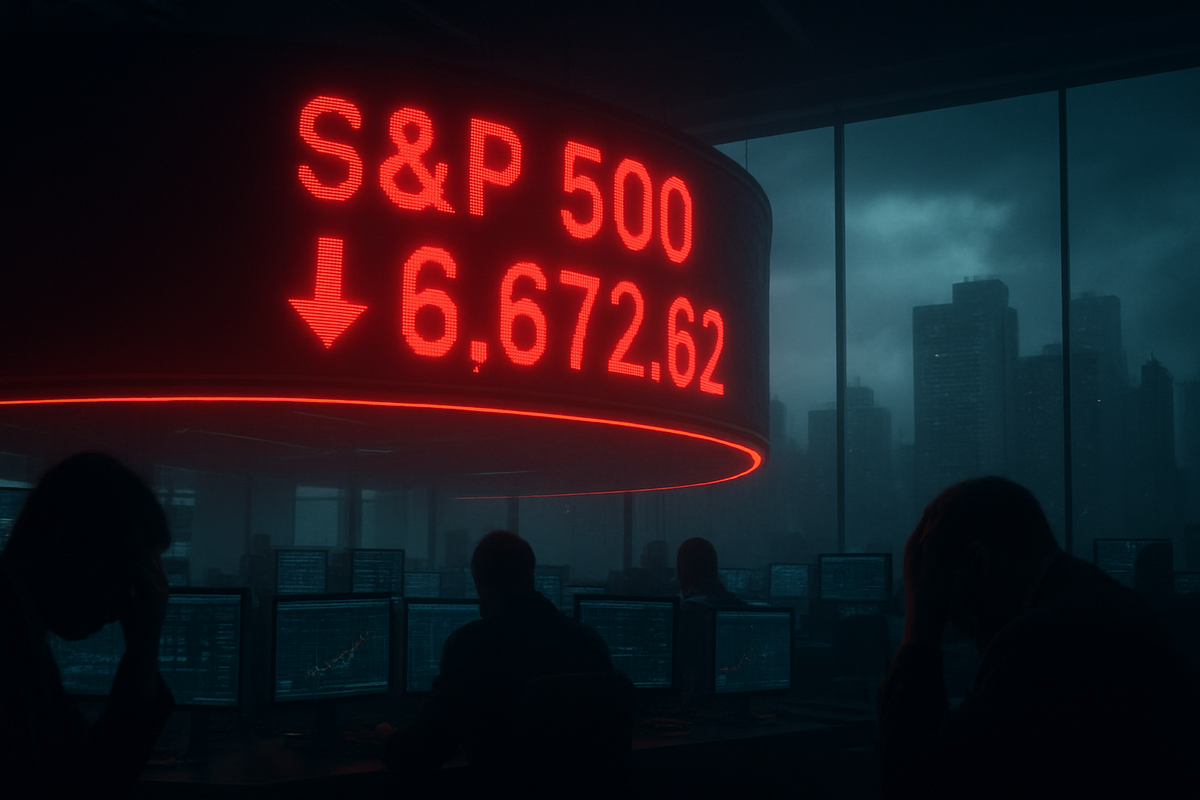
Wall Street faced a brutal reckoning on Friday, March 13, 2026, as the S&P 500 (NYSE Arca: SPY) tumbled 1.5% to close at 6,672.62, marking its lowest finish of the year. The decline capped a week of intensifying volatility, wiping out early-year gains and leaving the benchmark index more than 5% below its January peak. Investors were spooked by a combination of sticky inflation data and an escalating energy crisis, which have effectively revived the specter of stagflation in the U.S. economy.
The slide was broad-based, with nine of the 11 major sectors finishing in the red. In a troubling sign for market stability, traditional defensive havens failed to provide their usual sanctuary. Consumer Staples and Real Estate led the day's retreat, suggesting that the current economic pressures—ranging from rising borrowing costs to a sudden contraction in the labor market—are beginning to strain even the most resilient corners of the equity market.
A Perfect Storm: Breaking Down the March 13 Rout
The descent to 6,672.62 was the culmination of a week fraught with negative catalysts. The primary driver was a sharp spike in energy prices following reports of intensified conflict in the Middle East and the tactical closure of the Strait of Hormuz. This geopolitical shock sent Brent crude oil soaring toward the $100-per-barrel mark, raising immediate concerns about a renewed surge in transportation and manufacturing costs. The energy shock hit just as the market was digesting a disappointing Personal Consumption Expenditures (PCE) report, which showed core inflation remaining stubbornly high at 3.1%.
The timeline of the week’s decline began with Tuesday’s downward revision of Q4 2025 GDP, which showed the economy growing at a sluggish 0.7% annualized rate. By mid-week, the mood soured further when a catastrophic labor report revealed the U.S. economy shed 92,000 jobs in February—the first such contraction since the 2020 pandemic era. This "toxic cocktail" of slowing growth and rising prices left the Federal Reserve in a precarious position, effectively ending hopes for a rate cut at the upcoming FOMC meeting on March 17-18.
By Friday afternoon, the selling pressure became institutional. The CBOE Volatility Index (VIX), often called the market's "fear gauge," surged to 28.4, its highest level in months. This spike signaled a shift from tactical profit-taking to a broader defensive de-risking by hedge funds and pension managers. As the S&P 500 broke below its 200-day moving average, technical sell orders were triggered, accelerating the slide into the closing bell.
Sector Breakdown: Staples and Real Estate Under Fire
The most alarming aspect of Friday’s session was the sharp decline in interest-rate-sensitive and defensive sectors. The Real Estate sector was hit particularly hard, with industry leader Prologis (NYSE: PLD) and telecommunications infrastructure giant American Tower (NYSE: AMT) seeing significant sell-offs. As Treasury yields climbed in response to inflation fears, the high-yielding nature of Real Estate Investment Trusts (REITs) lost its luster, and the prospect of sustained high borrowing costs threatened to freeze new property developments and refinancings.
Consumer Staples, typically the sector investors flock to during times of uncertainty, offered no protection. Heavyweights like Procter & Gamble (NYSE: PG) and Walmart (NYSE: WMT) saw their stock prices buckle under the weight of rising input costs and the fear that consumer spending is finally reaching a breaking point. With the universal tariffs enacted in late 2025 continuing to pressure margins, investors are increasingly skeptical that these companies can pass further price increases on to an already stretched American public.
In contrast, the Energy sector stood as the lone survivor of the rout. Companies like ExxonMobil (NYSE: XOM) saw gains as oil prices surged, benefiting from the geopolitical instability. Meanwhile, the high-flying technology sector, which had carried the market through much of 2025, continued its "AI fatigue" correction. Companies that had been the darlings of the market, including Nvidia (NASDAQ: NVDA) and Apple (NASDAQ: AAPL), faced a second consecutive week of outflows as valuations were reassessed against a backdrop of higher discount rates and cooling corporate capital expenditure.
The Broader Impact: Stagflation and Historical Precedents
The current market environment draws uncomfortable comparisons to the stagflationary periods of the 1970s and the "lost decade" for equities. The 1.5% drop on March 13 is significant because it marks a definitive break in the "Goldilocks" narrative—the idea that the Fed could orchestrate a soft landing with low inflation and steady growth. Instead, the market is now pricing in a "hard landing" where the central bank is forced to keep interest rates high to combat energy-driven inflation, even as the labor market begins to crack.
This event has massive ripple effects on global competitors and partners. With the U.S. being a primary engine of global consumption, the contraction in the labor market and the 1.5% market slide suggest a cooling of global trade. Furthermore, the regulatory environment is likely to tighten as policymakers face pressure to address the cost-of-living crisis. We may see renewed calls for energy subsidies or windfall taxes on oil companies, adding another layer of uncertainty for corporate earnings in the second half of 2026.
Historically, when the S&P 500 breaks its 200-day moving average alongside a rise in the VIX, it often precedes a period of prolonged consolidation or a deeper bear market. The last time the index faced such a sharp decline on a Friday the 13th was during the early days of the COVID-19 pandemic, though the drivers today are fundamentally different—rooted in supply-side shocks and fiscal policy rather than a public health crisis.
Looking Ahead: Strategic Pivots and Market Risks
In the short term, all eyes will be on the Federal Reserve’s meeting next week. While a rate hike seems unlikely given the weak jobs data, a "hawkish hold"—where the Fed keeps rates steady but warns of future increases—could send the S&P 500 toward its next support level near 6,500. Investors should prepare for continued volatility as the market seeks a new floor. The era of "cheap money" is firmly in the rearview mirror, and the focus is shifting toward companies with strong balance sheets and "moats" that can withstand rising operational costs.
Long-term, this market reset may force a strategic pivot for many public companies. We are likely to see a shift away from aggressive growth-at-all-costs strategies toward capital preservation and efficiency. For the technology sector, this means moving beyond the AI hype and delivering tangible productivity gains that can justify current valuations. For the Real Estate and Consumer sectors, adaptation will mean finding ways to navigate a higher-for-longer interest rate environment while managing a consumer base that is increasingly price-sensitive.
Wrap-Up: Navigating a New Economic Reality
The S&P 500’s close at 6,672.62 on March 13, 2026, is more than just a 2026 low; it is a signal that the post-pandemic growth cycle is facing its most significant challenge yet. The failure of defensive sectors like Staples and Real Estate to hold their ground suggests that the market’s traditional playbooks may no longer apply in a world of high energy costs and stagnant growth. Investors are no longer just worried about a correction; they are worried about the fundamental health of the U.S. consumer.
Moving forward, the market will likely remain in a "show me" mode, where earnings reports and economic data are scrutinized with unprecedented intensity. The coming months will be a test of resilience for both the economy and the markets. Investors should watch the price of oil and the monthly payroll reports as the primary indicators of where the floor might eventually be found. While the current outlook is grim, such periods of dislocation often pave the way for the next generation of market leaders—though for now, caution remains the order of the day.
This content is intended for informational purposes only and is not financial advice.