
Over the past six months, Lyft has been a great trade, beating the S&P 500 by 9.6%. Its stock price has climbed to $16.83, representing a healthy 19.5% increase. This run-up might have investors contemplating their next move.
Following the strength, is LYFT a buy right now? Or is the market overestimating its value? Find out in our full research report, it’s free.
Why Does Lyft Spark Debate?
Founded by Logan Green and John Zimmer as a long-distance intercity carpooling company Zimride, Lyft (NASDAQ: LYFT) operates a ridesharing network in the US and Canada.
Two Things to Like:
1. Active Riders Skyrocket, Fueling Growth Opportunities
As a gig economy marketplace, Lyft generates revenue growth by expanding the number of services on its platform (e.g. rides, deliveries, freelance jobs) and raising the commission fee from each service provided.
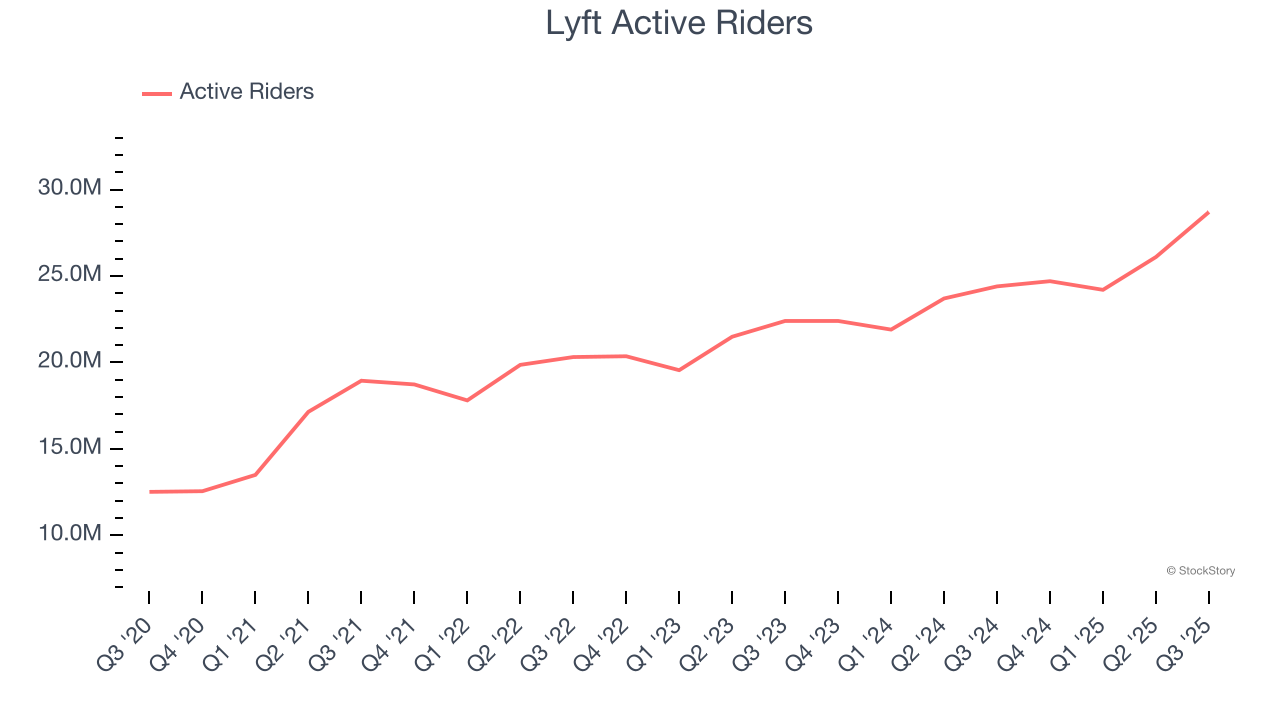
Over the last two years, Lyft’s active riders, a key performance metric for the company, increased by 11.2% annually to 28.7 million in the latest quarter. This growth rate is strong for a consumer internet business and indicates people love using its offerings.
2. Increasing Free Cash Flow Margin Juices Financials
If you’ve followed StockStory for a while, you know we emphasize free cash flow. Why, you ask? We believe that in the end, cash is king, and you can’t use accounting profits to pay the bills.
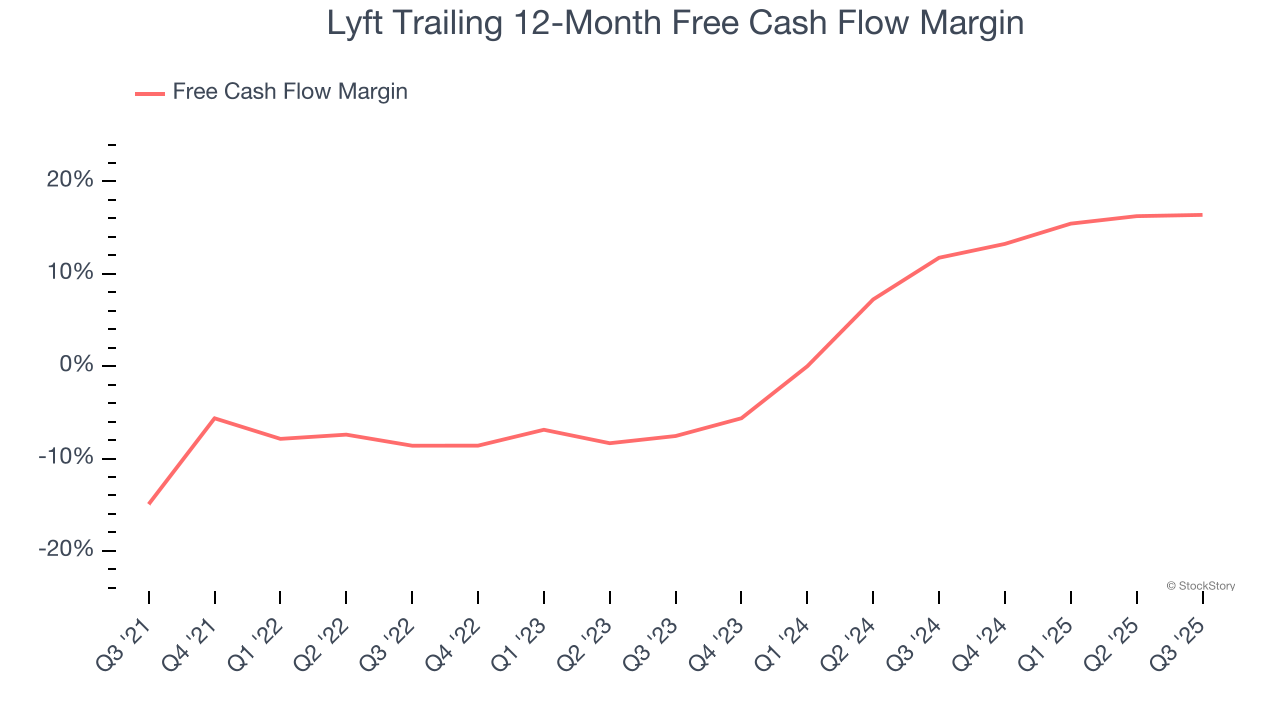
As you can see below, Lyft’s margin expanded by 25 percentage points over the last few years. This is encouraging, and we can see it became a less capital-intensive business because its free cash flow profitability rose more than its operating profitability. Lyft’s free cash flow margin for the trailing 12 months was 16.4%.
One Reason to be Careful:
Low Gross Margin Reveals Weak Structural Profitability
For gig economy businesses like Lyft, gross profit tells us how much money the company gets to keep after covering the base cost of its products and services, which typically include server hosting, customer support, and payment processing fees. Another cost of revenue could also be insurance to protect against liabilities arising from providing transportation, housing, or freelance work services.
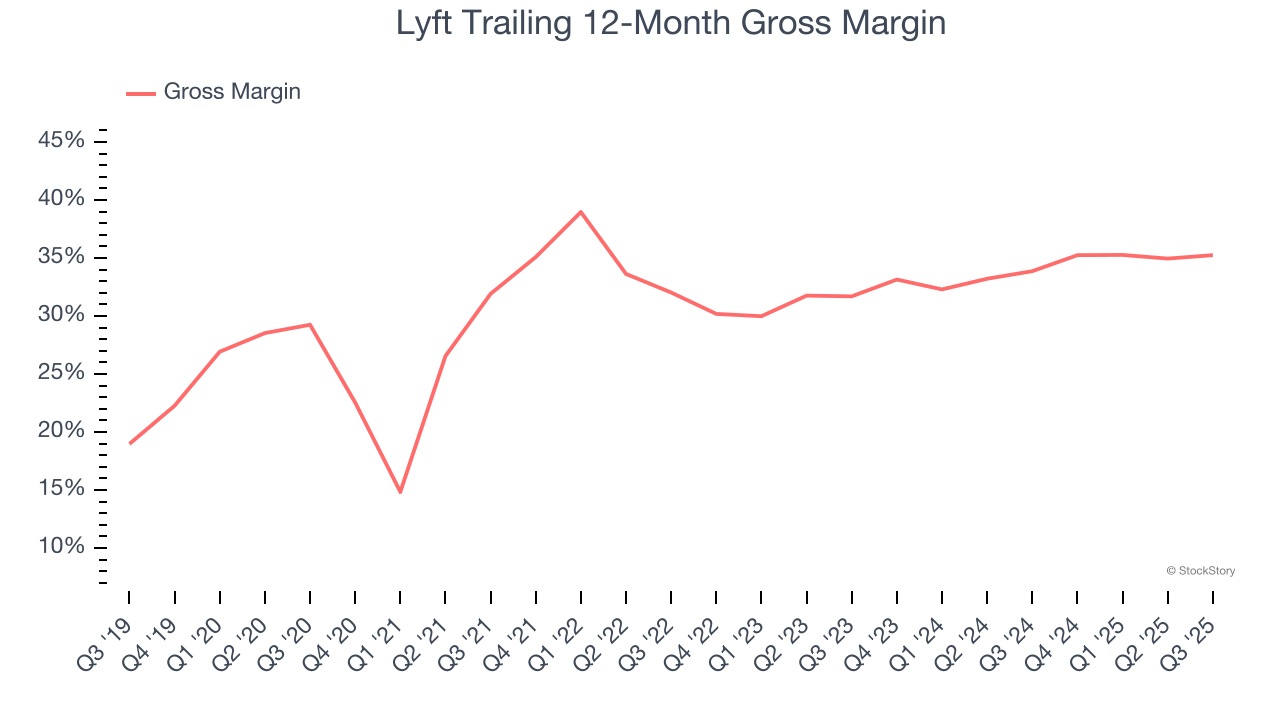
Lyft’s unit economics are far below other consumer internet companies, signaling it operates in a competitive market and must pay many third parties a slice of its sales to distribute its products and services. As you can see below, it averaged a 34.6% gross margin over the last two years. Said differently, Lyft had to pay a chunky $65.39 to its service providers for every $100 in revenue.
Final Judgment
Lyft has huge potential even though it has some open questions, and with its shares topping the market in recent months, the stock trades at 10.1× forward EV/EBITDA (or $16.83 per share). Is now the right time to buy? See for yourself in our full research report, it’s free.
Stocks We Like Even More Than Lyft
Check out the high-quality names we’ve flagged in our Top 6 Stocks for this week. This is a curated list of our High Quality stocks that have generated a market-beating return of 244% over the last five years (as of June 30, 2025).
Stocks that have made our list include now familiar names such as Nvidia (+1,326% between June 2020 and June 2025) as well as under-the-radar businesses like the once-small-cap company Exlservice (+354% five-year return). Find your next big winner with StockStory today.