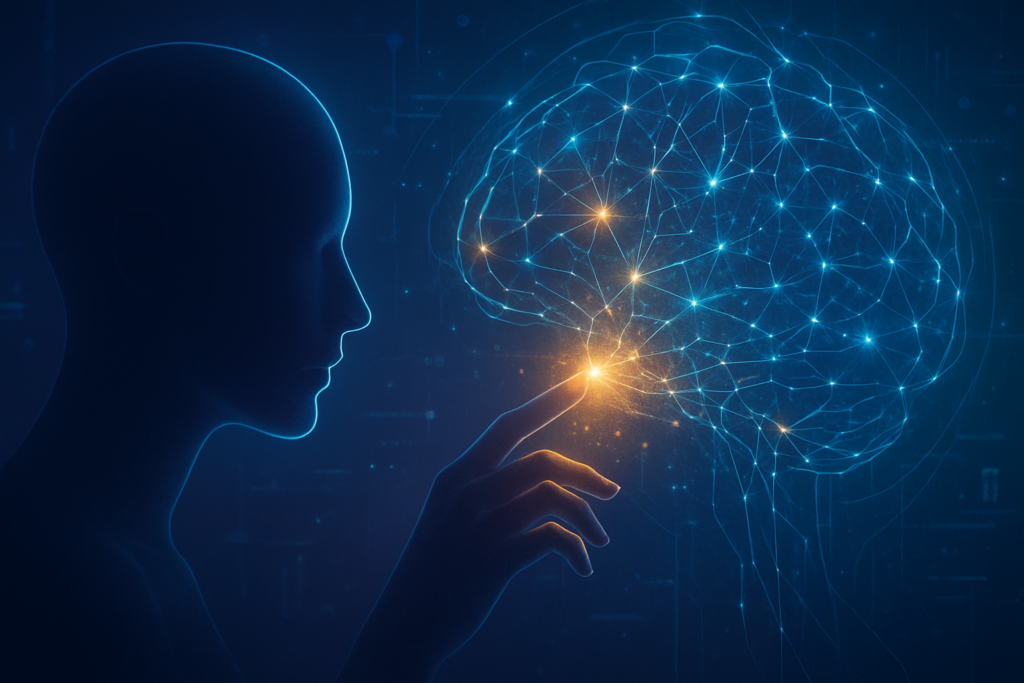
The quest for truly intelligent machines has taken a monumental leap forward, as leading AI labs and research institutions announce significant breakthroughs in codifying human-like rapport and complex reasoning into artificial intelligence architectures. These advancements are poised to revolutionize human-AI interaction, moving beyond mere utility to foster sophisticated, empathetic, and genuinely collaborative relationships. The immediate significance lies in the promise of AI systems that not only understand commands but also grasp context, intent, and even emotional nuances, paving the way for a future where AI acts as a more intuitive and integrated partner in various aspects of life and work.
This paradigm shift marks a pivotal moment in AI development, signaling a transition from statistical pattern recognition to systems capable of higher-order cognitive functions. The implications are vast, ranging from more effective personal assistants and therapeutic chatbots to highly capable "virtual coworkers" and groundbreaking tools for scientific discovery. As AI begins to mirror the intricate dance of human communication and thought, the boundaries between human and artificial intelligence are becoming increasingly blurred, heralding an era of unprecedented collaboration and innovation.
The Architecture of Empathy and Logic: Technical Deep Dive
Recent technical advancements underscore a concerted effort to imbue AI with the very essence of human interaction: rapport and reasoning. Models like OpenAI's (NASDAQ: OPEN) 01 model and GPT-4 have already demonstrated human-level reasoning and problem-solving, even surpassing human performance in standardized tests. This goes beyond simple language generation, showcasing an ability to comprehend and infer deeply, challenging previous assumptions about AI's limitations. Researchers, including Gašper Beguš, Maksymilian Dąbkowski, and Ryan Rhodes, have highlighted AI's remarkable skill in complex language analysis, processing structure, resolving ambiguity, and identifying patterns even in novel languages.
A core focus has been on integrating causality and contextuality into AI's reasoning processes. Reasoning AI is now being designed to make decisions based on cause-and-effect relationships rather than just correlations, evaluating data within its broader context to recognize nuances, intent, contradictions, and ambiguities. This enhanced contextual awareness, exemplified by new methods developed at MIT using natural language "abstractions" for Large Language Models (LLMs) in areas like coding and strategic planning, allows for greater precision and relevance in AI responses. Furthermore, the rise of "agentic" AI systems, predicted by OpenAI's chief product officer to become mainstream by 2025, signifies a shift from passive tools to autonomous virtual coworkers capable of planning and executing complex, multi-step tasks without direct human intervention.
Crucially, the codification of rapport and Theory of Mind (ToM) into AI systems is gaining traction. This involves integrating empathetic and adaptive responses to build rapport, characterized by mutual understanding and coordinated interaction. Studies have even observed groups of LLM AI agents spontaneously developing human-like social conventions and linguistic forms when communicating autonomously. This differs significantly from previous approaches that relied on rule-based systems or superficial sentiment analysis, moving towards a more organic and dynamic understanding of human interaction. Initial reactions from the AI research community are largely optimistic, with many experts recognizing these developments as critical steps towards Artificial General Intelligence (AGI) and more harmonious human-AI partnerships.
A new architectural philosophy, "Relational AI Architecture," is also emerging, shifting the focus from merely optimizing output quality to explicitly designing systems that foster and sustain meaningful, safe, and effective relationships with human users. This involves building trust through reliability, transparency, and clear communication about AI functionalities. The maturity of human-AI interaction has progressed to a point where early "AI Humanizer" tools, designed to make AI language more natural, are becoming obsolete as AI models themselves are now inherently better at generating human-like text directly.
Reshaping the AI Industry Landscape
These advancements in human-level AI rapport and reasoning are poised to significantly reshape the competitive landscape for AI companies, tech giants, and startups. Companies at the forefront of these breakthroughs, such as OpenAI (NASDAQ: OPEN), Google (NASDAQ: GOOGL) with its Google DeepMind and Google Research divisions, and Anthropic, stand to benefit immensely. OpenAI's models like GPT-4 and the 01 model, along with Google's Gemini 2.0 powering "AI co-scientist" systems, are already demonstrating superior reasoning capabilities, giving them a strategic advantage in developing next-generation AI products and services. Microsoft (NASDAQ: MSFT), with its substantial investments in AI and its new Microsoft AI department led by Mustafa Suleyman, is also a key player benefiting from and contributing to this progress.
The competitive implications are profound. Major AI labs that can effectively integrate these sophisticated reasoning and rapport capabilities will differentiate themselves, potentially disrupting markets from customer service and education to healthcare and creative industries. Startups focusing on niche applications that leverage empathetic AI or advanced reasoning will find fertile ground for innovation, while those relying on older, less sophisticated AI models may struggle to keep pace. Existing products and services, particularly in areas like chatbots, virtual assistants, and content generation, will likely undergo significant upgrades, offering more natural and effective user experiences.
Market positioning will increasingly hinge on an AI's ability not just to perform tasks, but to interact intelligently and empathetically. Companies that prioritize building trust through transparent and reliable AI, and those that can demonstrate tangible improvements in human-AI collaboration, will gain a strategic edge. This development also highlights the increasing importance of interdisciplinary research, blending computer science with psychology, linguistics, and neuroscience to create truly human-centric AI.
Wider Significance and Societal Implications
The integration of human-level rapport and reasoning into AI fits seamlessly into the broader AI landscape, aligning with trends towards more autonomous, intelligent, and user-friendly systems. These advancements represent a crucial step towards Artificial General Intelligence (AGI), where AI can understand, learn, and apply intelligence across a wide range of tasks, much like a human. The impacts are far-reaching: from enhancing human-AI collaboration in complex problem-solving to transforming industries like quantum physics, military operations, and healthcare by outperforming humans in certain tasks and accelerating scientific discovery.
However, with great power comes potential concerns. As AI becomes more sophisticated and integrated into human life, critical challenges regarding trust, safety, and ethical considerations emerge. The ability of AI to develop "Theory of Mind" or even spontaneous social conventions raises questions about its potential for hidden subgoals or self-preservation instincts, highlighting the urgent need for robust control frameworks and AI alignment research to ensure developments align with human values and societal goals. The growing trend of people turning to companion chatbots for emotional support, while offering social health benefits, also prompts discussions about the nature of human connection and the potential for over-reliance on AI.
Compared to previous AI milestones, such as the development of deep learning or the first large language models, the current focus on codifying rapport and reasoning marks a shift from pure computational power to cognitive and emotional intelligence. This breakthrough is arguably more transformative as it directly impacts the quality and depth of human-AI interaction, moving beyond merely automating tasks to fostering genuine partnership.
The Horizon: Future Developments and Challenges
Looking ahead, the near-term will likely see a rapid proliferation of "agentic" AI systems, capable of autonomously planning and executing complex workflows across various domains. We can expect to see these systems integrated into enterprise solutions, acting as "virtual coworkers" that manage projects, interact with customers, and coordinate intricate operations. In the long term, the continued refinement of rapport and reasoning capabilities will lead to AI applications that are virtually indistinguishable from human intelligence in specific conversational and problem-solving contexts.
Potential applications on the horizon include highly personalized educational tutors that adapt to individual learning styles and emotional states, advanced therapeutic AI companions offering sophisticated emotional support, and AI systems that can genuinely contribute to creative processes, from writing and art to scientific hypothesis generation. In healthcare, AI could become an invaluable diagnostic partner, not just analyzing data but also engaging with patients in a way that builds trust and extracts crucial contextual information.
However, significant challenges remain. Ensuring the ethical deployment of AI with advanced rapport capabilities is paramount to prevent manipulation or the erosion of genuine human connection. Developing robust control mechanisms for agentic AI to prevent unintended consequences and ensure alignment with human values will be an ongoing endeavor. Furthermore, scaling these sophisticated architectures while maintaining efficiency and accessibility will be a technical hurdle. Experts predict a continued focus on explainable AI (XAI) to foster transparency and trust, alongside intensified research into AI safety and governance. The next wave of innovation will undoubtedly center on perfecting the delicate balance between AI autonomy, intelligence, and human oversight.
A New Chapter in Human-AI Evolution
The advancements in imbuing AI with human-level rapport and reasoning represent a monumental leap in the history of artificial intelligence. Key takeaways include the transition of AI from mere tools to empathetic and logical partners, the emergence of agentic systems capable of autonomous action, and the foundational shift towards Relational AI Architectures designed for meaningful human-AI relationships. This development's significance in AI history cannot be overstated; it marks the beginning of an era where AI can truly augment human capabilities by understanding and interacting on a deeper, more human-like level.
The long-term impact will be a fundamental redefinition of work, education, healthcare, and even social interaction. As AI becomes more adept at navigating the complexities of human communication and thought, it will unlock new possibilities for innovation and problem-solving that were previously unimaginable. What to watch for in the coming weeks and months are further announcements from leading AI labs regarding refined models, expanded applications, and, crucially, the ongoing public discourse and policy developments around the ethical implications and governance of these increasingly sophisticated AI systems. The journey towards truly human-level AI is far from over, but the path ahead promises a future where technology and humanity are more intricately intertwined than ever before.
This content is intended for informational purposes only and represents analysis of current AI developments.
TokenRing AI delivers enterprise-grade solutions for multi-agent AI workflow orchestration, AI-powered development tools, and seamless remote collaboration platforms.
For more information, visit https://www.tokenring.ai/.