The artificial intelligence industry has reached a pivotal infrastructure milestone as silicon photonics transitions from a long-promised laboratory curiosity to the backbone of global data centers. In a move that signals the end of the "copper era" for high-performance computing, Marvell Technology (NASDAQ: MRVL) officially announced its definitive agreement to acquire Celestial AI on December 2, 2025, for an initial value of $3.25 billion. This acquisition, coupled with Broadcom’s (NASDAQ: AVGO) staggering record of $20 billion in AI hardware revenue for fiscal year 2025, confirms that light-based interconnects are no longer a luxury—they are a necessity for the next generation of generative AI.
The commercial breakthrough comes at a critical time when traditional electrical signaling is hitting physical limits. As AI models like OpenAI’s "Titan" project demand unprecedented levels of data throughput, the industry is shifting toward optical solutions to solve the "memory wall"—the bottleneck where processors spend more time waiting for data than computing it. This convergence of Marvell’s strategic M&A and Broadcom’s dominant market performance marks the beginning of a new epoch in AI hardware, where silicon photonics provides the massive bandwidth and energy efficiency required to sustain the current pace of AI scaling.
Breaking the Memory Wall: The Technical Leap to Photonic Fabrics
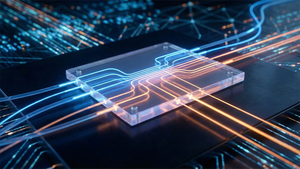
The centerpiece of this technological shift is the "Photonic Fabric," a proprietary architecture developed by Celestial AI that Marvell is now integrating into its portfolio. Unlike traditional pluggable optics that sit at the edge of a motherboard, Celestial AI’s technology utilizes an Optical Multi-Chip Interconnect Bridge (OMIB). This allows for 3D packaging where optical interconnects are placed directly on the silicon substrate alongside AI accelerators (XPUs) and High Bandwidth Memory (HBM). By using light to transport data across these components, the Photonic Fabric delivers 25 times greater bandwidth while reducing latency and power consumption by a factor of ten compared to existing copper-based solutions.
Broadcom (NASDAQ: AVGO) has simultaneously pushed the envelope with its own optical innovations, recently unveiling the Tomahawk 6 "Davidson" switch. This 102.4 Tbps Ethernet switch is the first to utilize 200G-per-lane Co-Packaged Optics (CPO). By integrating the optical engines directly into the switch package, Broadcom has slashed the energy required to move a bit of data, a feat previously thought impossible at these speeds. The industry's move to 1.6T and eventually 3.2T interconnects is now being realized through these advancements in silicon photonics, allowing hundreds of individual chips to function as a single, massive "virtual" processor.
This shift represents a fundamental departure from the "scale-out" networking of the past decade. Previously, data centers connected clusters of servers using standard networking cables, which introduced significant lag. The new silicon photonics paradigm enables "scale-up" architectures, where the entire rack—or even multiple racks—is interconnected via a seamless web of light. This allows for near-instantaneous memory sharing across thousands of GPUs, effectively neutralizing the physical distance between chips and allowing larger models to be trained in a fraction of the time.
Initial reactions from the AI research community have been overwhelmingly positive, with experts noting that these hardware breakthroughs are the "missing link" for trillion-parameter models. By moving the data bottleneck from the electrical domain to the optical domain, engineers can finally match the raw processing power of modern chips with a communication infrastructure that can keep up. The integration of 3nm Digital Signal Processors (DSPs) like Broadcom’s Sian3 further optimizes this ecosystem, ensuring that the transition to light is as power-efficient as possible.
Market Dominance and the New Competitive Landscape
The acquisition of Celestial AI positions Marvell Technology (NASDAQ: MRVL) as a formidable challenger to the established order of AI networking. By securing the Photonic Fabric technology, Marvell is targeting a $1 billion annualized revenue run rate for its optical business by 2029. This move is a direct shot across the bow of Nvidia (NASDAQ: NVDA) (NASDAQ: NVDA), which has traditionally dominated the AI interconnect space with its proprietary NVLink technology. Marvell’s strategy is to offer an open, high-performance alternative that appeals to hyperscalers like Google (NASDAQ: GOOGL) and Meta (NASDAQ: META), who are increasingly looking to decouple their hardware stacks from single-vendor ecosystems.
Broadcom, meanwhile, has solidified its status as the "arms dealer" of the AI era. With AI revenue surging to $20 billion in 2025—a 65% year-over-year increase—Broadcom’s dominance in custom ASICs and high-end switching is unparalleled. Their record Q4 revenue of $6.5 billion was largely driven by the massive deployment of custom AI accelerators for major cloud providers. By leading the charge in Co-Packaged Optics, Broadcom is ensuring that it remains the primary partner for any firm building a massive AI cluster, effectively gatekeeping the physical layer of the AI revolution.
The competitive implications for startups and smaller AI labs are profound. As the cost of building state-of-the-art optical infrastructure rises, the barrier to entry for training "frontier" models becomes even higher. However, the availability of standardized silicon photonics products from Marvell and Broadcom could eventually democratize access to high-performance interconnects, allowing smaller players to build more efficient clusters using off-the-shelf components rather than expensive, proprietary systems.
For the tech giants, this development is a strategic win. Companies like Meta (NASDAQ: META) have already begun trialing Broadcom’s CPO solutions to lower the massive electricity bills associated with their AI data centers. As silicon photonics reduces the power overhead of data movement, these companies can allocate more of their power budget to actual computation, maximizing the return on their multi-billion dollar infrastructure investments. The market is now seeing a clear bifurcation: companies that master the integration of light and silicon will lead the next decade of AI, while those reliant on traditional copper interconnects risk being left in the dark.
The Broader Significance: Sustaining the AI Boom
The commercialization of silicon photonics is more than just a hardware upgrade; it is a vital survival mechanism for the AI industry. As the world grapples with the environmental impact of massive data centers, the energy efficiency gains provided by optical interconnects are essential. By reducing the power required for data transmission by 90%, silicon photonics offers a path toward sustainable AI scaling. This shift is critical as global power grids struggle to keep pace with the exponential demand for AI compute, turning energy efficiency into a competitive "moat" for the most advanced tech firms.
This milestone also represents a significant extension of Moore’s Law. For years, skeptics argued that the end of traditional transistor scaling would lead to a plateau in computing performance. Silicon photonics bypasses this limitation by focusing on the "interconnect bottleneck" rather than just the raw transistor count. By improving the speed at which data moves between chips, the industry can continue to see massive performance gains even as individual processors face diminishing returns from further miniaturization.
Comparisons are already being drawn to the transition from dial-up internet to fiber optics. Just as fiber optics revolutionized global communications by enabling the modern internet, silicon photonics is poised to do the same for internal computer architectures. This is the first time in the history of computing that optical technology has been integrated so deeply into the chip packaging itself, marking a permanent shift in how we design and build high-performance systems.
However, the transition is not without concerns. The complexity of manufacturing silicon photonics at scale remains a significant challenge. The precision required to align laser sources with silicon waveguides is measured in nanometers, and any manufacturing defect can render an entire multi-thousand-dollar chip useless. Furthermore, the industry must now navigate a period of intense standardization, as different vendors vie to make their optical protocols the industry standard. The outcome of these "standards wars" will dictate the shape of the AI industry for the next twenty years.
Future Horizons: From Data Centers to the Edge
Looking ahead, the near-term focus will be the rollout of 1.6T and 3.2T optical networks throughout 2026 and 2027. Experts predict that the success of the Marvell-Celestial AI integration will trigger a wave of further consolidation in the semiconductor industry, as other players scramble to acquire optical IP. We are likely to see "optical-first" AI architectures where the processor and memory are no longer distinct units but are instead part of a unified, light-driven compute fabric.
In the long term, the applications of silicon photonics could extend beyond the data center. While currently too expensive for consumer electronics, the maturation of the technology could eventually bring optical interconnects to high-end workstations and even specialized edge AI devices. This would enable "AI at the edge" with capabilities that currently require a cloud connection, such as real-time high-fidelity language translation or complex autonomous navigation, all while maintaining strict power efficiency.
The next major challenge for the industry will be the integration of "on-chip" lasers. Currently, most silicon photonics systems rely on external laser sources, which adds complexity and potential points of failure. Research into integrating light-emitting materials directly into the silicon manufacturing process is ongoing, and a breakthrough in this area would represent the final piece of the silicon photonics puzzle. If successful, this would allow for truly monolithic optical chips, further driving down costs and increasing performance.
A New Era of Luminous Computing
The events of late 2025—Marvell’s multi-billion dollar bet on Celestial AI and Broadcom’s record-shattering AI revenue—will be remembered as the moment silicon photonics reached its commercial tipping point. The transition from copper to light is no longer a theoretical goal but a market reality that is reshaping the balance of power in the semiconductor industry. By solving the memory wall and drastically reducing power consumption, silicon photonics has provided the necessary foundation for the next decade of AI advancement.
The key takeaway for the industry is that the "infrastructure bottleneck" is finally being broken. As light-based interconnects become standard, the focus will shift from how to move data to how to use it most effectively. This development is a testament to the ingenuity of the semiconductor community, which has successfully married the worlds of photonics and electronics to overcome the physical limits of traditional computing.
In the coming weeks and months, investors and analysts will be closely watching the regulatory approval process for the Marvell-Celestial AI deal and Broadcom’s initial shipments of the Tomahawk 6 "Davidson" switch. These milestones will serve as the first real-world tests of the silicon photonics era. As the first light-driven AI clusters come online, the true potential of this technology will finally be revealed, ushering in a new age of luminous, high-efficiency computing.
This content is intended for informational purposes only and represents analysis of current AI developments.
TokenRing AI delivers enterprise-grade solutions for multi-agent AI workflow orchestration, AI-powered development tools, and seamless remote collaboration platforms.
For more information, visit https://www.tokenring.ai/.