The landscape of biological science underwent a seismic shift in November 2024, when Google DeepMind, a subsidiary of Alphabet Inc. (NASDAQ: GOOGL), officially released the source code and model weights for AlphaFold 3. This decision was more than a mere software update; it was a high-stakes pivot that ended months of intense scientific debate and fundamentally altered the trajectory of global drug discovery. By moving from a restricted, web-only "black box" to an open-source model for academic use, DeepMind effectively democratized the ability to predict the interactions of life’s most complex molecules, setting the stage for the pharmaceutical breakthroughs we are witnessing today in early 2026.
The significance of this move cannot be overstated. Coming just one month after the 2024 Nobel Prize in Chemistry was awarded to Demis Hassabis and John Jumper for their work on protein structure prediction, the release of AlphaFold 3 (AF3) represented the transition of AI from a theoretical marvel to a practical, ubiquitous tool for the global research community. It transformed the "protein folding problem"—once a 50-year-old mystery—into a solved foundation upon which the next generation of genomic medicine, oncology, and antibiotic research is currently being built.
From Controversy to Convergence: The Technical Evolution of AlphaFold 3
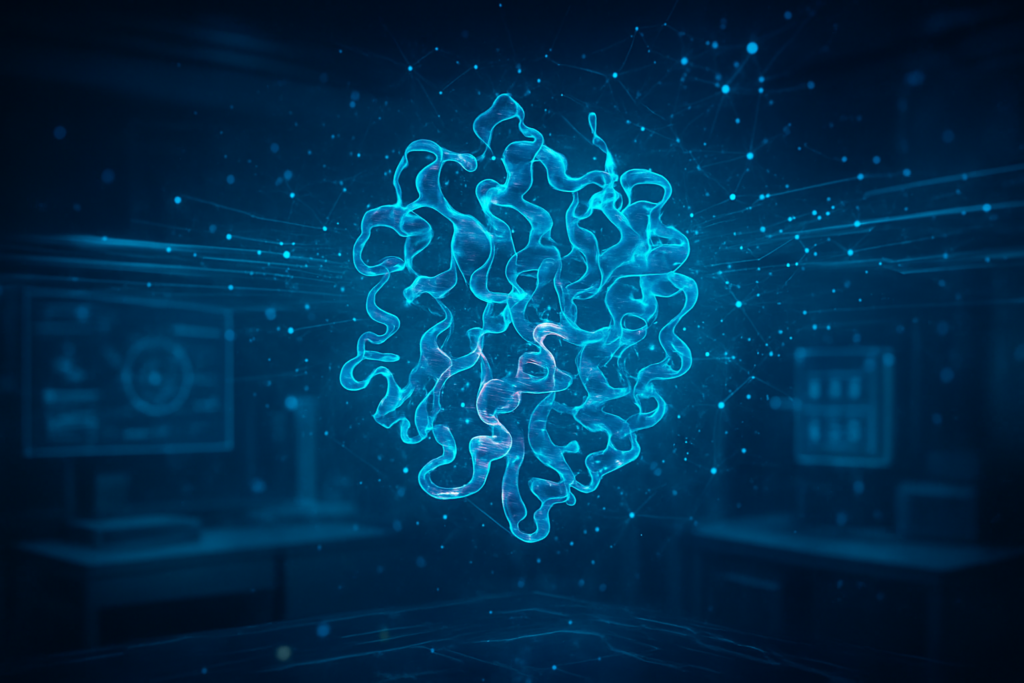
When AlphaFold 3 was first unveiled in May 2024, it was met with equal parts awe and frustration. Technically, it was a masterpiece: unlike its predecessor, AlphaFold 2, which primarily focused on the shapes of individual proteins, AF3 introduced a "Diffusion Transformer" architecture. This allowed the model to predict the raw 3D atom coordinates of an entire molecular ecosystem—including DNA, RNA, ligands (small molecules), and ions—within a single framework. While AlphaFold 2 used an EvoFormer system to predict distances between residues, AF3’s generative approach allowed for unprecedented precision in modeling how a drug candidate "nests" into a protein’s binding pocket, outperforming traditional physics-based simulations by nearly 50%.
However, the initial launch was marred by a restricted "AlphaFold Server" that limited researchers to a handful of daily predictions and, most controversially, blocked the modeling of protein-drug (ligand) interactions. This "gatekeeping" sparked a massive backlash, culminating in an open letter signed by over 1,000 scientists who argued that the lack of code transparency violated the core tenets of scientific reproducibility. The industry’s reaction was swift; by the time DeepMind fulfilled its promise to open-source the code in November 2024, the scientific community had already begun rallying around "open" alternatives like Chai-1 and Boltz-1. The eventual release of AF3’s weights for non-commercial use was seen as a necessary correction to maintain DeepMind’s leadership in the field and to honor the collaborative spirit of the Protein Data Bank (PDB) that made AlphaFold possible in the first place.
The Pharmaceutical Arms Race: Market Impact and Strategic Shifts
The open-sourcing of AlphaFold 3 in late 2024 triggered an immediate realignment within the biotechnology and pharmaceutical sectors. Major players like Eli Lilly (NYSE: LLY) and Novartis (NYSE: NVS) had already begun integrating AI-driven structural biology into their pipelines, but the availability of AF3’s architecture allowed for a "digital-first" approach to drug design that was previously impossible. Isomorphic Labs, DeepMind’s commercial spin-off, leveraged the proprietary versions of these models to ink multi-billion dollar deals, focusing on "undruggable" targets in oncology and immunology.
This development also paved the way for a new tier of AI-native biotech startups. Throughout 2025, companies like Recursion Pharmaceuticals (NASDAQ: RXRX) and the NVIDIA-backed (NASDAQ: NVDA) Genesis Molecular AI utilized the AF3 framework to develop even more specialized models, such as Boltz-2 and Pearl. These newer iterations addressed AF3’s early limitations, such as its difficulty with dynamic protein movements, by adding "binding affinity" predictions—calculating not just how a drug binds, but how strongly it stays attached. As of 2026, the strategic advantage in the pharmaceutical industry has shifted from those who own the largest physical chemical libraries to those who possess the most sophisticated predictive models and the specialized hardware to run them.
A Nobel Legacy: Redefining the Broader AI Landscape
The decision to open-source AlphaFold 3 must be viewed through the lens of the 2024 Nobel Prize in Chemistry. The recognition of Hassabis and Jumper by the Nobel Committee cemented AlphaFold’s status as one of the most significant breakthroughs in the history of science, comparable to the sequencing of the human genome. By releasing the code shortly after receiving the world’s highest scientific honor, DeepMind effectively silenced critics who feared that corporate interests would stifle biological progress. This move set a powerful precedent for "Open Science" in the age of AI, suggesting that while commercial applications (like those handled by Isomorphic Labs) can remain proprietary, the underlying scientific "laws" discovered by AI should be shared with the world.
This milestone also marked the moment AI moved beyond "generative text" and "image synthesis" into the realm of "generative biology." Unlike Large Language Models (LLMs) that occasionally hallucinate, AlphaFold 3 demonstrated that AI could be grounded in the rigid laws of physics and chemistry to produce verifiable, life-saving data. However, the release also sparked concerns regarding biosecurity. The ability to model complex molecular interactions with such ease led to renewed calls for international safeguards to ensure that the same technology used to design antibiotics isn't repurposed for the creation of novel toxins—a debate that continues to dominate AI safety forums in early 2026.
The Final Frontier: Self-Driving Labs and the Road to 2030
Looking ahead, the legacy of AlphaFold 3 is evolving into the era of the "Self-Driving Lab." We are already seeing the emergence of autonomous platforms where AI models design a molecule, robotic systems synthesize it, and high-throughput screening tools test it—all without human intervention. The "Hit-to-Lead" phase of drug discovery, which traditionally took two to three years, has been compressed in some cases to just four months. The next major challenge, which researchers are tackling as we enter 2026, is predicting "ADMET" (Absorption, Distribution, Metabolism, Excretion, and Toxicity). While AF3 can tell us how a molecule binds to a protein, predicting how that molecule will behave in the complex environment of a human body remains the "final frontier" of AI medicine.
Experts predict that the next five years will see the first "fully AI-designed" drugs clearing Phase III clinical trials and reaching the market. We are also seeing the rise of "Digital Twin" simulations, which use AF3-derived structures to model how specific genetic variations in a patient might affect their response to a drug. This move toward truly personalized medicine was made possible by the decision in November 2024 to let the world’s scientists look under the hood of AlphaFold 3, allowing them to build, tweak, and expand upon a foundation that was once hidden behind a corporate firewall.
Closing the Chapter on the Protein Folding Problem
The journey of AlphaFold 3—from its controversial restricted launch to its Nobel-sanctioned open-source release—marks a definitive turning point in the history of artificial intelligence. It proved that AI could solve problems that had baffled humans for generations and that the most effective way to accelerate global progress is through a hybrid model of commercial incentive and academic openness. As of January 2026, the "structural silo" that once separated biology from computer science has completely collapsed, replaced by a unified field of computational medicine.
As we look toward the coming months, the focus will shift from predicting structures to designing them from scratch. With tools like RFdiffusion 3 and OpenFold3 now in widespread use, the scientific community is no longer just mapping the world of biology—it is beginning to rewrite it. The open-sourcing of AlphaFold 3 wasn't just a release of code; it was the starting gun for a race to cure the previously incurable, and in early 2026, that race is only just beginning.
This content is intended for informational purposes only and represents analysis of current AI developments.
TokenRing AI delivers enterprise-grade solutions for multi-agent AI workflow orchestration, AI-powered development tools, and seamless remote collaboration platforms.
For more information, visit https://www.tokenring.ai/.