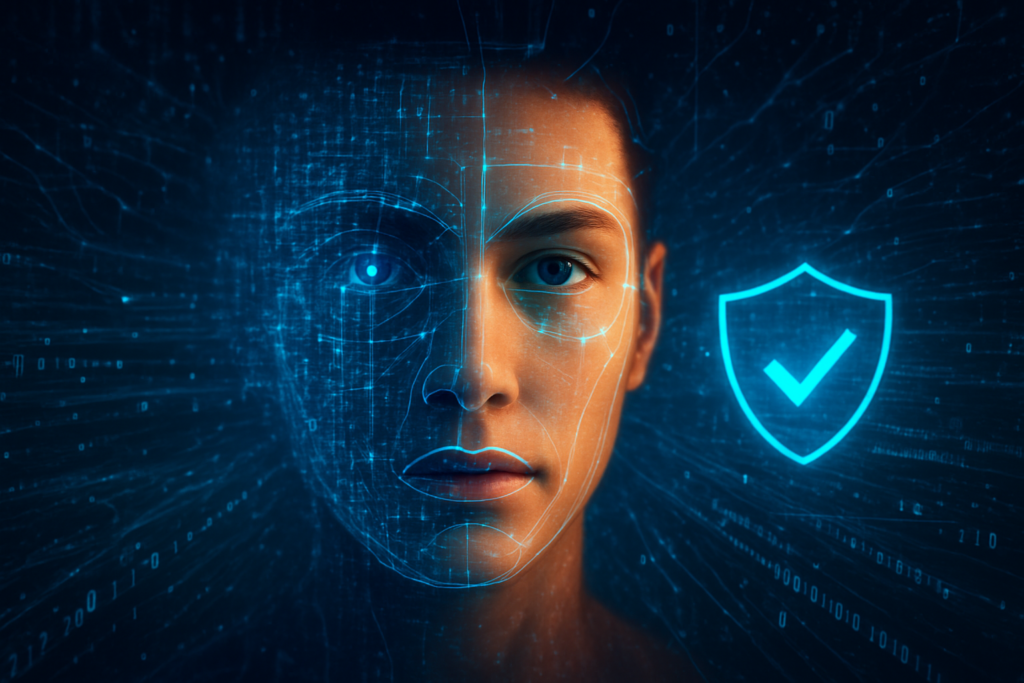
As of January 26, 2026, the global fight against digital disinformation has reached a decisive turning point. A consortium of researchers from top-tier academic institutions and Silicon Valley giants has unveiled a new generation of "Universal Detectors" capable of identifying AI-generated video and audio with a staggering 98% accuracy. This breakthrough represents a monumental shift in the "deepfake arms race," providing a robust defense mechanism just as the world prepares for the 2026 U.S. midterm elections and a series of high-stakes global democratic processes.
Unlike previous detection tools that were often optimized for specific generative models, these new universal systems are model-agnostic. They are designed to identify synthetic media regardless of whether it was created by OpenAI’s Sora, Runway’s latest Gen-series, or clandestine proprietary models. By focusing on fundamental physical and biological inconsistencies rather than just pixel-level artifacts, these detectors offer a reliable "truth layer" for the internet, promising to restore a measure of trust in digital media that many experts feared was lost forever.
The Science of Biological Liveness: How 98% Was Won
The leap to 98% accuracy is driven by a transition from "artifact-based" detection to "physics-based" verification. Historically, deepfake detectors looked for visual glitches, such as mismatched earrings or blurred hair edges—flaws that generative AI quickly learned to correct. The new "Universal Detectors," such as the recently announced Detect-3B Omni and the UNITE (Universal Network for Identifying Tampered and synthEtic videos) framework developed by researchers at UC Riverside and Alphabet Inc. (NASDAQ: GOOGL), take a more sophisticated approach. They analyze biological "liveness" indicators that remain nearly impossible for current AI to replicate perfectly.
One of the most significant technical advancements is the refinement of Remote Photoplethysmography (rPPG). This technology, championed by Intel Corporation (NASDAQ: INTC) through its FakeCatcher project, detects the subtle change in skin color caused by human blood flow. While modern generative models can simulate a heartbeat, they struggle to replicate the precise spatial distribution of blood flow across a human face—the way blood moves from the forehead to the jaw in micro-sync with a pulse. Universal Detectors now track these "biological signals" with sub-millisecond precision, flagging any video where the "blood flow" doesn't match human physiology.
Furthermore, the breakthrough relies on multi-modal synchronization—specifically the "physics of speech." These systems analyze the phonetic-visual mismatch, checking if the sound of a "P" or "B" (labial consonants) aligns perfectly with the pressure and timing of the speaker's lips. By cross-referencing synthetic speech patterns with corresponding facial muscle movements, models like those developed at UC San Diego can catch fakes that look perfect but feel "off" to a high-fidelity algorithm. The AI research community has hailed this as the "ImageNet moment" for digital safety, shifting the industry from reactive patching to proactive, generalized defense.
Industry Impact: Tech Giants and the Verification Economy
This breakthrough is fundamentally reshaping the competitive landscape for major AI labs and social media platforms. Meta Platforms, Inc. (NASDAQ: META) and Microsoft Corp. (NASDAQ: MSFT) have already begun integrating these universal detection APIs directly into their content moderation pipelines. For Meta, this means the "AI Label" system on Instagram and Threads will now be automated by a system that rarely misses, significantly reducing the burden on human fact-checkers. For Microsoft, the technology is being rolled out as part of a "Video Authenticator" service within Azure, targeting enterprise clients who are increasingly targeted by "CEO fraud" via deepfake audio.
Specialized startups are also seeing a massive surge in market positioning. Reality Defender, recently named a category leader by industry analysts, has launched a real-time "Real Suite" API that protects live video calls from being hijacked by synthetic overlays. This creates a new "Verification Economy," where the ability to prove "humanity" is becoming as valuable as the AI models themselves. Companies that provide "Deepfake-as-a-Service" for the entertainment industry are now forced to include cryptographic watermarks, as the universal detectors are becoming so effective that "unlabeled" synthetic content is increasingly likely to be blocked by default across major platforms.
The strategic advantage has shifted toward companies that control the "distribution" points of the internet. By integrating detection at the browser level, Google’s Chrome and Apple’s Safari could theoretically alert users the moment a video on any website is flagged as synthetic. This move positions the platform holders as the ultimate arbiters of digital reality, a role that brings both immense power and significant regulatory scrutiny.
Global Stability and the 2026 Election Landscape
The timing of this breakthrough is no coincidence. The lessons of the 2024 elections, which saw high-profile incidents like the AI-generated Joe Biden robocall, have spurred a global demand for "election-grade" detection. The ability to verify audio and video with 98% accuracy is seen as a vital safeguard for the 2026 U.S. midterms. Election officials are already planning to use these universal detectors to quickly debunk "leaked" videos designed to suppress voter turnout or smear candidates in the final hours of a campaign.
However, the wider significance of this technology goes beyond politics. It represents a potential solution to the "Epistemic Crisis"—the societal loss of a shared reality. By providing a reliable tool for verification, the technology may prevent the "Liar's Dividend," a phenomenon where public figures can dismiss real, incriminating footage as "just a deepfake." With a 98% accurate detector, such claims become much harder to sustain, as the absence of a "fake" flag from a trusted universal detector would serve as a powerful endorsement of authenticity.
Despite the optimism, concerns remain regarding the "2% Problem." With billions of videos uploaded daily, a 2% error rate could still result in millions of legitimate videos being wrongly flagged. Experts warn that this could lead to a new form of "censorship by algorithm," where marginalized voices or those with unique speech patterns are disproportionately silenced by over-eager detection systems. This has led to calls for a "Right to Appeal" in AI-driven moderation, ensuring that the 2% of false positives do not become victims of the war on fakes.
The Future: Adversarial Evolution and On-Device Detection
Looking ahead, the next frontier in this battle is moving detection from the cloud to the edge. Apple Inc. (NASDAQ: AAPL) and Google are both reportedly working on hardware-accelerated detection that runs locally on smartphone chips. This would allow users to see a "Verified Human" badge in real-time during FaceTime calls or while recording video, effectively "signing" the footage at the moment of creation. This integration with the C2PA (Coalition for Content Provenance and Authenticity) standard will likely become the industry norm by late 2026.
However, the challenge of adversarial evolution persists. As detection improves, the creators of deepfakes will inevitably use these very detectors to "train" their models to be even more realistic—a process known as "adversarial training." Experts predict that while the 98% accuracy rate is a massive win for today, the "cat-and-mouse" game will continue. The next generation of fakes may attempt to simulate blood flow or lip pressure even more accurately, requiring detectors to look even deeper into the physics of light reflection and skin elasticity.
The near-term focus will be on standardizing these detectors across international borders. A "Global Registry of Authentic Media" is already being discussed at the UN level, which would use the 98% accuracy threshold as a benchmark for what constitutes "reliable" verification technology. The goal is to create a world where synthetic media is treated like any other tool—useful for creativity, but always clearly distinguished from the biological reality of human presence.
A New Era of Digital Trust
The arrival of Universal Detectors with 98% accuracy marks a historic milestone in the evolution of artificial intelligence. For the first time since the "deepfake" was coined, the tools of verification have caught up—and arguably surpassed—the tools of generation. This development is not merely a technical achievement; it is a necessary infrastructure for the maintenance of a functioning digital society and the preservation of democratic integrity.
While the "battle for the truth" is far from over, the current developments provide a much-needed reprieve from the chaos of the early 2020s. As we move into the middle of the decade, the significance of this breakthrough will be measured by its ability to restore the confidence of the average user in the images and sounds they encounter every day. In the coming weeks and months, the primary focus for the industry will be the deployment of these tools across social media and news platforms, a rollout that will be watched closely by governments and citizens alike.
This content is intended for informational purposes only and represents analysis of current AI developments.
TokenRing AI delivers enterprise-grade solutions for multi-agent AI workflow orchestration, AI-powered development tools, and seamless remote collaboration platforms.
For more information, visit https://www.tokenring.ai/.