The year 2024 marked a historic inflection point in the history of science, as the Royal Swedish Academy of Sciences awarded Nobel Prizes in both Physics and Chemistry to pioneers of artificial intelligence. This dual recognition effectively ended the debate over whether AI was merely a sophisticated tool or a fundamental branch of scientific inquiry. By bestowing its highest honors on Geoffrey Hinton and John Hopfield for the foundations of neural networks, and on Demis Hassabis and John Jumper for cracking the protein-folding code with AlphaFold, the Nobel committee signaled that the "Information Age" had evolved into the "AI Age," where the most complex mysteries of the universe are now being solved by silicon and code.
The immediate significance of these awards cannot be overstated. For decades, AI research was often siloed within computer science departments, distinct from the "hard" sciences like physics and biology. The 2024 prizes dismantled these boundaries, acknowledging that the mathematical frameworks governing how machines learn are as fundamental to our understanding of the physical world as thermodynamics or molecular biology. Today, as we look back from early 2026, these awards are viewed as the official commencement of a new scientific epoch—one where human intuition is systematically augmented by machine intelligence to achieve breakthroughs that were previously deemed impossible.
The Physics of Learning and the Geometry of Life
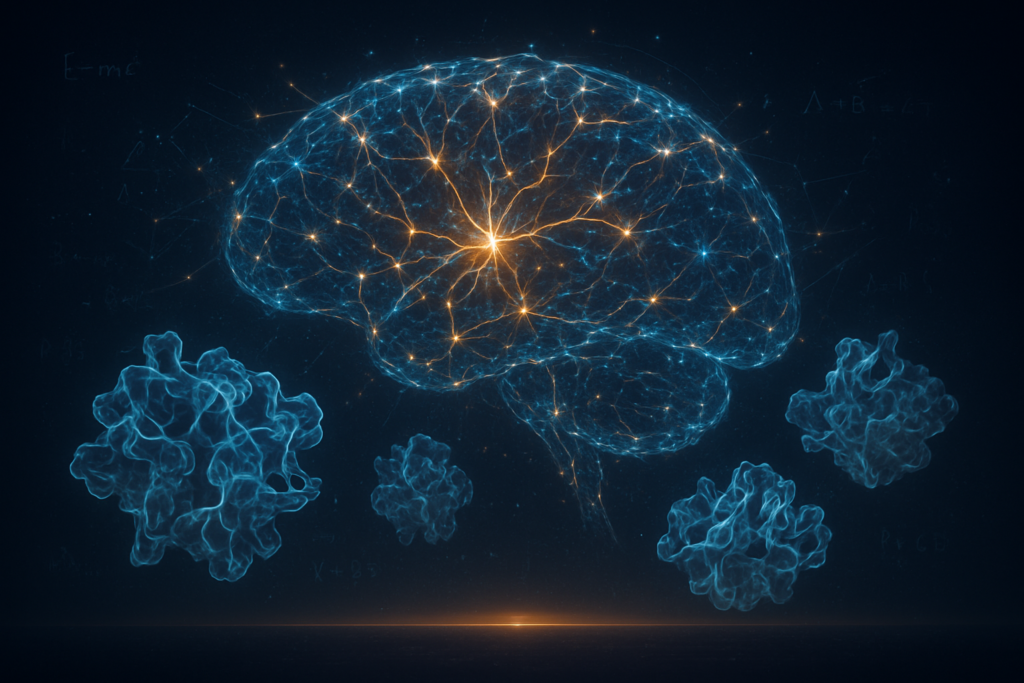
The 2024 Nobel Prize in Physics was awarded to John J. Hopfield and Geoffrey E. Hinton for foundational discoveries in machine learning. Their work was rooted not in software engineering, but in statistical mechanics. Hopfield developed the Hopfield Network, a model for associative memory that treats data patterns like physical systems seeking their lowest energy state. Hinton expanded this with the Boltzmann Machine, introducing stochasticity and "hidden units" that allowed networks to learn complex internal representations. This architecture, inspired by the Boltzmann distribution in thermodynamics, provided the mathematical bedrock for the Deep Learning revolution that powers every modern AI system today. By recognizing this work, the Nobel committee validated the idea that information is a physical property and that the laws governing its processing are a core concern of physics.
In Chemistry, the prize was shared by Demis Hassabis and John Jumper of Google DeepMind, owned by Alphabet (NASDAQ: GOOGL), alongside David Baker of the University of Washington. Hassabis and Jumper were recognized for AlphaFold 2, an AI system that solved the "protein folding problem"—a grand challenge in biology for over 50 years. By predicting the 3D structure of nearly all known proteins from their amino acid sequences, AlphaFold provided a blueprint for life that has accelerated biological research by decades. David Baker’s contribution focused on de novo protein design, using AI to build entirely new proteins that do not exist in nature. These breakthroughs transitioned chemistry from a purely experimental science to a predictive and generative one, where new molecules can be designed on a screen before they are ever synthesized in a lab.
A Corporate Renaissance in the Laboratory
The recognition of Hassabis and Jumper, in particular, highlighted the growing dominance of corporate research labs in the global scientific landscape. Alphabet (NASDAQ: GOOGL) through its DeepMind division, demonstrated that a concentrated fusion of massive compute power, top-tier talent, and specialized AI architectures could solve problems that had stumped academia for half a century. This has forced a strategic pivot among other tech giants. Microsoft (NASDAQ: MSFT) has since aggressively expanded its "AI for Science" initiative, while NVIDIA (NASDAQ: NVDA) has solidified its position as the indispensable foundry of this revolution, providing the H100 and Blackwell GPUs that act as the modern-day "particle accelerators" for AI-driven chemistry and physics.
This shift has also sparked a boom in the biotechnology sector. The 2024 Nobel wins acted as a "buy signal" for the market, leading to a surge in funding for AI-native drug discovery companies like Isomorphic Labs and Xaira Therapeutics. Traditional pharmaceutical giants, such as Eli Lilly and Company (NYSE: LLY) and Novartis (NYSE: NVS), have been forced to undergo digital transformations, integrating AI-driven structural biology into their core R&D pipelines. The competitive landscape is no longer defined just by chemical expertise, but by "data moats" and the ability to train large-scale biological models. Companies that failed to adopt the "AlphaFold paradigm" by early 2026 are finding themselves increasingly marginalized in an industry where drug candidate timelines have been slashed from years to months.
The Ethical Paradox and the New Scientific Method
The 2024 awards also brought the broader implications of AI into sharp focus, particularly through the figure of Geoffrey Hinton. Often called the "Godfather of AI," Hinton’s Nobel win was marked by a bittersweet irony; he had recently resigned from Google to speak more freely about the existential risks posed by the very technology he helped create. His win forced the scientific community to grapple with a profound paradox: the same neural networks that are curing diseases and uncovering new physics could also pose catastrophic risks if left unchecked. This has led to a mandatory inclusion of "AI Safety" and "Ethics in Algorithmic Discovery" in scientific curricula globally, a trend that has only intensified through 2025 and into 2026.
Beyond safety, the "AI Nobels" have fundamentally altered the scientific method itself. We are moving away from the traditional hypothesis-driven approach toward a data-driven, generative model. In this new landscape, AI is not just a calculator; it is a collaborator. This has raised concerns about the "black box" nature of AI—while AlphaFold can predict a protein's shape, it doesn't always explain the underlying physical steps of how it folds. The tension between predictive power and fundamental understanding remains a central debate in 2026, with many scientists arguing that we must ensure AI remains a tool for human enlightenment rather than a replacement for it.
The Horizon of Discovery: Materials and Climate
Looking ahead, the near-term developments sparked by these Nobel-winning breakthroughs are moving into the realm of material science and climate mitigation. We are already seeing the first AI-designed superconductors and high-efficiency battery materials entering pilot production—a direct result of the scaling laws first explored by Hinton and the structural prediction techniques perfected by Hassabis and Jumper. In the long term, experts predict the emergence of "Closed-Loop Labs," where AI systems not only design experiments but also direct robotic systems to conduct them, analyze the results, and refine their own models without human intervention.
However, significant challenges remain. The energy consumption required to train these "Large World Models" is immense, leading to a push for more "energy-efficient" AI architectures inspired by the very biological systems AlphaFold seeks to understand. Furthermore, the democratization of these tools is a double-edged sword; while any lab can now access protein structures, the ability to design novel toxins or pathogens using the same technology remains a critical security concern. The next several years will be defined by the global community’s ability to establish "Bio-AI" guardrails that foster innovation while preventing misuse.
A Watershed Moment in Human History
The 2024 Nobel Prizes in Physics and Chemistry were more than just awards; they were a collective realization that the map of human knowledge is being redrawn by machine intelligence. By recognizing Hinton, Hopfield, Hassabis, and Jumper, the Nobel committees acknowledged that AI has become the foundational infrastructure of modern science. It is the microscope of the 21st century, allowing us to see patterns in the subatomic and biological worlds that were previously invisible to the naked eye and the human mind.
As we move further into 2026, the legacy of these prizes is clear: AI is no longer a sub-discipline of computer science, but a unifying language across all scientific fields. The coming weeks and months will likely see further breakthroughs in AI-driven nuclear fusion and carbon capture, as the "Silicon Revolution" continues to accelerate. The 2024 laureates didn't just win a prize; they validated a future where the partnership between human and machine is the primary engine of progress, forever changing how we define "discovery" itself.
This content is intended for informational purposes only and represents analysis of current AI developments.
TokenRing AI delivers enterprise-grade solutions for multi-agent AI workflow orchestration, AI-powered development tools, and seamless remote collaboration platforms.
For more information, visit https://www.tokenring.ai/.